





By Usman Usman Garba
A faith and cultural collaboration project is targeting harmful social norms and behaviours affecting adolescent girls and young women (AGYW), with particular focus on maternal, newborn and child health (MNCH) and child spacing/family planning in Kano and Kaduna states.
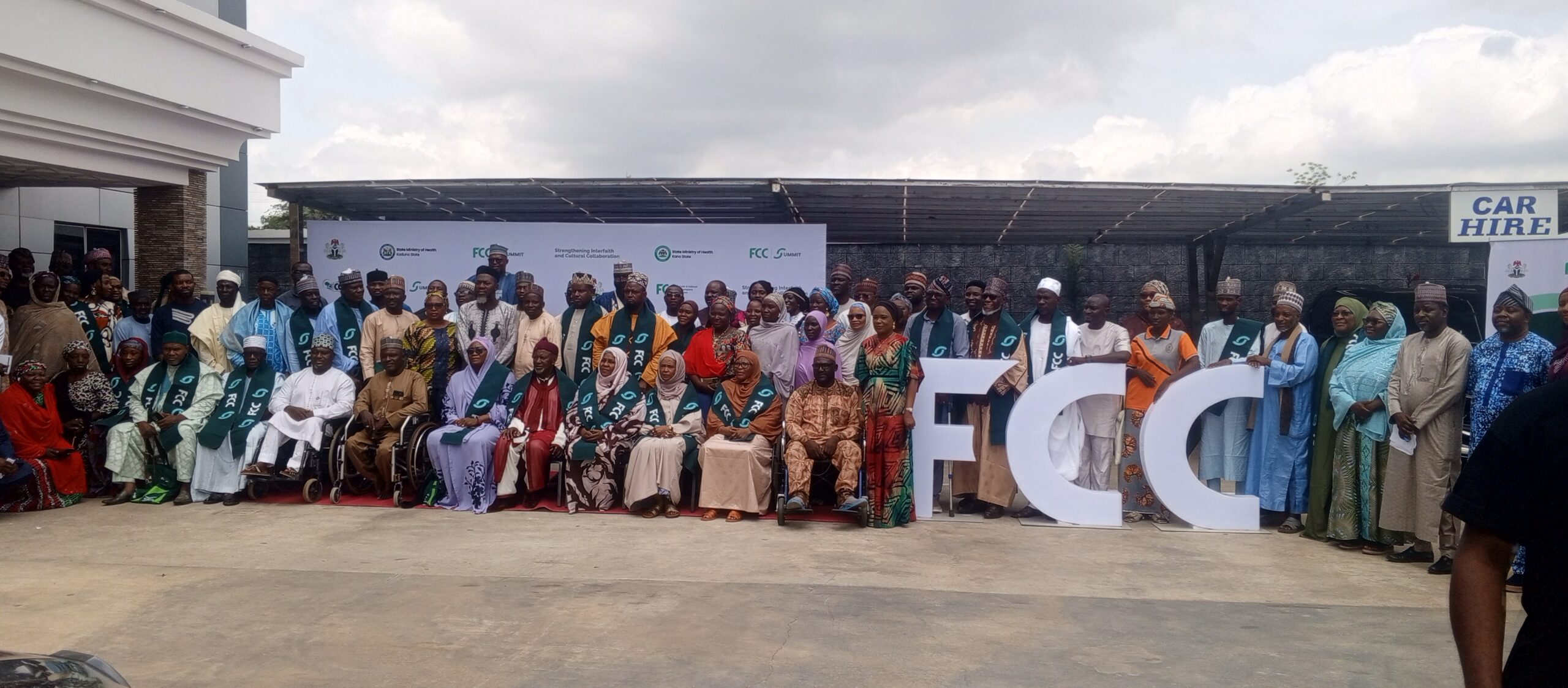
Professor Sufiyan M. Babale (PD-FCC), disclose this during the FCC 2026 Annual Submit held on Wednesday at Hilton Palace Hotel, Kano while presenting the milestones and journey so far, said the project seeks to strengthen the capacity of faith and cultural leaders to influence positive changes in community attitudes, behaviours and norms.
He said the initiative is designed to improve knowledge, attitudes and practices among faith leaders and their audiences on MNCH and child spacing/family planning, while increasing the quality and quantity of health messages delivered through religious platforms.
According to him, the project is also aimed at contributing to increased antenatal care (ANC) attendance, facility-based deliveries, contraceptive use and a reduction in maternal deaths.
Addressing harmful social norms
Professor Babale explained that the project identified several social norms that can prevent women from accessing essential health services.
He said one of the major concerns is the belief that husbands should have the final decision on whether women attend ANC or deliver in a health facility.
The project also identified a norm whereby women may be criticised or regarded as disrespectful when they seek ANC or plan for childbirth with healthcare providers without their husbands’ approval.
On child spacing, the project found that discussions between adolescent girls and young women and their husbands or partners about child spacing are not always considered normal or acceptable in some communities.
Such discussions can also attract stigma and gossip from community members.
Faith and cultural leaders as agents of change
Professor Babale said the FCC project works by engaging trusted faith and cultural leaders as structured agents of positive norm change.
He noted that the initiative uses community engagement, faith-based messaging, mass media, digital platforms, advocacy and capacity building to reach priority groups and their reference groups.
These strategies include community sensitisation campaigns, community dialogues, town hall meetings, house-to-house visits and male engagement.
“Faith-based messaging is delivered through sermons, religious gatherings and other faith events, while radio, television, videos and social media are also used to reinforce key messages,” he said.
Lessons from the implementation
According to Professor Babale, one of the major lessons from the project is that trust is essential for successful community engagement.
He said the endorsement and involvement of respected traditional and religious leaders increase community acceptance and provide a stronger foundation for implementation.
He also highlighted the importance of identifying and strengthening champions through the project’s Trust, Influence and Power (TrIP) approach.
“Culture and language matter,” he noted, stressing that the use of local languages, storytelling, proverbs, culturally appropriate terminology and locally relevant visuals makes health messages easier to understand and more acceptable to communities.
The project also found that husbands and mothers-in-law remain important decision-makers whose support can significantly influence women’s uptake of ANC, facility delivery and healthy childbirth spacing.
Focus on women with disabilities, Professor Babale further said the project had learned that women with disabilities are more likely to seek and utilise MNCH services when interventions deliberately address their specific needs.
He said another encouraging development was the spontaneous integration of MNCH and child-spacing messages into routine sermons by some faith leaders.
According to him, this demonstrates growing ownership of the intervention and suggests that the project’s approach to changing harmful social norms is gradually becoming sustainable.
Importance of real-life stories
The project also places emphasis on personal testimonies and real-life experiences.
Professor Babale said peer experiences and culturally relevant stories help communities connect health information with their everyday lives, making messages more actionable and encouraging reflection.
He, however, stressed the need for continuous mentoring and adaptation because participating implementing organisations have different levels of readiness and capacity.
He identified practical coaching, supportive supervision, documentation, safeguarding and adaptive learning as important components for sustaining the intervention.
Project implementation process
The FCC project follows three major phases: action learning, implementation and evaluation.
The action-learning phase involves gathering insights from relevant resources, selecting and engaging faith and cultural champions, stakeholder engagement, co-creation workshops and identification of priority norms, behaviours and thematic areas.
The implementation phase includes sub-granting to implementing faith and cultural organisations, orientation workshops, execution of developed workplans, monitoring and supportive supervision, quarterly convenings, documentation of lessons and an annual summit.
The evaluation phase includes baseline studies, responsive feedback mechanisms, documentation of significant change stories, midline assessment and endline evaluation.
Long-term goal
The overall objective of the initiative is to contribute to improved maternal and child health outcomes by changing harmful social norms and increasing support for positive health-seeking behaviours.
Professor Babale said the FCC platform seeks to bridge belief, influence and action, transforming trusted faith and cultural leaders into agents of positive change in their communities.
He said the approach is ultimately expected to contribute to a reduction in maternal mortality and child morbidity across Kano and Kaduna states.


