



From Musa Muhammad Kutama, Calabar
The South-South governors have resolved to build a stronger regional economic bloc anchored on infrastructure connectivity, investment mobilisation, maritime development, industrialisation and coordinated engagement with the Federal Government.
The move is aimed at translating the region’s enormous economic potential into tangible prosperity for its people.
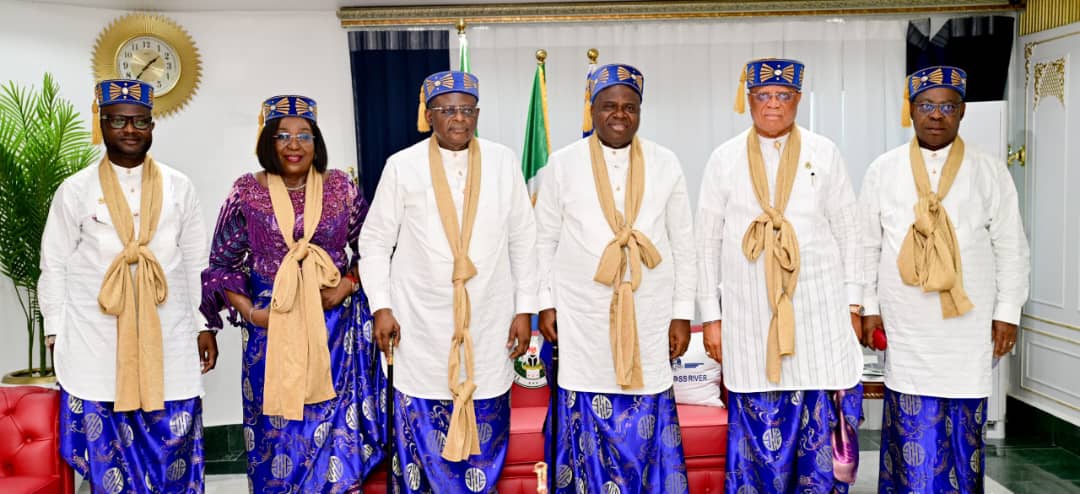
The resolution formed the thrust of a communiqué issued at the end of the second meeting of the South-South Governors’ Forum, held in Calabar, Cross River State, on Monday under the chairmanship of Bayelsa State Governor, Senator Douye Diri.
The governors identified regional rail development, the rehabilitation and modernisation of the Calabar, Port Harcourt and Warri seaports, as well as the economic opportunities presented by the Lagos-Calabar Coastal Highway, as strategic priorities.
They also resolved to engage President Bola Ahmed Tinubu on critical South-South concerns, particularly infrastructure and environmental development, while reaffirming their commitment to his re-election in 2027 with “100 per cent” support from the region.
The Forum further resolved to institutionalise its activities through quarterly meetings, with Uyo, Akwa Ibom State, scheduled to host the next meeting from November 6 to 8, 2026.
The communiqué also embraced a broader regional investment strategy, reflecting a presentation by the Director-General of the BRACED Commission, Ambassador Joe Keshi, on efforts to advance regional infrastructure, particularly rail development.
PANDEF National Chairman, Ambassador Godknows Boladei Igali, advocated the establishment of a regional investment fund capable of mobilising capital for projects that transcend individual state boundaries.
He also urged the governors to place young people at the centre of the region’s economic transformation.
The emerging agenda seeks to move the South-South away from isolated state-level initiatives towards an integrated economic space driven by shared infrastructure, investment and value chains.
Otu Calls for Regional Integration
Hosting the meeting, Cross River State Governor and Vice Chairman of the Forum, Senator Bassey Edet Otu, said the region’s ability to secure meaningful development depended on the extent to which its states could speak and act collectively.
“We must come together as a people; we must cooperate, and we must ensure that our voice is heard and respected,” Otu declared.
He stressed that “the South-South has everything it takes” to become one of Nigeria’s most formidable economic blocs, provided the states could overcome fragmentation and harness their resources within a common regional framework.
Otu called for a unified regional position on fiscal equity, particularly Value Added Tax, oil and gas revenues and the 13 per cent derivation benchmark.
He also sought the Forum’s support for Cross River’s campaign to regain its oil-producing status, describing the issue as part of the state’s broader quest for greater economic opportunities.
On infrastructure, he proposed a regional corridor linking the Bakassi Deep Seaport in Calabar with the East-West Road and the ports of Bayelsa and Delta.
He also advocated greater integration of the region’s agricultural economies, urging the states to look beyond the exploitation of raw resources and embrace value addition, industrial processing and job creation.
Otu specifically highlighted opportunities in cassava production, processing and ethanol development as areas capable of driving economic growth and employment.
Diri Demands Implementation
In his opening remarks, Governor Douye Diri insisted that the Forum must distinguish itself through implementation rather than rhetoric.
“We cannot afford to remain a region of meetings and communiqués,” he said, stressing that “the meeting must produce movement” and that decisions reached must translate into “measurable progress.”
He argued that the South-South, despite its enormous contribution to Nigeria’s economy, could no longer afford fragmented approaches to challenges that were inherently regional.
“We must move beyond resolutions to implementation,” Diri said, emphasising coordinated action on infrastructure, transportation, security, environmental remediation and economic integration.
The Bayelsa governor placed particular emphasis on connectivity as the foundation for regional economic transformation.
He called for accelerated development of road, rail, air and maritime infrastructure, including the East-West Road, Lagos-Calabar Coastal Highway and regional rail networks.
Diri said the South-South must deliberately position itself as “Nigeria’s gas-industrial hub, West Africa’s maritime gateway and the country’s leading blue-economy zone.”
He also drew attention to the region’s environmental challenges, arguing that a region that serves as a major economic engine of Nigeria should not simultaneously bear the disproportionate consequences of ecological degradation.
He called for expanded environmental remediation across the Niger Delta, stressing the need to address the environmental devastation affecting communities across the region.
The governors consequently linked economic development with security and environmental sustainability, recognising that investment cannot flourish where communities, waterways and critical infrastructure remain vulnerable.
The Forum advocated stronger intelligence-sharing and coordinated security operations to protect communities, oil and gas assets and economic corridors across the six states.
The governors also stressed the importance of environmental restoration, reflecting what Diri described as the need to confront the contradiction of a region that sustains Nigeria’s economy while suffering severe ecological and developmental consequences.
The Forum also resolved to throw its weight behind President Bola Ahmed Tinubu’s re-election in 2027 and to seek direct engagement with him on the region’s development priorities.