





By Mustapha Muhammad
In Nigeria’s northeast lies a forest that stretches across several states and connects to other forests in neighbouring regions. Wild animals roam freely here, and the area appears to be part of a migratory route for elephants travelling from Waza National Park in Cameroon across West Africa. It is a blossoming tourist attraction with infrastructure that makes you feel at home, yet the vegetation cover and the presence of wild monkeys constantly remind you that you are in a forest.
This is Yankari Game Reserve in Bauchi State, a tourism hub in the northeast. It offers serene and befitting accommodation and a waterfall turned swimming pool, popularly known as the Wikki Warm Spring. You will see able-bodied park rangers with their vehicles always ready to take you around the forest.
I was privileged to visit during a tour organized for members of the Society of Nigerian Broadcasters as part of its 3rd Annual General Meeting, held from Sunday, 27th to Tuesday, 29th September, 2026.
A convoy of more than a dozen buses headed to the reserve through a solid new road constructed under the current governor of Bauchi State, Senator Bala Mohammed. The road leads to this wildlife habitat, home to hundreds of different animal and bird species — largely wild and dangerous — but the security protocol at Yankari Game Reserve makes you feel comfortable and takes away any jitters.
As we approached the gate, we saw a large rock painted with colour. On the front it reads, “Welcome to Yankari Game Reserve,” and on the back, “Goodbye to Yankari Game Reserve.” It was a clear notice that we were entering a new environment; unlike the signboards used when entering a town, here it is a rock.
From the gate to the main area of the reserve is another journey of nearly 45 minutes, with an instruction to drive at 30 kilometres per hour to avoid hitting animals while they are crossing.
The road was designed in a zigzag pattern with about 20 mini roundabouts at intervals to discourage high speed out of concern for the animals. What I also noticed were placards displaying messages like “Animals Crossing” and “Animals Have Right of Way.” All these are for the safety of the crossing animals.
Kudos to the Bauchi State Government for this concern for wildlife conservation.
As we entered the main administrative area of the reserve, I saw several lodge apartments of different categories: Luxury Suites, Double, Single and Executive Lodges. As we toured around, it was clear this is a serene environment that can accommodate families on vacation and tourists seeking comfort and relaxation.
One interesting infrastructure is the solar-powered energy hub provided by the state government to ensure uninterrupted power supply, making the place lively even at night. “When I visited some years ago, I used to come around 1 a.m. to swim, feel the breeze and relax,” Muzammil Sanda, a member of the Society of Nigerian Broadcasters who had previously vacationed at Yankari, told me as we descended the curving steps to the waterfall, with railings protecting both sides.
At the swimming pool — the Wikki Warm Spring, formed from spring water oozing from beneath the rocks — every member beamed with smiles, enjoying and relaxing.
Some swam like fish, while others simply watched nature and splashed water on their feet. Group and individual pictures dominated the moment, showing that the place is lively and interesting.
The Museum of Natural History at Yankari Game Reserve, opened to the public in 1985 by the late Major General Muhammadu Buhari, is another fantastic attraction that preserves the heritage of the reserve.
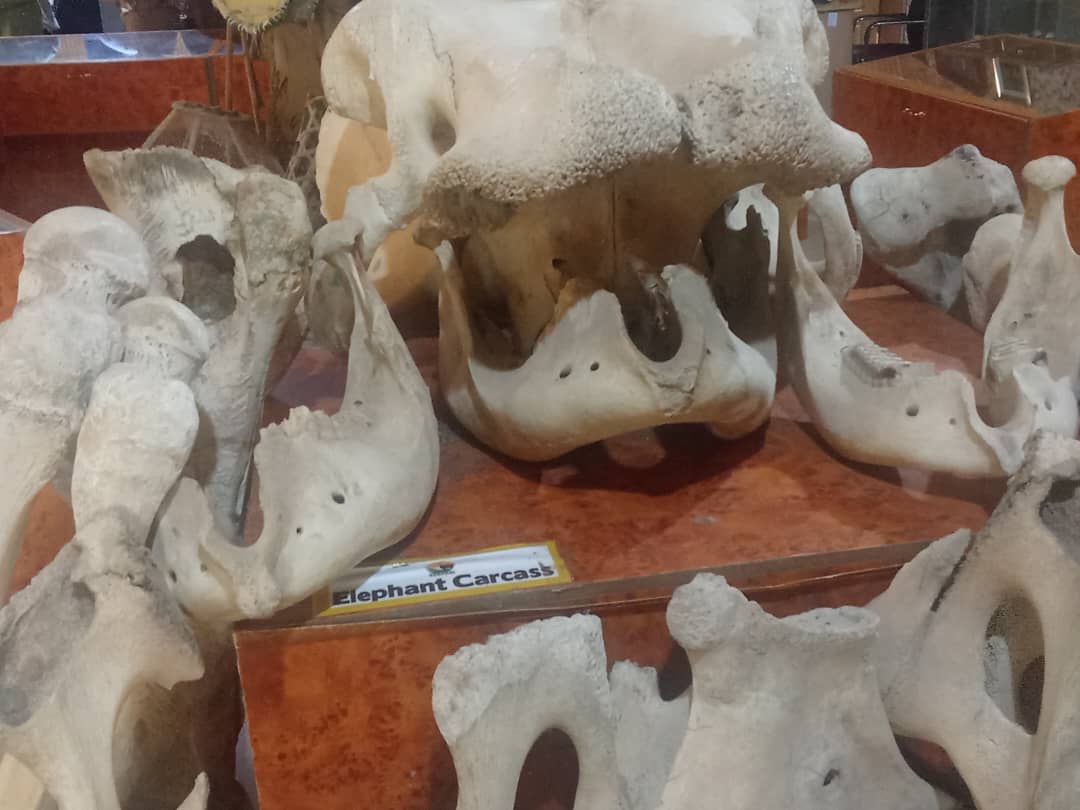
It displays fully mounted stuffed animals, skins, tusks, bones and horns of native park species like lions, leopards, crocodiles and elephants.
The most striking exhibit for me was the elephant carcass on display. In addition, the museum houses archaeological finds, inscriptions, monuments and other historical relics tied to the region.
Yankari Game Reserve, which was officially opened to the public on December 1, 1962, is home to over 50 species of mammals including buffaloes, hippopotamuses, roan antelopes, waterbucks, bushbucks, western hartebeests, and the critically endangered West African lion, as well as more than 350 species of birds.
This makes the place even more attractive to tourists. Thanks to the Bauchi State Government for its relentless efforts in preserving Yankari Game Reserve and making it more attractive.
It is not surprising that the United Nations Educational, Scientific and Cultural Organization (UNESCO) has included Yankari Game Reserve on its Tentative List as a potential World Heritage Site.
As we approached the forest, it reminded me of my visit to a forest in South London with colleagues for Hostile Environment Training (Safety of Journalists Training).
Though the purpose of both trips was different, the sense of ecosystem was similar. Managed by the London Wildlife Trust, the London site is one of the South’s oldest woods and home to over 200 species of trees, plants and wildlife.
The air and thick forest environment are similar to that of Yankari Game Reserve; the difference is that the London forest consists more of ancient, taller woodlands and nature reserves that are remnants of the historic Great North Wood. I really enjoyed both trips.
Our visit to Yankari Game Reserve was full of fun and showed how wild animals and human beings can relate peacefully if visitors’ guidelines are strictly followed.
Animals in the reserve live in their natural habitat without human interference or taming. Of course, mammals like elephants, lions, buffaloes and hippos are dangerous and can react aggressively if startled, approached or provoked.
Maintaining distance is a major guideline — always stay inside designated safari vehicles and remain with a trained park ranger during game drives and nature walks. Secure your food and keep it out of sight, as monkeys and baboons can be aggressive in trying to snatch it.
Adhering to these guidelines, I believe Yankari Game Reserve is truly a place where wild animals and human beings can relate.
Mustapha Muhammad is a member of the Society of Nigerian Broadcasters and the Chief Press Secretary to the Governor of Kano State. He writes from Bauchi.


