



By Lamara Garba
The first sign that Bauchi is being left behind is not a road sign. It is the silence. As the road stretches towards Yankari, the bustle of the city gradually gives way to open country. Buildings thin out, the horizon widens, and forests, rocky hills and grasslands begin to dominate the landscape.
The journey takes on a different rhythm as the ordinary noise of the city gradually gives way to the sounds of the wild.
Then comes Yankari. Here, nature does not arrive as a carefully constructed attraction. It is already there, in the ancient woodland, open grasslands, hills, wildlife trails and the warm, clear waters of Wikki.
The reserve has endured for generations, quietly preserving a landscape that has outlived governments, changing seasons and the restless expansion of modern life. For a visitor, the experience can begin before the first elephant appears.
It begins with anticipation: the possibility of wildlife emerging from the woodland, the prospect of stepping into the warm waters of Wikki, the evening sounds of the bush and the feeling of being somewhere removed from the hurried world outside.
Now, however, something else is happening at Yankari. The landscape remains ancient, but the destination is beginning to look towards the future. Under Governor Bala Abdulkadir Mohammed, the Kauran Bauchi, tourism is increasingly being placed within a broader development conversation in which infrastructure, investment, job creation, environmental sustainability and destination branding are expected to reinforce one another.
The state government’s development framework identifies tourism as an avenue for attracting private investment, creating jobs and increasing internally generated revenue, while its tourism strategy calls for stronger hospitality services and destination marketing.
Yankari sits at the centre of that ambition. This is important because the political significance of the reserve goes beyond the renovation of chalets or the provision of electricity.
The real test is whether government can turn an inherited natural asset into a productive economic sector capable of creating businesses, supporting communities, attracting investors and giving Bauchi a stronger identity in Nigeria’s tourism economy. That is a much larger proposition than simply refurbishing a tourist site.
The current administration has begun putting money and projects behind that proposition. Bauchi’s budget performance documents have included interventions relating to solar power at Yankari, game viewing vehicles, outpost stations and other wildlife infrastructure, while Yankari has also featured among the state’s tourism and investment opportunities.
These interventions matter because tourism infrastructure is not an end in itself. A solar installation means little if visitors cannot reach the destination comfortably. A renovated chalet means little if the visitor experience outside the room remains poor.
A wildlife reserve cannot thrive if conservation and security are neglected, while a beautiful attraction cannot become an economic asset if nobody knows how to find it, book it or experience it.
The political challenge, therefore, is to make the pieces work together. For decades, Yankari has remained one of Nigeria’s most recognisable natural tourism destinations.
Its wildlife, landscape, caves and warm spring have given it a special place in the country’s tourism story, yet its enormous potential has not always been matched by the sustained investment, marketing and destination management required to make tourism a major economic force. The present effort creates an opportunity to change that.
Modern tourism is no longer only about possessing beautiful attractions. Destinations compete through accessibility, hospitality, comfort, security, digital visibility and the quality of experiences they offer. Yankari already possesses the most difficult ingredient to create: nature.
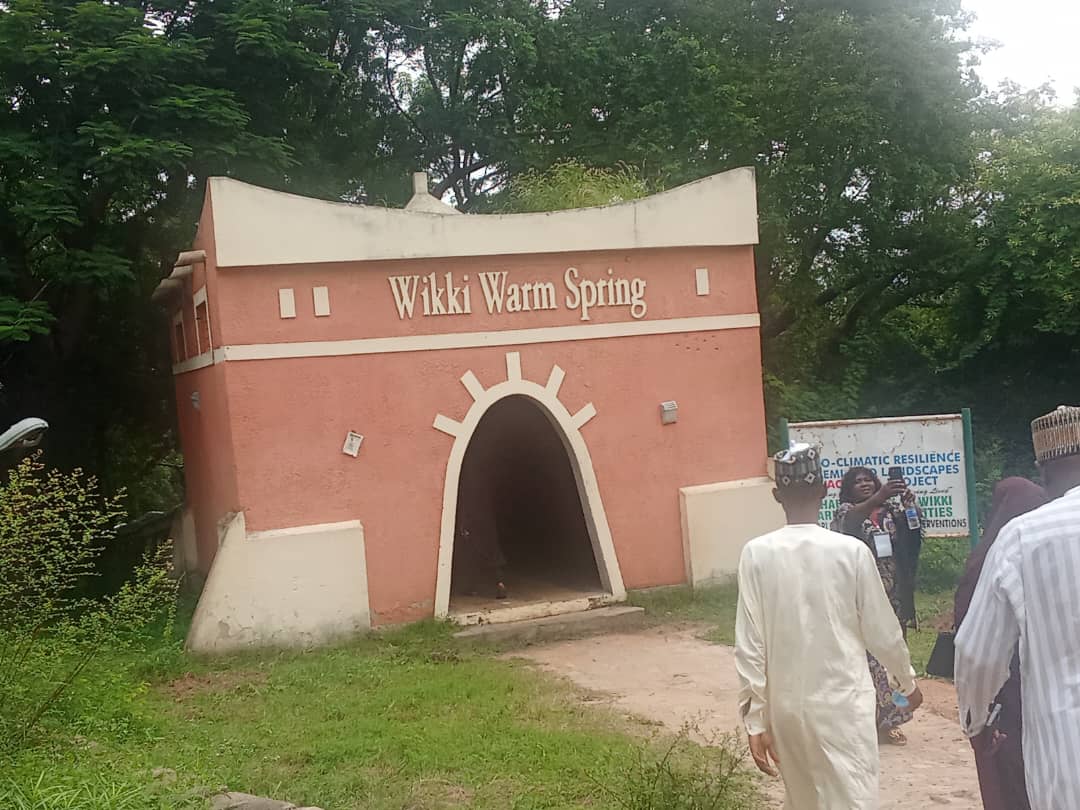
At the heart of the destination is the magnificent Wikki Warm Spring. Its crystal clear, naturally warm waters have long been among Yankari’s greatest attractions, maintaining a temperature of about 31 degrees Celsius and becoming synonymous with the Yankari experience.
Imagine arriving early in the morning, when the air is cool, entering the warm waters of Wikki and watching the surrounding landscape gradually awaken. Imagine spending the day exploring the reserve, returning to a comfortable chalet and ending the evening surrounded by the sounds of nature.
That is the Yankari experience waiting to be properly packaged and presented to the world.
The reserve itself provides an extraordinary wildlife portfolio. Elephants remain among Yankari’s most celebrated attractions, while the wider ecosystem supports buffaloes, hippopotamuses, lions, baboons, monkeys, antelopes and other wildlife. Sightings naturally vary according to season, location and animal behaviour.
Its birdlife adds another dimension, making Yankari an outdoor classroom for families, a living gallery for photographers, a natural laboratory for researchers, a wilderness experience for adventure seekers and a gateway into the natural beauty of northern Nigeria for international visitors.
But this is where government policy must move beyond physical infrastructure. If Yankari is to become a genuine destination, the administration will need to connect the reserve to the wider economic ecosystem of Bauchi.
Tour operators need customers. Young people need opportunities to work as guides, rangers, hospitality staff and conservation assistants. Farmers and food producers need access to the tourism supply chain.
Artisans need markets, transport operators need passengers and local communities need to see tangible benefits from the natural resource on their doorstep. Tourism becomes development when the money generated by visitors travels beyond the entrance gate.
That gives the Yankari project a wider political and economic meaning. It is about whether a government can take a natural asset that has existed for generations and build around it an ecosystem of opportunity.
It is also about the question of what kind of development Bauchi wants to pursue. Governor Mohammed’s administration has publicly framed its agenda around infrastructure advancement, economic revitalisation and environmental sustainability, with tourism included among the sectors through which the state seeks to strengthen its economy. Yankari provides a place where those ambitions can meet.
A better road serves tourists but also serves communities. Reliable electricity improves visitor comfort but can also support local businesses. Better security protects wildlife and visitors while improving investor confidence. Modern hospitality creates employment, while professional conservation protects the resource on which the entire enterprise depends. In that sense, Yankari can become a practical demonstration of an idea that is often discussed in government but difficult to achieve: using public infrastructure to unlock private economic activity.
The renovated chalets can become an important part of that story. After hours in the wilderness, visitors need comfortable places to rest, eat, connect and recharge. Modern accommodation can make Yankari more attractive to families, professionals, international visitors and organisations seeking a distinctive destination for retreats and conferences. Solar power can equally strengthen the resort concept.
In a destination whose greatest asset is the environment, dependable renewable energy offers an opportunity to combine comfort with environmental responsibility.
Accessibility will be just as important. The road from Bauchi can become part of the destination experience. A smooth and comfortable journey through the changing landscape prepares visitors for the transition from city life into wilderness. Clear tourism signage, reliable transport services and better visitor information can turn the journey itself into part of the Yankari story.
If proposed improvements in air connectivity eventually become part of the tourism strategy, they could further expand the reserve’s reach, although infrastructure alone will not create international tourism. It must be accompanied by professional destination management and sustained marketing.
This is where political leadership becomes critical. Governments can build roads and facilities, allocate funds and establish institutions, but tourism ultimately depends on consistency. Investors need confidence that policies will survive beyond announcements. Visitors need reliable standards. Conservation requires long term thinking, while communities need to know that tourism benefits will not disappear with the next budget cycle.
Yankari therefore requires a development model that is bigger than one administration, even if the current administration is the one pushing the present phase of renewal.
The prize is substantial. Bauchi could position Yankari as the anchor of a broader tourism corridor connecting wildlife, history, culture, hospitality and conference tourism. Such a strategy would also change the way Bauchi presents itself. For too long, northern Nigeria’s economic narrative has been dominated by agriculture, commerce, public administration and the challenges of insecurity.
Those realities remain important, but they do not tell the whole story. There is another story in Yankari: a story of forests, elephants, warm water, biodiversity, adventure and the possibility of a tourism economy built around conservation.
The political significance of that story is that it offers a different definition of development: not simply how much concrete is poured, how many roads are constructed or how many buildings are commissioned, but whether public investment creates enduring economic activity and preserves assets for future generations. That is the real test facing Yankari’s rebirth.
The reserve does not need to be reinvented. It needs to be better managed, better connected, better marketed and better protected. Nature alone does not create a resort, and infrastructure does not create one either. A resort is created when nature, hospitality, accessibility, security, marketing, investment and human capital are brought together around a coherent experience. That is the opportunity now before Bauchi.
Imagine a Nigerian family spending a long weekend at Yankari, young Africans travelling there for adventure, international visitors exploring the wildlife and landscapes of northern Nigeria, photographers waiting patiently for an elephant to emerge from the woodland, or children swimming in the warm waters of Wikki before watching wildlife in its natural habitat. That is destination tourism, and Yankari has the raw material for it.
Perhaps the most beautiful thing about the reserve is that its greatest attraction does not require invention. The spring has been flowing for generations. The hills have watched administrations come and go. The trees have witnessed seasons change. The animals continue their ancient routines beyond the noise of human politics. The landscape does not need to be manufactured. It needs to be protected, presented, connected and marketed to the world.
That may ultimately be the real meaning of Yankari’s rebirth. For the Bala Mohammed administration, the significance of the project will ultimately be measured not only by what has been renovated or constructed, but by what happens afterwards: whether visitor numbers grow, whether private investment follows, whether local businesses expand, whether jobs are created, whether communities benefit and whether the natural resource remains protected. Those are the measures that can turn a tourism project into a development strategy.
The ambition, therefore, should be larger than making Yankari attractive again. It should be about making Yankari economically relevant again. It should be about demonstrating that a natural asset can become an engine of jobs, investment, conservation and regional visibility without sacrificing the very character that makes it valuable.
Yankari can become more than a tourism project. It can become a statement about Bauchi: that development can include the preservation of natural heritage; that northern Nigeria possesses destinations capable of attracting the world; and that tourism can create jobs, support communities and encourage environmental stewardship.
The world is already here, in the forests of Yankari, in the elephants moving quietly through the wilderness, in the birds crossing the morning sky, in the hills, rivers and open landscape and in the warm, clear waters of Wikki. What remains is to build the bridge between that natural inheritance and the economic future Bauchi wants.
The water is flowing, the wilderness remains alive, the roads are opening the way, the chalets are being renewed and the sun is providing new possibilities for power. Government is beginning to place tourism within a larger development conversation, and Yankari provides one of the clearest places to see what that conversation could mean in practice.
Perhaps the time has come to stop asking why Nigerians travel abroad in search of beautiful places and start showing the world what Nigeria already possesses. Yankari offers a magnificent answer. It is not merely a place to visit. It is a place to experience, to breathe, to explore, to rest and to remember.
Lamara Garba, a veteran journalist, writes from Kano.