



From Atiku Sarki, Abuja
The Federal Government, through the Federal Ministry of Agriculture and Food Security, has partnered with the International Soil Reference and Information Centre (ISRIC) and the International Institute of Tropical Agriculture (IITA) to develop a comprehensive soil information system aimed at advancing food sovereignty and agricultural transformation in Nigeria.
The two-day workshop, held in Abuja between October 23 and 24, 2025, brought together experts from government, academia, private sector, and development partners to strategize on aligning Nigeria’s soil management practices with global standards.
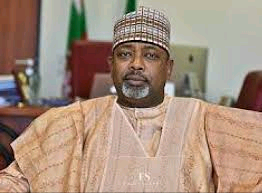
Declaring the workshop open on Wednesday, the Minister of State for Agriculture and Food Security, Senator (Dr.) Aliyu Sabi Abdullahi, said the initiative was designed to provide farmers with data-driven information to match crops with soil types, optimize fertilizer use, and promote precision agriculture.
“Soil is the foundation of agriculture, and we must take ownership of our soil and the data it produces. It’s the basis for national food security and sovereignty,” the minister said.
He explained that the collaboration with IITA and ISRIC would help establish a robust soil framework to enhance productivity across Nigeria’s agricultural value chain.
According to him, the initiative would promote location- and crop-specific fertilizer blends, encourage private sector participation, and enable experts to guide farmers on appropriate crop and fertilizer use to achieve higher yields and reduced production costs.
“This data-driven approach will also guide investments into high-potential value chains and regions, providing clarity and reducing exploratory risks for agribusinesses,” Abdullahi added.
The minister noted that while Nigeria has over 300 million hectares of land, only about 34 million hectares are currently being cultivated — a gap he described as “too wide” for a nation seeking food security.
He further disclosed plans by the ministry to establish functional soil testing laboratories in all 774 local government areas to facilitate timely soil analysis and health monitoring for farmers.
“This aligns with President Bola Ahmed Tinubu’s vision of achieving a transformed food system that guarantees food sovereignty under the mantra, ‘Eat what we produce and produce what we eat,’” he said.
Declaring the workshop closed on Thursday, Abdullahi emphasized transparency and collaboration among global partners in advancing food security. “As a sovereign nation, we must contribute meaningfully to the global food system by producing and consuming locally,” he added.
In his remarks, the Deputy Director-General of IITA, Dr. Bernard Vanlauwe, said the institution’s role was to strengthen the Nigerian Soil Information System (NISIS) through modern technology and ensure consistency with regional standards across West Africa.
“With advances in science and technology, soil information is now more accessible, accurate, and impactful than ever before,” Vanlauwe said, commending the progress Nigeria has made in developing its soil database.
Also speaking, the Project Manager of ISRIC, Netherlands, Dr. Chrow Krushid, said Nigeria remains one of the priority countries under the West Africa Soil Information Hub and will benefit from technical assistance in creating digital soil maps to guide agricultural policy and investment.