





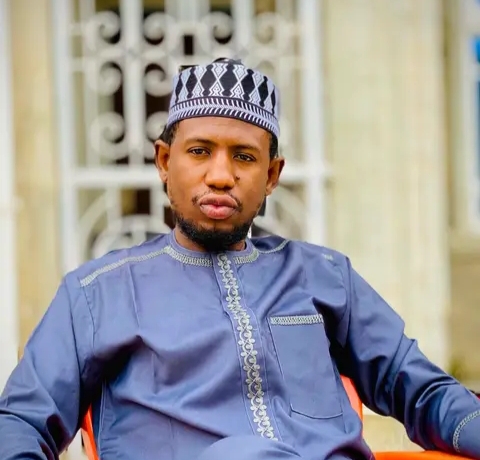
By Abdul’azi Ismail
There is a common belief that if a film is good enough, it will naturally find its audience. While that may sound inspiring, it is only partly true.
Before people can appreciate a story, they must first understand it.
That is why I believe one of the biggest obstacles preventing Kannywood from reaching its full potential is not a lack of talent, funding, or creativity. It is accessibility.
A few days ago, someone sent me a direct message expressing a desire to watch Matan Gida. The only problem was that the series has no English subtitles.
That message reminded me of an issue I have raised repeatedly over the years.
Kannywood is proudly built on the Hausa language, and that should never change.
Our language is our identity, and our culture is what makes our stories unique. But protecting our identity should not mean limiting our audience.
A great story deserves to travel beyond the people who speak its language.
The easiest way to make that happen is by including quality English subtitles in every production.
Even better, producers should consider releasing professionally dubbed English versions after the original Hausa release.
Doing so would allow millions of people across Nigeria, Africa, and the rest of the world to experience the richness of Hausa storytelling.
This philosophy also explains why I choose to write most of my movie reviews in English.
It is not because I value English more than Hausa. Rather, it is because I want our stories to reach people who would otherwise never discover them.
The results have been encouraging.
Many non-Hausa speakers have told me they started watching Kaddara after reading my reviews. Others discovered Wani Dare for the same reason. Both productions also benefited from having English subtitles.
They may not have been perfect, but they were good enough to help viewers follow the story and connect emotionally with the characters.
Unfortunately, not every production has taken that step.
I was surprised to discover that Matan Gida has no English subtitles.
The same happened with Saheeba. Its trailer featured English subtitles, creating the expectation that the series would do the same. But when the episodes were released, the subtitles were nowhere to be found.
That is a missed opportunity.
Every film produced without subtitles automatically excludes millions of potential viewers, not because they are uninterested, but because they simply cannot understand the language.
If Korean dramas, Spanish series, Indian films, and Turkish productions can find audiences around the world through subtitles and dubbing, there is no reason Hausa films cannot do the same.
The stories are already powerful.
The performances are already compelling.
The culture is already rich.
What remains is making those stories accessible.
This is, therefore, an appeal to every Hausa filmmaker, producer, and distributor: treat English subtitles as an essential part of filmmaking, not an optional extra.
Plan for them from the beginning. And where possible, invest in quality English dubbing for wider distribution.
Kannywood has everything it needs to compete on the global stage. What it needs now is the willingness to speak to the world without abandoning the language that makes it unique.
Sometimes, the distance between a local hit and an international success is nothing more than a few lines of translated text.
Abdulaziz Ismail writes from Kano and can be reached via ilileecakes@gmail.com


