





Christiana Gokyo, Jos
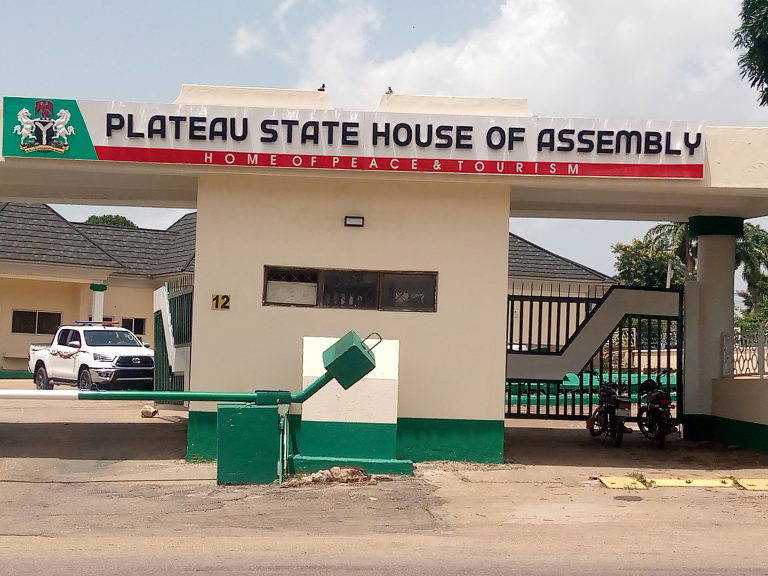
The Plateau State House of Assembly has opened a one-day public hearing on a bill seeking to provide for the protection and regulation of the rights of women and girls in Plateau State to inherit the property, benefits, and privileges of deceased husbands and parents, as well as for other related matters, 2025.
The bill was sponsored by Rt. Hon. Naanlong Daniel Gapyil, Member representing Mikang Constituency, and co-sponsored by Hon. Daniel Nanbol Listcik, Hon. Wallangko Ibrahim Sylvanus, and Hon. Eli Ankala Bako.
While addressing participants at the public hearing, the Chairman of the Committee on Judiciary, Ethics and Privileges, Kalamu Dal, noted that the bill became necessary to address the persistent injustice suffered by women and girls, often reinforced by cultural practices.
He explained that the bill seeks to protect and regulate the inheritance rights of women and children in Plateau State in line with Section 42 (1 & 2) of the 1999 Constitution of the Federal Republic of Nigeria (as amended).
According to him, the bill guarantees the right of women and children to inherit the self-acquired property, benefits, and privileges of a deceased husband or father who dies intestate, while also preserving relevant customary principles.
He further stated that the bill provides for equitable distribution of property among widows, children, parents, and siblings; dispute resolution through mediation by the Gender and Equal Opportunities Commission; and jurisdiction vested in the High Court, Family Court, and Area Courts.
It also outlines offences and penalties to deter unlawful disinheritance and mismanagement of estates.
The bill equally defines the roles of the Ministry of Women Affairs and Social Development, the Gender and Equal Opportunities Commission, and other relevant agencies in sensitisation, legal aid, and community outreach.
The chairman added that by enacting the bill, Plateau State would reaffirm its commitment to gender equity, family justice, and the protection of vulnerable members of society.
Also speaking, the Chairman of the Committee on Women Affairs and Social Development, Sylvester Wallanko, noted that if passed and assented to, the bill would address many cultural challenges affecting families.
In her submission, the Chairperson of the Gender and Equal Opportunities Commission, Plateau State, Olivia Daziam, said the bill would bring succour to women and girls.
She stressed that no individual should be denied entitlement on the basis of sex, age, or circumstances of birth.
She added that the commission had identified minor typographical and structural issues and submitted recommendations and a memorandum to assist the committee in its deliberations.
According to her, the engagement provides an opportunity to strengthen family justice, protect vulnerable persons, and promote gender equity. She urged stakeholders to support the bill.
She also appreciated the speaker and members of the assembly for their commitment and expressed confidence that the bill would be passed and effectively implemented.
“This bill is not just about inheritance; it is about justice. It is about equity. It is about ensuring that no woman or girl is denied her rightful place within her family,” she said.
Chairman of the Plateau State Council of the Nigerian Union of Journalists (NUJ), Ayuku Pwajok, while presenting a memorandum, disclosed that journalists have documented numerous cases of injustice against women and called for strong implementation mechanisms.
She cited Section 22 of the 1999 Constitution, which mandates the media to uphold accountability and responsibility in governance.
“As journalists, we have had the privilege—and sometimes the burden—of documenting the lived realities of many women and girls across our communities,” she said.
“We have encountered stories of widows dispossessed of their homes, daughters denied inheritance because of their gender, and families pushed deeper into poverty due to discriminatory practices that have no place in a just society.
She noted that the absence of clear legal protections has led to silent suffering, as many victims fear stigma or lack awareness. She added that weak laws make justice difficult to pursue and allow impunity to thrive.
According to her, a strong legal framework would not only protect victims but also empower the media to hold violators accountable.
She, however, emphasised that passing the bill is only the first step, noting that effective implementation would require public awareness, community engagement, and collaboration with traditional and religious leaders.
She also highlighted concerns regarding Clause 4 on the distribution of estates, noting that the realities of female-headed households were not adequately recognised.
She urged stakeholders to give the bill serious consideration in the interest of justice and equity.
Also speaking, co-sponsor of the bill, Hon. Daniel Nanbol, assured stakeholders that the committee would ensure that recommendations are incorporated in line with global standards.
A member of the committee, Adamu Aliyu, also assured that the 10th Assembly would ensure the bill is passed into law.
Stakeholders at the public hearing included traditional rulers; the Ministries of Women Affairs, Justice, and Lands and Survey; the judiciary; FIDA; NBA; NHRC; PIDAN; the Federation of Muslim Women; the Public Complaints Commission; NCWS; JNI; and the Association of Local Government Council Chairmen’s Wives, among others.


