



From Muawuya Bala Idris, Katsina
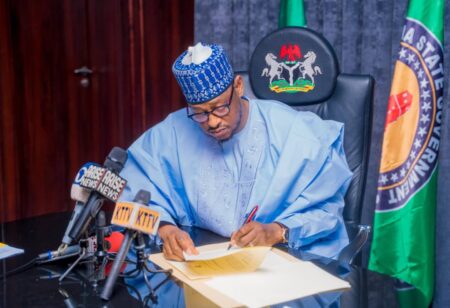
Katsina State Governor, Malam Dikko Umaru Radda, has launched a $1 million food security project aimed at strengthening the resilience of vulnerable farming communities against the recurring challenges of floods and drought in the state.
The project, titled “Protecting Food Security Against Recurring Floods and Drought,” is organised by the Katsina State Development Management Board (KTDMB) in collaboration with the Ministry of Budget and Economic Planning, with support from development partners and implementation by Mercy Corps Nigeria.
Speaking at the launch held at Hillside Hotel, Katsina, Governor Radda described climate change as a reality that requires collective action and practical interventions.
He stressed that protecting the environment and agricultural production was essential to improving food security, livelihoods and the economic well-being of the people.
“Climate change is a reality. We have no way to hide from it, and we must confront it with all the capacity and ability so that together we can fight it,” Governor Radda said.
The governor noted that Katsina is an agrarian state whose people depend heavily on agriculture for their livelihoods, making interventions that protect land and water resources, improve agricultural productivity and strengthen food systems particularly important.
“Anything that will protect our environment, anything that will improve the environment and enable us to produce more, feed more and generate more income is something that all of us need to work towards,” he said.
Governor Radda assured development partners of the state government’s continued cooperation and support, while urging the benefiting local governments to provide maximum cooperation to ensure that the intervention achieves its intended objectives.
He directed the Ministry of Budget and Economic Planning and KTDMB to ensure effective coordination among the relevant ministries, departments and agencies involved in the project, as well as strong synergy between development partners and the three beneficiary local government areas.
The governor further directed the Ministry of Environment and the Department of Climate Change to study the intervention and assess the possibility of scaling up similar climate-resilience initiatives to other local government areas across the state.
“Our aim is for every local government in the state to benefit from this laudable initiative,” Governor Radda said.
Earlier, the Executive Secretary of the Katsina State Development Management Board, Dr Mustapha Shehu, said the project was funded with $1 million for a period of one year and would initially be implemented in Bindawa, Bakori and Kafur Local Government Areas.
He said the three LGAs were selected based on available data and identified vulnerabilities.
Dr Shehu disclosed that baseline assessments were already being conducted across the three beneficiary LGAs to establish benchmarks and generate data that could guide the possible expansion of the intervention beyond the initial locations.
He said the project would be coordinated by the Ministry of Budget and Economic Planning and implemented in collaboration with relevant ministries, including Agriculture, Livestock Development, Youth, Women Affairs, and Security and Home Affairs.
The Executive Secretary recalled previous development interventions implemented in Katsina through partnerships with organisations including Mercy Corps, noting that such collaborations had contributed to strengthening community resilience, peace and social cohesion.
He expressed hope that the food security intervention would generate wider conversations and support for protecting vulnerable communities and strengthening food systems across the state.
In his project overview, the Programme Manager of Mercy Corps Nigeria, Mr Philip Ikita, said the intervention was designed in response to several challenges affecting vulnerable farming communities, including recurring floods and droughts, soil erosion, poor storage facilities, post-harvest losses, poverty, limited drainage and inadequate water management.
Mr Ikita explained that the project would adopt a prevention-first approach, focusing on protecting existing agricultural assets, restoring degraded land, improving water management, strengthening food storage systems and building the capacity of communities to prepare for climate-related shocks.
He said the project would construct soil bunds, contour barriers and drainage systems on 150 selected farms, restore degraded land through vegetation, and engage 180 workers under a cash-for-work arrangement, with restoration tools provided.
The programme manager added that at least 12 solar-powered water systems would be rehabilitated to support livestock and farming communities, particularly during the dry season, while water committees and technicians would also be trained.
He said the project would further rehabilitate 150 food storage facilities, distribute 500 hermetic bags and train households on improved food storage practices to reduce post-harvest losses.
According to him, the intervention would also train farmers in climate-smart agriculture, support livelihood diversification for about 300 women, and build community capacity in hazard mapping, contingency planning and preparedness for changing weather conditions.
Mr Ikita said priority would be given to smallholder farming households, households dependent on grazing land, women and women-headed households, vulnerable families with young children, youths participating in cash-for-work activities, persons with disabilities and other highly vulnerable households.
He explained that implementation would commence with assessments and procurement, followed by construction and land restoration, training and strengthening of community committees, and subsequently handover, inspection and project close-out within the 12-month implementation period.
On his part, the Commissioner for Budget and Economic Planning, Hon Malik Anas, commended Mercy Corps Nigeria and KTDMB for the intervention, describing it as a timely initiative aimed at strengthening the resilience of vulnerable farming communities to climate-related shocks.
Hon Anas said the project would contribute to improving food security and livelihoods by strengthening the capacity of communities to withstand the effects of floods and drought.
He called on relevant ministries, departments and agencies to actively participate in the implementation, monitoring and evaluation of the project to ensure that its objectives were achieved.
The commissioner stressed the importance of effective grassroots monitoring, urging project personnel and relevant stakeholders to maintain a strong presence in the benefiting local governments and ensure proper reporting of activities and outcomes.
He congratulated Mercy Corps Nigeria and KTDMB for bringing the intervention to Katsina State and called for sustained collaboration among all stakeholders to ensure its success.