





From Sani Gazas Chinade, Damaturu
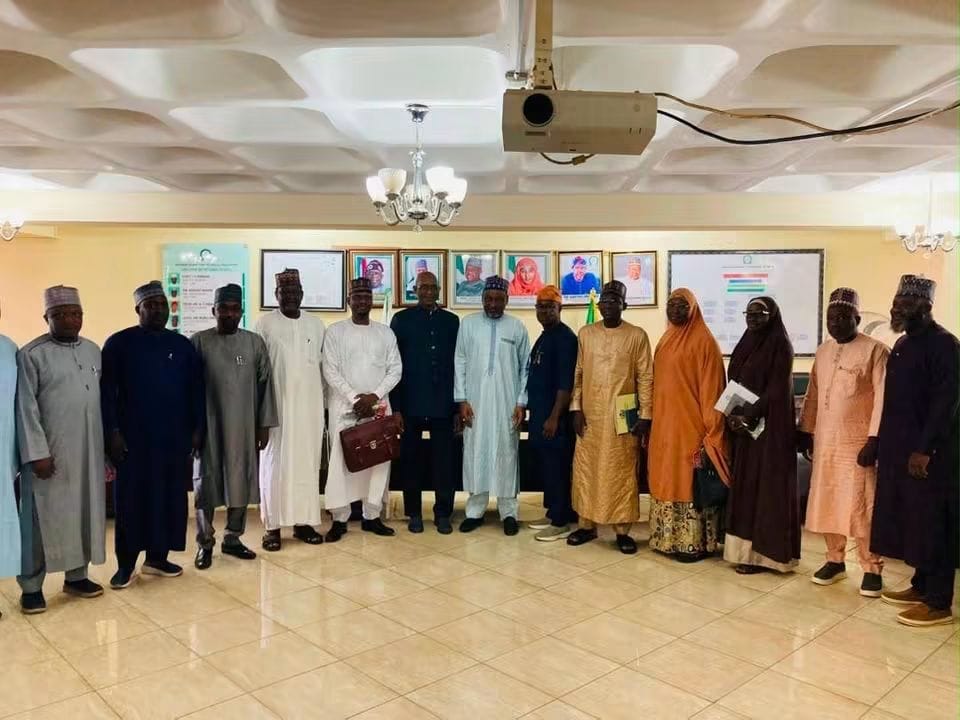
The Steering Committee of the proposed Yobe Institute for Biomedical Engineering Technology (YIBET) has paid a working visit to the National Board for Technical Education (NBTE) in Kaduna to seek regulatory guidance, institutional partnership and technical support for the successful establishment and take-off of the institute.
In a press statement signed by Ibrahim Baba Saleh, Media Coordinator/Liaison Officer, Office of the Secretary to the Yobe State Government, the visit was described as part of ongoing efforts to lay a solid foundation for the proposed specialised technical institution.
The NBTE, Nigeria’s apex regulatory body for technical and vocational education and the National Skills Qualifications Framework (NSQF), is expected to play a key role in the accreditation, curriculum development and institutional framework of YIBET.
The YIBET delegation, led by the Chairman of the Steering Committee, Prof. Mohammed Bello Kawuwa, alongside the Institute’s Technical Consultant, Dr. Abdulkareem Karasuwa, was received by the Executive Secretary of NBTE, Prof. Idris Mohammed Bugaje, accompanied by senior management officials and directors of key departments responsible for institutional development, skills qualifications, curriculum standards and quality assurance.
Speaking during the engagement, Prof. Kawuwa said the visit was aimed at formally introducing the proposed institute to the country’s foremost technical education regulator and seeking its partnership, technical guidance and institutional support.
He explained that the establishment of YIBET represents one of Governor Mai Mala Buni’s strategic investments in human capital development, healthcare innovation and technological advancement.
According to him, the institute is envisioned as a Centre of Excellence in Biomedical Engineering Technology that will serve not only Yobe State but also Nigeria and the West African sub-region.
Prof. Kawuwa said YIBET was conceived to bridge existing gaps in biomedical engineering education, clinical engineering services, healthcare equipment management, medical technology innovation and the training of highly skilled technical professionals capable of supporting modern healthcare systems.
He added that the Buni administration remained committed to providing the enabling environment, infrastructure and legislative backing required for the successful establishment of the institute.
He appealed to NBTE to provide the necessary regulatory support, technical expertise and institutional guidance to ensure that YIBET commences operations in accordance with national and international best practices.
Responding, the NBTE Executive Secretary, Prof. Idris Bugaje, commended Governor Mai Mala Buni for what he described as visionary leadership and sustained investment in healthcare infrastructure, education and human capital development.
Prof. Bugaje described the proposed Yobe Institute for Biomedical Engineering Technology as a bold and forward-looking initiative that aligns with the Federal Government’s efforts to expand technical education, strengthen healthcare systems and produce industry-ready professionals equipped with relevant 21st-century skills.
He assured the delegation of NBTE’s commitment to partnering with Yobe State in advancing biomedical and clinical engineering technology.
According to him, the proposed institute has the potential to become a national reference point for specialised technical education and healthcare technology training.
Prof. Bugaje observed that the rapid pace of technological advancement in the healthcare sector had made it necessary to review existing academic programmes.
He disclosed that NBTE was already considering the unbundling of the current Higher National Diploma (HND) programme in Biomedical Engineering Technology into more specialised programmes that would reflect emerging global trends and industry demands.
He therefore invited YIBET to actively collaborate with the Board in shaping the proposed new curriculum and contributing to ongoing national reforms in biomedical and clinical engineering education.
The Executive Secretary also advised the Yobe State Government to expedite the enactment of the law establishing the institute and the appointment of a substantive Director-General.
He explained that the two steps would facilitate the commencement of formal regulatory processes, programme accreditation and institutional development.
During the technical session, YIBET’s Technical Consultant, Dr. Abdulkareem Karasuwa, stressed the importance of incorporating innovation, research, entrepreneurship and emerging technologies into the institute’s academic programmes.
He advocated the development of industry-driven curricula aligned with the National Skills Qualifications Framework (NSQF) and other international competency standards to ensure that graduates acquire practical and globally competitive skills capable of addressing contemporary healthcare challenges.
Dr. Karasuwa also emphasised the need for strong collaboration among academia, industry and healthcare institutions to position YIBET as a hub for research, innovation, equipment maintenance, technology transfer and workforce development in biomedical and clinical engineering.
Following extensive deliberations, Prof. Bugaje directed relevant NBTE departments to immediately commence technical engagements with the YIBET Steering Committee on institutional establishment requirements, curriculum development, accreditation procedures, statutory guidelines, quality assurance mechanisms and other regulatory processes necessary for the smooth take-off of the institute.
The discussions also explored opportunities for long-term collaboration in specialised skills development, curriculum innovation, staff capacity building, research partnerships and the advancement of biomedical engineering education in Nigeria.
A major highlight of the visit was the presentation of NBTE souvenirs to the Chairman and Vice Chairman of the YIBET Steering Committee as well as the Technical Consultant, in recognition of the strategic engagement and the shared commitment to establishing a world-class biomedical engineering institute in Yobe State.


