






By Ekaette Okon Joseph
When President Bola Ahmed Tinubu visited Uyo on Nov. 6, 2026, and approved the request for the establishment of the Ibom Deep Sea Port, he gave fresh momentum to one of Akwa Ibom’s most consequential economic ambitions.
For Governor Umo Eno, the presidential commitment strengthens a development vision that places maritime infrastructure at the centre of the state’s next phase of economic growth.
That vision is captured in ARISE Agenda 2.0, the development blueprint for 2027 to 2031. Its central proposition is that Akwa Ibom must move beyond dependence on government expenditure and expand its productive economy through private investment, industrialisation, agriculture, tourism and international trade.
The state’s geographical position provides a compelling foundation for this ambition.
Akwa Ibom’s coastline along the Gulf of Guinea offers access to important regional and international maritime routes. Of particular significance are the Oron waterways, which provide a strategic connection towards neighbouring countries, including Cameroon and Equatorial Guinea.
These waterways form part of a wider maritime network linking West and Central Africa to international commercial routes extending towards Europe.
This geographical advantage gives the state an opportunity to participate more actively in regional trade.
With appropriate port infrastructure, efficient transportation and supporting industries, Akwa Ibom could emerge as an important maritime gateway for businesses seeking access to markets across Sub-Saharan Africa.
The Ibom Deep Sea Port is central to that possibility.
Following President Tinubu’s intervention, Governor Eno explained that the federal approval addressed important financing arrangements, particularly the sovereign guarantee expected to strengthen investor confidence.
This is significant because a project of this scale requires substantial capital, credible partners and sustained institutional support.
The proposed port is intended to serve markets beyond Nigeria, including Cameroon, Equatorial Guinea, Sao Tome and Principe, Gabon and other Central African countries.
Its potential extends to shipping, cargo handling, warehousing, freight services, marine engineering and manufacturing.
For Akwa Ibom, the economic benefits would extend beyond port operations. Businesses in the Niger Delta and neighbouring regions could gain improved access to international markets, while new commercial activities would create opportunities for employment and enterprise.
The Oron maritime corridor deserves particular attention in this arrangement. Its development should complement the deep seaport through improved water transportation, modern landing facilities, coastal infrastructure and maritime services.
Such investments would connect coastal communities to emerging commercial opportunities while strengthening regional trade.
This is the practical meaning of the blue economy: converting maritime resources and geographical advantages into sustainable economic activity.
Agriculture offers another important connection. Under ARISE 2.0, Governor Eno has outlined plans to move farmers from subsistence production to large-scale commercial agriculture through mechanisation, farm settlements, modern technology and expanded processing.
Akwa Ibom has considerable potential in oil palm, cassava, fisheries and other agricultural commodities. However, increased production requires reliable processing, storage and transportation facilities. A functional seaport would provide an important route for agricultural exports and processed products seeking access to international buyers.
The proposed Ibom Industrial City would strengthen this relationship. Industries located around the port could process agricultural produce, manufacture goods and provide services required by maritime businesses.
The success of both projects will depend on coordinated investment, reliable power, road connectivity and access to markets.
The administration’s aviation investments complete another part of this economic framework. The expansion of Ibom Air and the development of Victor Attah International Airport, including its international operations, offer opportunities to improve passenger and cargo connectivity.
Together, the airport, seaport and supporting road infrastructure could strengthen Akwa Ibom’s position as a destination for investment, commerce and tourism. The objective should be an integrated transport system that connects producers, manufacturers, investors and international markets.
Uyo’s urban transformation and the development of the ARISE Palm Resort also support this wider ambition. As commercial activities expand, demand for hospitality, professional services, accommodation and tourism facilities will increase.
However, infrastructure alone does not guarantee economic transformation. The success of ARISE 2.0 will depend on implementation, investment commitments and the ability to translate projects into measurable benefits.
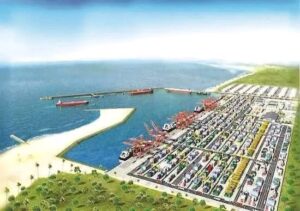

The state must sustain engagement with prospective investors, provide clear implementation timelines and ensure transparency in the financing and delivery of the seaport. The Governor’s emphasis on measurable milestones in engagements with partners, including Africa Global Logistics, is therefore important.
Human capital development must receive equal attention. Port operations, marine engineering, shipping, logistics and industrial management require specialised skills. Akwa Ibom’s young people should be prepared through technical education, professional training and partnerships with relevant institutions.
Coastal communities must also participate in the benefits. Fishing livelihoods, environmental protection, improved landing facilities and access to new commercial opportunities should be incorporated into the development framework. The people whose lives and livelihoods are connected to the Atlantic should not be left behind.
Security is equally fundamental. Safe waterways, effective maritime surveillance and cooperation among Gulf of Guinea countries are essential to protecting commercial vessels, attracting investors and sustaining regional trade.
Akwa Ibom’s maritime advantage is not a new discovery. What ARISE 2.0 offers is an opportunity to convert that advantage into productive infrastructure and lasting economic value.
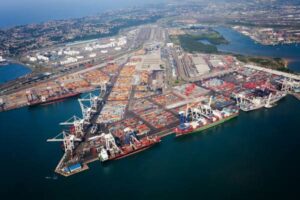

The measure of success will be the industries established, cargo handled, businesses created, exports delivered and jobs secured. When the first commercial vessels berth at the Ibom Deep Sea Port, the achievement should represent more than the completion of an infrastructure project.
It should mark the beginning of a new economic relationship between Akwa Ibom, the African continent and international markets.
From Oron to the wider world, the ambition is to make Akwa Ibom’s coastline a centre of trade, investment and prosperity. Okon Joseph is the special.assistant media to governor Umo Eno of.Akwa Ibom.state


