





By Atiku Sarki, Abuja
The Minister of Agriculture and Food Security, Senator Abubakar Kyari, has declared that the future of African agriculture will be determined not by the continent’s natural resources alone but by the quality of its science, the strength of its institutions, and its commitment to innovation.
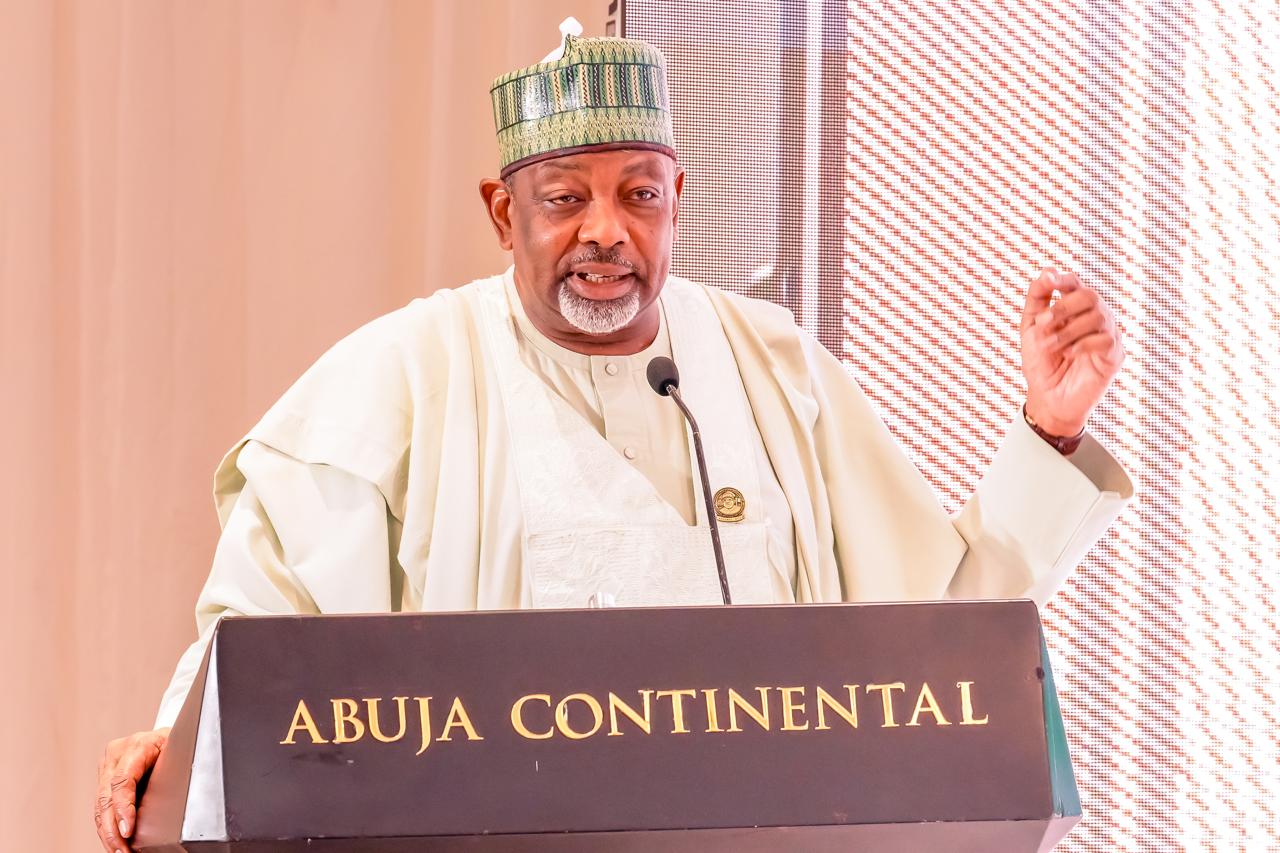
Speaking on Wednesday at the 9th Africa Agriculture Science Week (AASW9) in Abuja, Kyari urged African countries to make greater investments in research, innovation, and scientific institutions to achieve sustainable agricultural transformation and food security.
According to the minister, while global partnerships remain valuable, Africa must increasingly rely on its own scientists, research institutions, and innovation systems to drive agricultural development.
“The future of African agriculture will be shaped not by the resources we possess alone, but by the quality of our science, the strength of our institutions, and our commitment to innovation,” Kyari said.
He stressed that sustainable agricultural transformation must be driven by African knowledge, leadership, and investment, noting that no country has achieved lasting agricultural prosperity without prioritising science.
Drawing lessons from countries such as Japan, the Republic of Korea, Brazil, India, and China, Kyari said their agricultural success was built on sustained investment in research, innovation, and strong institutions that translated scientific discoveries into food security and economic growth.
“The lesson is clear: prosperous agriculture is built on research, strategic investment, effective institutions, and continuous innovation,” he said.
The minister noted that for Nigeria, Africa’s largest economy and one of its leading agricultural producers, future food security will depend not only on expanding cultivated land but also on expanding knowledge through science and innovation.
He said the administration of President Bola Ahmed Tinubu has placed agricultural research at the centre of its transformation agenda, recognising that increasing production alone is insufficient to achieve sustainable food systems.
Kyari explained that the Federal Government is strengthening agricultural production alongside research, financing, mechanisation, extension services, value addition, and market development, adding that every successful agricultural intervention must be rooted in sound scientific evidence.
He described agricultural research as a strategic national investment that enhances productivity, resilience, competitiveness, and long-term prosperity.
The minister highlighted Nigeria’s extensive agricultural research network, describing it as one of the most comprehensive in Africa.
He said the country’s specialised research institutions continue to generate technologies, build scientific capacity, and support innovation across the agricultural value chain.
According to him, the Agricultural Research Council of Nigeria (ARCN) remains at the centre of the country’s agricultural research system by providing strategic leadership, policy direction, quality assurance, and coordination among research institutes, universities, Federal Colleges of Agriculture, extension services, and the private sector.
Kyari also reaffirmed Nigeria’s commitment to strengthening partnerships with the Forum for Agricultural Research in Africa (FARA), the African Union, AUDA-NEPAD, CGIAR Centres, Regional Economic Communities, and other stakeholders to build a resilient and competitive African agrifood system.
He urged participants at the conference to move beyond discussions by investing in science, empowering researchers and young innovators, and accelerating the commercialisation of African technologies.
Earlier, the Minister of State for Agriculture and Food Security, Senator Dr. Aliyu Sabi Abdullahi, welcomed delegates to Nigeria and expressed delight that Abuja was hosting the 9th Africa Agriculture Science Week.
He said the conference, themed “Innovation and Partnership for Resilient and Sustainable Agrifood Systems in Africa,” brings together scientists, policymakers, investors, development partners, farmers, and innovators to discuss emerging technologies, climate-resilient agriculture, nutrition, healthy food systems, and financing mechanisms for scaling agricultural innovations across the continent.
Abdullahi emphasised that science is no longer confined to laboratories but has become the engine driving agricultural productivity, resilience, and inclusive economic growth in Africa.


