



From Joseph Asegba, Yola
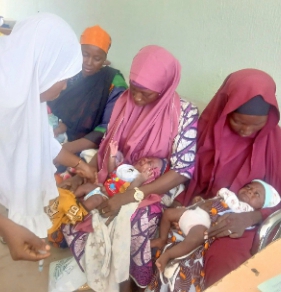
Adamawa State is benefiting from the ROK/UNICEF Zero-Dose Project, a partnership involving the Republic of Korea (ROK), the Federal Government of Nigeria, and UNICEF aimed at strengthening routine immunisation services, particularly in underserved, hard-to-reach, and insecurity-affected communities.
The project targets zero-dose children—those aged above 11 months who have never received any vaccine—as well as under-vaccinated children who have not completed their recommended immunisation schedules.
Speaking during a media briefing in Yola on Monday, UNICEF Health Officer at the Bauchi Field Office, Mr. Patrick Akor, said the intervention was developed following assessments of the impact of the COVID-19 pandemic on healthcare delivery systems.
According to him, the Republic of Korea initiated the support to help restore essential health services and strengthen healthcare systems disrupted by the pandemic.
“The intervention was designed to reinforce healthcare systems by strengthening routine immunisation in selected states,” Akor said.
He explained that the project specifically targets zero-dose children who have not received their first vaccine dose despite being older than 11 months, as well as under-vaccinated children who have not completed their recommended immunisation schedules.
“In Adamawa, the project focuses on reaching zero-dose children and under-vaccinated children, particularly those living in insecurity-affected communities,” he said.
Akor added that the initiative seeks to restore and strengthen healthcare systems disrupted by COVID-19 by ensuring vaccine availability, training healthcare workers, improving data collection, and enhancing responses to disease outbreaks such as cholera and measles.
Also speaking at the briefing, the Adamawa State Immunisation Officer, Mr. Umar Bahuli, said the programme has already recorded significant achievements, especially in communities previously identified as having low routine immunisation coverage.
Bahuli disclosed that, according to the latest monthly review, the project had successfully reached 1,212 previously unvaccinated children aged between 12 and 59 months.
He explained that the intervention adopts an integrated approach by combining immunisation services with other essential healthcare interventions.
According to him, beneficiaries also receive malnutrition screening services, while eligible girls aged between nine and 14 years are provided with the Human Papillomavirus (HPV) vaccine.
The state immunisation officer described the nine-month initiative as a critical tool for improving access to vaccines and mobilising eligible children across participating communities.
Meanwhile, Local Immunisation Officer, Mr. Mohammed Goni, commended UNICEF, the Republic of Korea, and other development partners for their sustained support since the project’s inception.
He noted that one of the programme’s major achievements has been the uninterrupted availability of vaccines throughout the intervention period.
According to Goni, no vaccine stock-outs have been recorded at either ward or health facility levels, enabling healthcare workers to maintain consistent service delivery.
The initiative is currently being implemented in nine Local Government Areas, covering 96 wards and 200 health facilities across Adamawa State.
Beneficiary LGAs include Yola South, Hong, Gombi, Maiha, Lamurde, Mubi North, and Mubi South, among others.
Among its notable achievements, the project has reached 1,212 previously unvaccinated children aged 12–59 months, maintained uninterrupted vaccine supplies across health facilities, and integrated immunisation services with malnutrition screening and HPV vaccination for eligible girls aged nine to 14 years.
Key strategies employed by the programme include strong community engagement through traditional rulers, religious leaders, and community influencers, as well as innovative approaches designed to identify and reach vulnerable children in underserved communities.