





By Sani Sani Surajo Abubakar
The true measure of a responsive government lies not only in the number of projects it executes but also in its ability to improve the lives of its people.
While roads, schools, hospitals and other public infrastructure remain vital pillars of development, policies that directly empower citizens economically often leave the most enduring legacy.
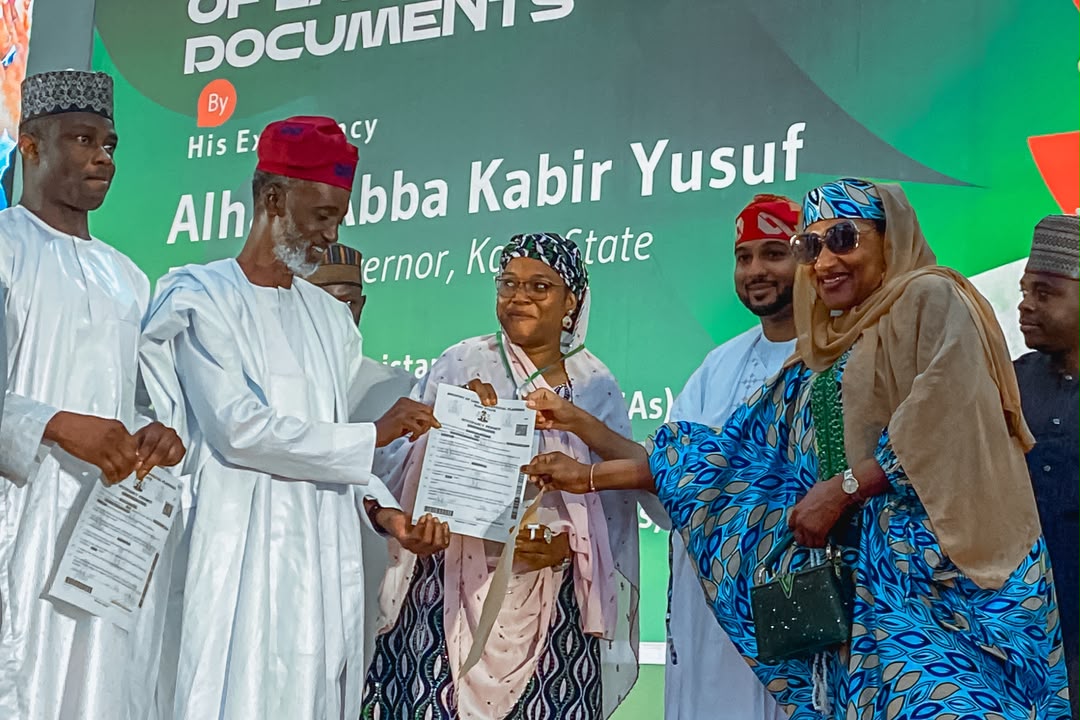
This philosophy was demonstrated by the administration of Kano State Governor, Alhaji Abba Kabir Yusuf, during the historic land allocation exercise held on August 1 and 2, 2026, at the Coronation Hall of the Kano State Government House.
The event, which attracted political appointees, party officials and government functionaries, marked one of the largest land allocation programmes ever undertaken by a state government in Nigeria for political office holders and grassroots political stakeholders.
Far from being an ordinary distribution of plots, the initiative represents a deliberate strategy to create wealth, promote homeownership, strengthen economic security and reward loyal service.
On the first day, the administration allocated plots of land to 402 political appointees, including Senior Special Assistants (SSAs), Personal Assistants (PAs), Senior Special Reporters (SSRs) and Senior Reporters (SRs), in recognition of their contributions to governance and public service.
On the second day, the programme expanded to include Polling Unit Agents (Yan Akwati) representing the state’s 11,222 polling units across the 44 local government areas.
For many observers, the inclusion of polling unit agents was particularly significant. These individuals form the backbone of political mobilisation and democratic participation at the grassroots. Their dedication before, during and after elections often goes unnoticed despite the critical role they play in sustaining democracy.
By extending the programme to them, the Governor affirmed that every level of service deserves recognition.
Represented by the Secretary to the State Government, Alhaji Umar Faruk Ibrahim, Governor Yusuf explained that the initiative was conceived with a broader developmental vision.
“This provision is not simply about the allocation of plots of land; it is about reducing the housing deficit, empowering people through property ownership, creating wealth for families, and providing young people, women and vulnerable groups with a solid foundation upon which they can build a future.”
These words capture the essence of the programme.
Across the world, land ownership remains one of the most reliable pathways to economic advancement.
Land provides financial security, appreciates over time, serves as collateral for credit, supports business development and creates investment opportunities.
It is an asset capable of transforming the economic future of individuals and families.
The Governor further reaffirmed his administration’s philosophy by stating that leadership should be judged not by promises made but by promises fulfilled.
According to him, the land allocation exercise is another demonstration of his government’s determination to honour its commitments to the people of Kano State.
This message extends beyond the event itself. Since assuming office, Governor Yusuf has consistently maintained that governance should be people-centred, focusing on policies that produce measurable improvements in the welfare of citizens.
The land allocation programme aligns squarely with that vision.
In his welcome address, the Commissioner for Land and Physical Planning, Abduljabbar Muhammad Umar, assured beneficiaries that the allocated plots are located within government-approved layouts professionally designed in line with modern urban planning standards.
He noted that the layouts include essential infrastructure such as access roads, drainage systems, public utilities and other facilities necessary for sustainable urban development, thereby enhancing both the value and usability of the land.
One of the most striking revelations during the event was the Commissioner’s disclosure that the number of plots allocated under Governor Abba Kabir Yusuf’s administration has surpassed the combined allocations made during the administrations of former Governors Rabiu Musa Kwankwaso and Abdullahi Umar Ganduje.
This comparison underscores the unprecedented scale of the programme and reflects the administration’s commitment to expanding opportunities for a broader segment of the population.
Beyond rewarding beneficiaries, the programme is expected to stimulate economic activity across multiple sectors.
Land ownership naturally drives investment in housing construction, building materials, engineering, architecture, surveying, legal services and other allied professions.
As beneficiaries begin developing their plots, thousands of additional jobs are expected to be created throughout the construction value chain.
In addition, increased property ownership will contribute to urban expansion, boost internally generated revenue through property-related transactions and promote more orderly physical development across the state.
From a social standpoint, owning land provides families with stability, dignity and long-term security.
For many beneficiaries, the allocated plots represent valuable assets that can be passed on to future generations, creating lasting family wealth and reducing economic vulnerability.
The initiative also strengthens confidence in public service. Rewarding dedication encourages greater commitment among political office holders and grassroots mobilisers while fostering a culture of loyalty, accountability and excellence in governance.
At a time when many Nigerians are grappling with economic hardship, initiatives that provide citizens with appreciating assets rather than short-term financial assistance deserve recognition.
Land is a resource whose value generally increases over time, making it one of the most sustainable forms of economic empowerment.
Governor Abba Kabir Yusuf’s land allocation programme therefore represents far more than a welfare intervention.
It is a strategic investment in people, a catalyst for wealth creation and an enduring legacy with the potential to transform the lives of thousands of beneficiaries.
As Kano State continues its development journey, this initiative will likely be remembered as one of the administration’s boldest efforts to combine good governance with economic empowerment.
It demonstrates that visionary leadership is not only about delivering infrastructure but also about creating opportunities that enable citizens to build lasting prosperity for themselves, their families and future generations.
Sani Surajo Abubakar is the Deputy Director of Public Enlightenment, Government House, Kano. He can be reached via: sanisurajoabubakar@gmail.com.


