





From Umar Danladi Ado,Sokoto
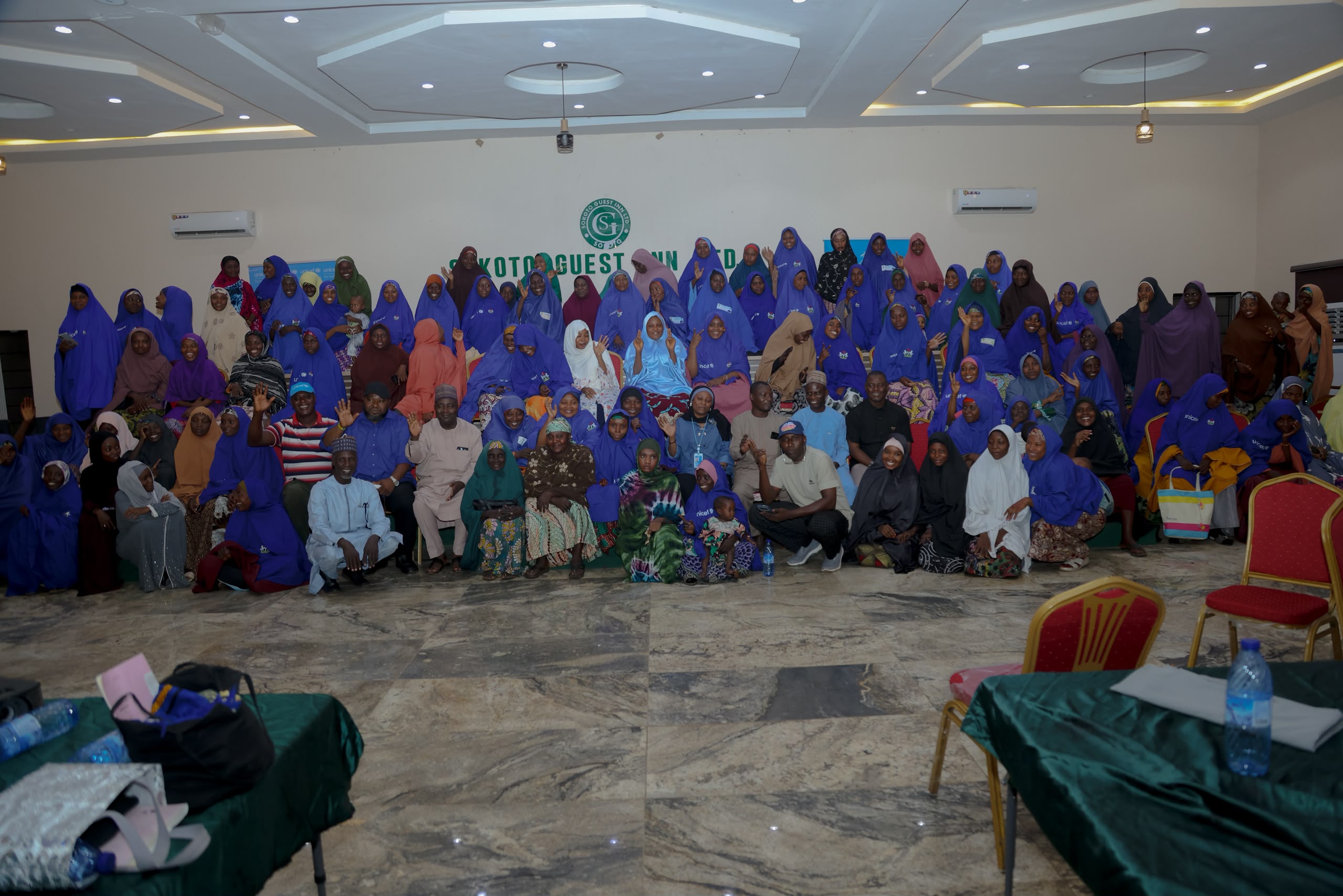
The United Nations Children’s Fund (UNICEF), in collaboration with the National Orientation Agency (NOA), has trained 120 women and girls in Sokoto State in vocational skills and provided each beneficiary with ₦154,000 in start-up capital to establish income-generating businesses.
The initiative targets women and girls in five local government areas—Sokoto North, Sokoto South, Wamakko, Dange Shuni and Yabo—with the aim of promoting economic self-reliance and strengthening household livelihoods.
The participants received training in perfume and fragrance production, bead-making and beadwork fashion design.
Some beneficiaries said the intervention would help them rebuild their livelihoods after losing their jobs, while others pledged to use their newly acquired skills to support their families and train additional women in their communities.
Fatima Abdullahi, a beneficiary from Amanawa village in Dange Shuni Local Government Area and a former UNICEF staff member, said she was grateful for the opportunity to acquire skills that could help her become self-reliant.
Fatima previously worked with UNICEF at the grassroots level, sensitising residents in remote communities on the importance of polio immunisation and the use of mosquito nets.
She said the training and start-up capital would help her pursue alternative livelihood opportunities following her disengagement from the organisation.
Another beneficiary, Hafsat Bello, also from Dange Shuni, pledged to share the skills she had acquired with other women to enable them to establish their own businesses.
“I intend to step down the training, and I promise to do that with all sense of responsibility because UNICEF has shown us that we can contribute our quota to the family with the little we are going to be making from these skills,” she said.
Similarly, Idiat Shehu, a beneficiary from Wamakko Local Government Area and another former UNICEF worker, urged women and girls to acquire vocational skills to improve their financial independence.
She said women could use the income generated from their skills to contribute to household expenses rather than depend entirely on their husbands for financial support.
“My message to fellow women is for them to learn skills, as they can even use them to be of help to their families, not necessarily waiting for their husbands to provide everything,” she said.
Idiat said losing her job had initially caused concern because it provided a measure of income security, but expressed optimism that the vocational training and start-up capital would help her establish a sustainable source of income.
“With these skills and the start-up capital given to us, I can confidently navigate, ensure stability and even impact the knowledge gained on others willing to learn,” she said.
The initiative is expected to help beneficiaries translate their newly acquired skills into small businesses, although its long-term impact will depend on their ability to establish viable enterprises and generate sustainable income.


