





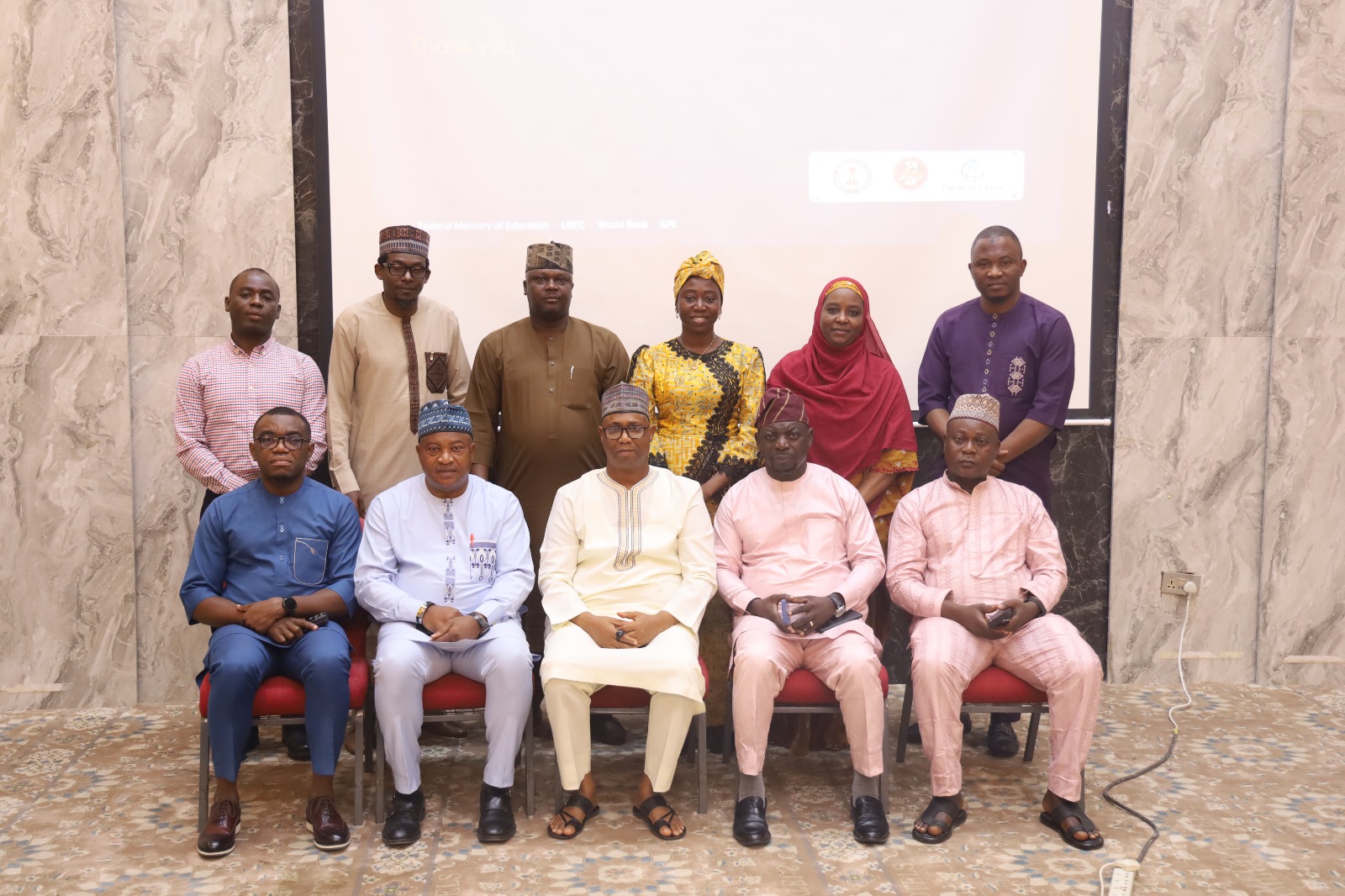
The Universal Basic Education Commission (UBEC) has urged states to strengthen decentralised financial management, accountability, and the effective utilisation of education funds to improve the quality of basic education across the country.
The Executive Secretary of UBEC, Dr. Aisha Garba, represented by the Director of Social Mobilisation, Malam Sahabo Basado, made the call during the opening of a regional thematic workshop on Result Area 3 of the HOPE-EDU Programme, focusing on Disbursement Linked Indicators (DLIs) 6 and 7, held in Kano.
Dr. Garba explained that the two indicators focus on strengthening decentralised financial management of core Universal Basic Education (UBE) funds and introducing annual school grants for public primary schools to address their immediate development needs.

She noted that the initiative would empower school management to make timely decisions on minor renovations and other essential requirements, thereby creating safer, more conducive, and child-friendly learning environments.
According to her, effective implementation of the programme requires transparent financial management systems, timely release of funds, adequate counterpart funding, clear operational regulations, and improved capacity among officials responsible for managing resources at various levels.
She urged participants to use the workshop to identify implementation challenges and develop practical solutions that would ensure the successful delivery of the programme.
The Executive Secretary further emphasised that the success of HOPE-EDU would be measured by its impact at the state, Local Government Education Authority (LGEA), and school levels.
She assured participants of the Commission’s continued technical support and coordination with development partners.
Earlier, the HOPE-EDU Programme Manager, Mr. Moyiwa Aleshil, said the workshop marked the first phase of the Result Area 3 thematic regional workshops, bringing together relevant officials from North-East and North-West states to strengthen their readiness for implementing DLIs 6 and 7.
He disclosed that the HOPE-EDU Programme became effective on 27 February 2026 and had entered its implementation phase, stressing that the focus was now on translating plans into tangible results.
Mr. Aleshil explained that the workshop was designed to build the capacity of state focal officers, clarify implementation responsibilities, and ensure effective coordination among Directors of Finance and Accounts, Social Mobilisation, and Procurement, alongside their designated supporting officers.
He urged participants to actively engage with resource persons, share experiences, and develop state-specific action plans, noting that the success of the programme would largely depend on their commitment and effective participation.
He expressed appreciation to the Kano State Government and other stakeholders for their support and hospitality, reaffirming the programme’s commitment to improving access to quality basic education for every Nigerian child.


