





By Abdulkarim Ibrahim and Zeenat Saad
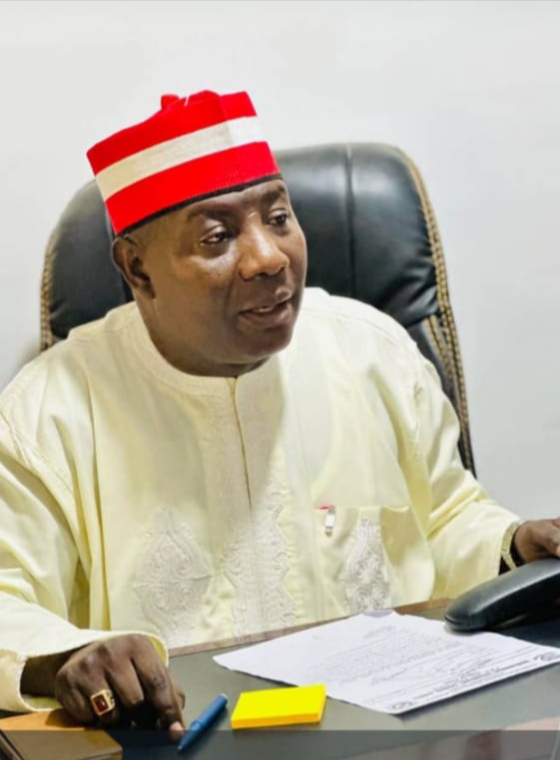
In the often slow-moving terrain of public administration, where reforms can take years to crystallize, the first year of Hon. Rabi’u Sale Gwarzo as Executive Secretary of the Kano State Senior Secondary Schools Management Board (KSSSSMB) stands out as a rare burst of speed, structure and substance.
It is a story not just of activity, but of intentional transformation, firmly rooted in the Kano First agenda championed by His Excellency, Abba Kabir Yusuf.
From the outset, Gwarzo approached the assignment with the mindset of a system builder, not merely an administrator.
His stewardship reflects a clear understanding that education reform is not a single intervention, but a synchronized movement across security, quality, infrastructure, human capital and innovation.
Safety as a Learning Enabler:
One of the earliest and most impactful decisions under his leadership was the recruitment of 1,600 watchmen across secondary schools in the state.
At a time when concerns over school safety could easily undermine enrollment and performance, this move provided immediate reassurance.
It sent a powerful message that learning cannot thrive where fear exists. By strengthening on-schools security, Gwarzo effectively laid the psychological and physical foundation upon which every other reform could stand.
Reclaiming Academic Excellence:
Understanding that no education system can rise above the quality of its teachers, Gwarzo moved decisively to address staffing gaps, particularly in critical subjects.
The recruitment of 400 mathematics teachers marked a strategic intervention in STEM education, an area that has long struggled with shortages.
But beyond staffing, he injected intellectual vibrancy into the system.
The inter-model science quiz competition, involving 50 schools, became more than a contest, it evolved into a platform for discovery, confidence-building and academic excellence.
Combined with spelling bees, quizzes and subject-based competitions, classrooms were re-energized and students were given renewed reasons to strive.
Infrastructure with Purpose:
Infrastructure development under Gwarzo has been both practical and visionary.
The perimeter fencing project at Government Secondary School, Tudun Yola, is a clear extension of the administration’s security-conscious approach. Yet, beyond protection, there has been innovation.
The installation of kiosks in 100 secondary schools represents a subtle but transformative idea, embedding entrepreneurship within the school environment.
These kiosks are not just structures; they are training grounds for financial literacy, responsibility and self-reliance among students.
Similarly, the introduction of botanical gardens in 13 schools across the three senatorial zones adds a scientific and environmental dimension to learning.
These gardens serve as living laboratories, where theory meets practice and curiosity is nurtured organically.
Strategic Policy Thinking and Partnerships:
Perhaps one of the most consequential long-term initiatives is the proposed Kano State Educational Trust Fund.
Developed after extensive consultations with high-level stakeholders, including the respected Emir Muhammadu Sanusi II, the proposal reflects a deep understanding of sustainable education financing. Awaiting executive approval, the Trust Fund has the potential to redefine resource mobilization for education in Kano.
Equally significant, is the collaboration with the Dangote Foundation. By aligning KSSSSMB with key educational bodies such as SUBEB and the Science and Technical Schools Board, Gwarzo has opened doors for resource sharing, innovation and broader institutional synergy.
Digital Leap: Preparing for the Future:
In a rapidly digitizing world, Gwarzo has shown that Kano’s secondary education system will not be left behind.
Through a partnership with MTN Nigeria, tablets have been introduced into schools, ushering students into a new era of e-learning.
This initiative is reinforced by the Learn and Teach Others (LATO) program, which focuses on ICT training for teachers, ensuring that technology integration is not superficial but effective.
Additionally, 331 students have been trained in computer-based testing (CBT) and digital literacy, preparing them for modern examination systems and global competitiveness.
Further strengthening digital governance, the board has engaged in data capturing across schools and trained 23 staff members in Educational Management Information Systems (EMIS), signaling a shift toward data-driven decision-making.
Governance, Monitoring and Accountability:
Behind the visible achievements lies a robust governance framework.
Gwarzo institutionalized monthly review meetings with 23 zonal directors, ensuring continuous assessment and alignment.
Sensitization exercises conducted in collaboration with the Office of the Head of Civil Service have reinforced discipline and service delivery standards across the system.
Monitoring activities have been particularly comprehensive, covering termly take-off supervision, punctuality assessments, school focus evaluations, special monitoring exercises as well as and oversight of internal and external examinations including WAEC and NECO.
Even lesser-known issues, such as the so-called “candy cane syndrome,” have not escaped attention, reflecting a leadership style that is both detailed and proactive.
Energizing the Workforce:
No reform can succeed without a motivated workforce, and Gwarzo’s tenure has paid significant attention to staff welfare and development.
Thousands of promotions across multiple cycles – including 2,496 in January 2025, 1,563 in July 2025, and 2,350 in January 2026 have boosted morale and restored confidence in career progression.
In addition, hundreds of appointments have been confirmed or formalized, while training programs ranging from in-service and part-time courses to specialized skills development have strengthened institutional capacity.
The posting and transfer of over 2,500 staff have further ensured that human resources are optimally distributed.
Student Development: Beyond the Classroom:
Gwarzo’s approach to education goes beyond textbooks.
A wide array of student-focused initiatives has redefined school life, ranging from academic competitions to sports and extra-curricular engagements.
Football, handball, tennis and even rugby competitions have been organized to promote physical fitness and teamwork.
Arabic essay competitions, Qur’anic recitations, and Islamic quizzes have preserved cultural and religious identity, ensuring that education remains holistic and contextually relevant.
The revival and conclusion of inter-school competitions have also played a crucial role in boosting student morale and fostering a sense of community across schools.
Strengthening Operations and Visibility:
Operational efficiency has not been overlooked.
The acquisition of a Toyota Hilux and an 18-seater bus has improved mobility for supervision and administrative duties.
On the communication front, KSSSSMB has become more visible and engaging.
Through active media relations, radio and television appearances and the revival of Teachers Voice magazine, the Board’s activities are now more transparent and accessible.
The creation of social media platforms has further connected the institution with the public.
Planning, Research and System Strengthening:
Beyond immediate interventions, Gwarzo has invested in long-term system strengthening.
Comprehensive staff data updates, budget preparations involving key institutions and ongoing stakeholder engagements reflect a leadership focused on sustainability.
The board has also supported research by providing data to higher institutions, reinforcing its role as both an administrative and knowledge hub.
A Prophecy Fulfilled:
Interestingly, this trajectory was not entirely unforeseen.
In my earlier article, “From Classroom to Corridors of Power: The Remarkable Journey of Rabi’u Sale Gwarzo,” published in Triumph Newspaper of 17 June, 2025 and subsequently Kano Teachers Voice Magazine, I described his appointment as “putting a square peg in a square hole.”
One year later, that statement resonates with striking accuracy.
What we are witnessing is the unfolding of a leadership style defined by clarity, urgency and deep sectoral understanding.
The Road Ahead:
As Hon. Rabi’u Sale Gwarzo continues to steer KSSSSMB with precision and purpose, his first year offers more than a record of achievements.
It provides a blueprint for sustained transformation.
By aligning closely with the Kano First agenda of Abba Kabir Yusuf, he has ensured that secondary education reform is not operating in isolation, but as part of a broader vision for societal progress.
If the pace, depth and coherence of this first year are anything to go by, then Kano’s secondary education system is not just on a path to improvement; it is on the verge of a renaissance.
And in that unfolding story, Gwarzo is not merely an administrator, he is fast becoming one of its defining architects.
Ibrahim and Saad are Directors Office of the Head of Civil Service and Housing Development Ministry.


