


By Usman Usman Garba
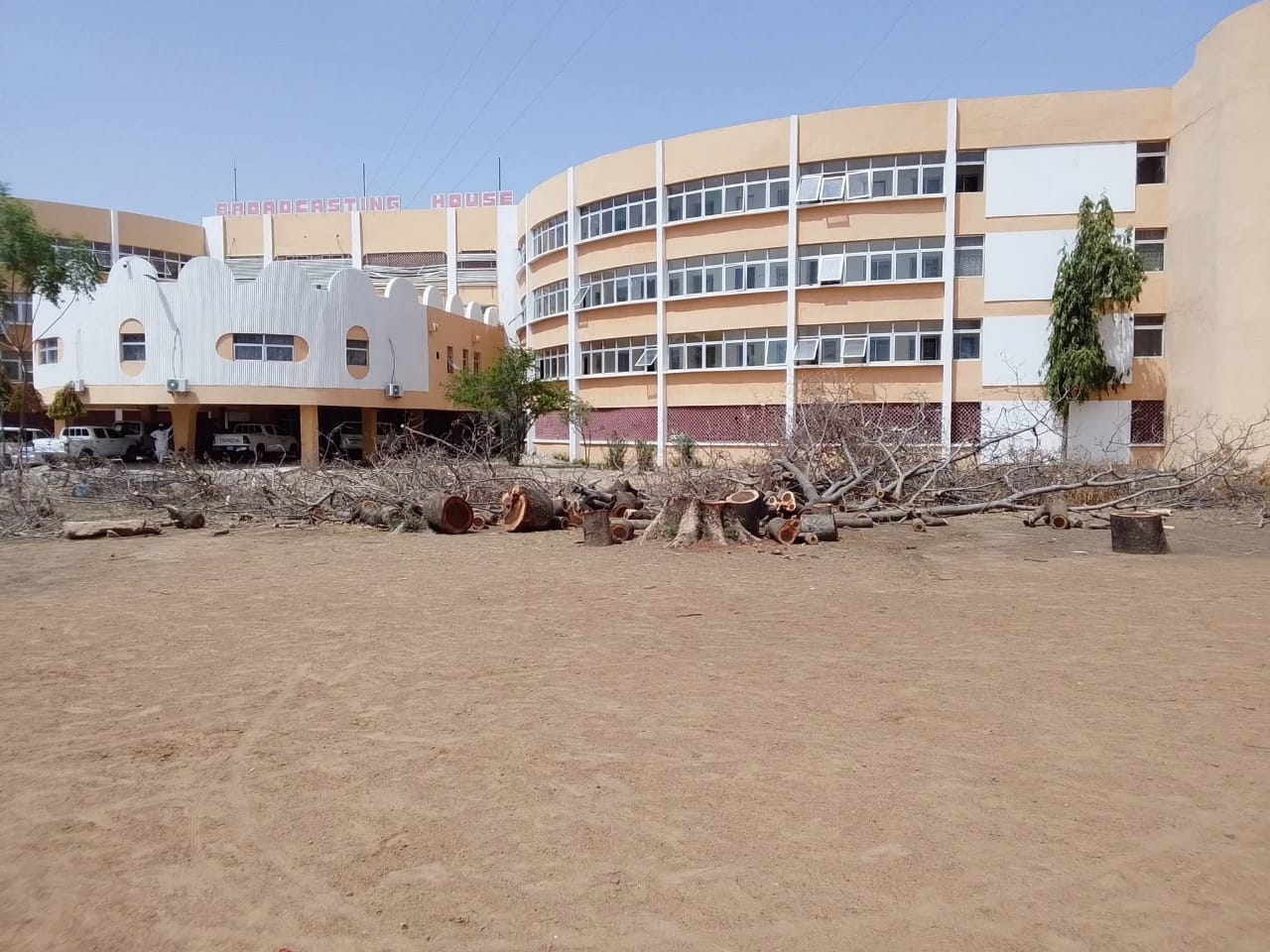
The controversy surrounding the indiscriminate felling of trees within the premises of Abubakar Rimi Television (ARTV) has taken a new turn following a visit by the Kano State Commissioner for Information and Internal Affairs to the state-owned media organization.
The commissioner’s visit came in the wake of an investigative report published by The Historica Nigeria, which exposed the removal of several trees within the ARTV premises and raised concerns over environmental sustainability and the management of public assets.
The development has been widely interpreted as a confirmation that the issues highlighted in the investigation deserved official attention, contrary to earlier attempts by ARTV management to dismiss the report as inaccurate and misleading.
The Historica Nigeria had reported that a significant number of mature trees were cut down within the television station’s premises, sparking public debate and calls for accountability.
The report attracted widespread reactions from environmental advocates, media stakeholders, and members of the public who questioned the rationale behind the exercise.
Following the publication, ARTV management issued a statement rejecting the report and insisting that only a few trees had been removed for security reasons.
The station also accused the online platform of publishing a one-sided story without seeking its official response.
However, the subsequent intervention by the state government through the Commissioner for Information has strengthened the credibility of the concerns raised by the investigation.
During the visit, the commissioner reportedly assessed the situation and engaged the management of the station over the circumstances surrounding the tree felling.
Observers noted that the visit underscored the importance of investigative journalism in promoting transparency and accountability in public institutions.
They argued that the government’s response demonstrated that the concerns raised by The Historica Nigeria were neither baseless nor insignificant.
The incident has continued to generate public interest, with many calling for greater environmental responsibility and stricter oversight regarding the management of public facilities and natural resources.
As discussions continue, media practitioners and civil society groups have emphasized the need for openness, accountability, and adherence to environmental best practices in all government-owned establishments.