


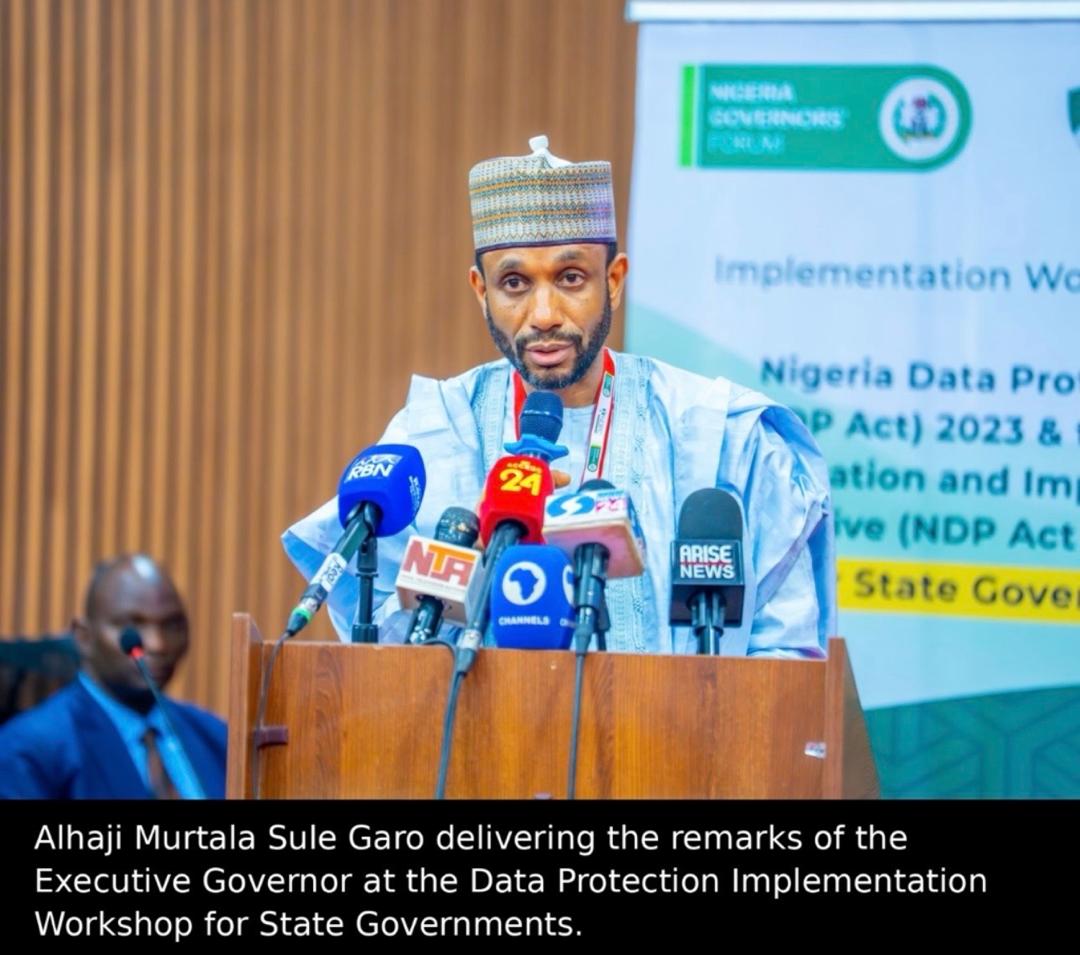
By Hussaini Ibrahim
Kano State Deputy Governor, Murtala Sule Garo, has called for stronger data protection measures in public institutions, warning that the growing use of citizens’ personal information in government services requires greater responsibility from officials.
Garo, who represented Governor Abba Kabir Yusuf, made the call at the Data Privacy Implementation Workshop for States organised by the Nigerian Governors’ Forum in partnership with the Nigeria Data Protection Commission.
The workshop, according to a statement issued on Thursday by the Public Relations Officer, Office of the Deputy Governor, Ludwanu Idris Malikawa Garu, was designed to help state governments translate the provisions of the Nigeria Data Protection Act into practical systems and procedures.
The deputy governor said government institutions handled sensitive personal information through services including education, healthcare, taxation, social protection, civil registration, employment, security and digital government.
He stressed that protecting such information should not be viewed merely as a regulatory obligation but as a responsibility tied to citizens’ trust in public institutions.
Garo said the issue was particularly important to Kano as the state continued to expand the use of digital systems and services, adding that data protection should be integrated into government policies and the daily operations of officials who handle personal information.
According to him, political leaders, permanent secretaries, heads of Ministries, Departments and Agencies, information technology professionals, legal officers, data protection officers and other public servants all had important roles to play in safeguarding citizens’ information.
The deputy governor said government institutions needed to improve staff training, data security, access controls, data retention, breach management and responsible information-sharing practices.
He noted that the expansion of digital public services made it necessary for government to balance technological innovation with privacy and security.
“Digital systems should make public services easier and more efficient without exposing citizens’ information to unnecessary risks or compromising their fundamental rights,” he said.
Garo welcomed the opportunity provided by the NGF and NDPC for states to examine practical challenges in implementing the Nigeria Data Protection Act and exchange approaches that could strengthen data protection across government institutions.
He said Kano State was committed to improving its data protection practices as it expanded digital service delivery, adding that stronger safeguards would help build public confidence in government institutions.
The workshop is expected to provide participating states with practical guidance on protecting public information, strengthening data security and improving compliance with the Nigeria Data Protection Act.
The engagement also brought together relevant government officials to deepen understanding of their responsibilities in collecting, processing, storing and sharing citizens’ personal information.