





From Atiku Sarki, Abuja
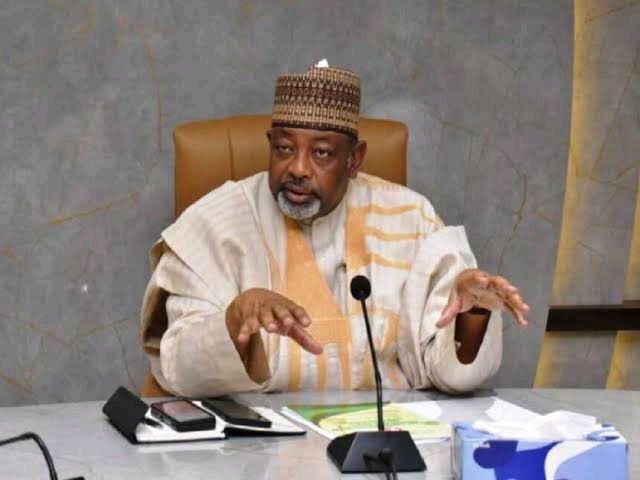
The Minister of Agriculture and Food Security, Senator Abubakar Kyari CON, has revealed that prices of essential food commodities have dropped by 50 per cent nationwide compared with previous years, when food prices soared beyond what most Nigerians could afford.
Speaking at the 2026 Ministerial Stakeholders Engagement Retreat on Agriculture Transformation in Abuja, Kyari said the Federal Government is committed to sustaining this trend by addressing high input costs and ensuring food remains accessible and affordable.
“This is in contrast to previous years when food prices skyrocketed, far beyond what most Nigerians could afford. We are working to sustain this trend by addressing high input costs to ensure food remains accessible and affordable,” he said.
The minister highlighted that his ministry has prioritised the development of key agricultural value chains, including rice, maize, wheat, millet, sorghum, yam, cocoa, cowpea, cassava, soybeans, cotton, onion, tomato, and oil palm, creating opportunities for millions of smallholder farmers nationwide.
Kyari also listed some of the ministry’s achievements over the last two years: the distribution of over 1.9 million bags of fertiliser to nearly one million farmers, provision of 12,000 litres of organic fertiliser, and strengthening regulatory frameworks to ensure the quality of agricultural inputs.
He added that the government has collaborated with countries such as Russia, Turkiye, India, and Canada to enhance fertiliser production and technology transfer, while 109 fertiliser inspectors and over 329 industry stakeholders were trained to curb the circulation of fake fertilisers.
“Through these efforts, we have improved agricultural productivity and ensured better access to high-quality inputs for farmers,” Kyari said, noting that more than 3,500 farmers have also been trained on organic fertiliser and soil management practices.
The minister said the 2025 Agricultural Performance Survey, conducted by the National Agricultural Extension and Research Liaison Services (NAERLS), showed steady growth in Nigeria’s agriculture, with rice, maize, sorghum, millet, cowpea, yam, and cassava recording higher outputs than in 2024.
Kyari further emphasised the ministry’s efforts to create a conducive environment for agribusinesses. He said initiatives over the past two years include the construction of modern markets, 10 large-scale integrated processing plants across Nigeria’s six geopolitical zones, and seven composite flour milling factories.
“Two agribusiness incubation centres have been launched at the Federal University, Lokoja, and Michael Okpara University of Agriculture, Umudike. Training and capacity-building programmes have empowered stakeholders to drive growth and innovation in the sector,” he said.
The minister noted that these interventions have attracted millions of dollars in investments, created jobs, increased incomes, and enhanced Nigeria’s agro-industrial competitiveness.
On poverty alleviation, Kyari said the government has focused on supporting vulnerable groups and improving food access through targeted programmes.
He also highlighted rural development projects, including the construction of 170km of asphalt roads, 57km of earth and dressed roads, 296 solar-powered and motorised boreholes, water treatment plants, 3,596 solar streetlights, and 69 rural housing and market facilities.
Kyari explained that the Ministry is optimising land management and soil fertility through the Nigerian Farmers Soil Health Scheme, installing pilot soil assessment laboratories in Oyo, Edo, Kogi, and Niger states, and constructing water-harvesting structures to boost climate resilience.
“Through these initiatives, farmers have increased crop yields by 20 per cent, boosting incomes and strengthening national food security,” he said.
He added that consultants have been engaged to trial nutrient omission studies, conduct Youth Hackathons for climate-smart technologies, and restore degraded lands across four states and the FCT, developing about 50 hectares per state to promote youth employment and food security.
Kyari described the retreat as a platform for collaboration, stating: “Together, we are united in our resolve to bridge gaps in agriculture, ensuring essential food items are steadily available, accessible, and affordable. Our mission is clear: to boost agricultural productivity, create livelihood opportunities, and drive wealth creation.”
He urged stakeholders to contribute ideas, leverage resources, and promote best practices, noting that collective action and feedback are crucial for achieving Nigeria’s agricultural transformation goals.


