



By Usman Usman Garba
Kano State Governor, Abba Kabir Yusuf, has reaffirmed his administration’s commitment to strengthening partnerships with international development agencies to accelerate agricultural transformation and economic growth in the state..
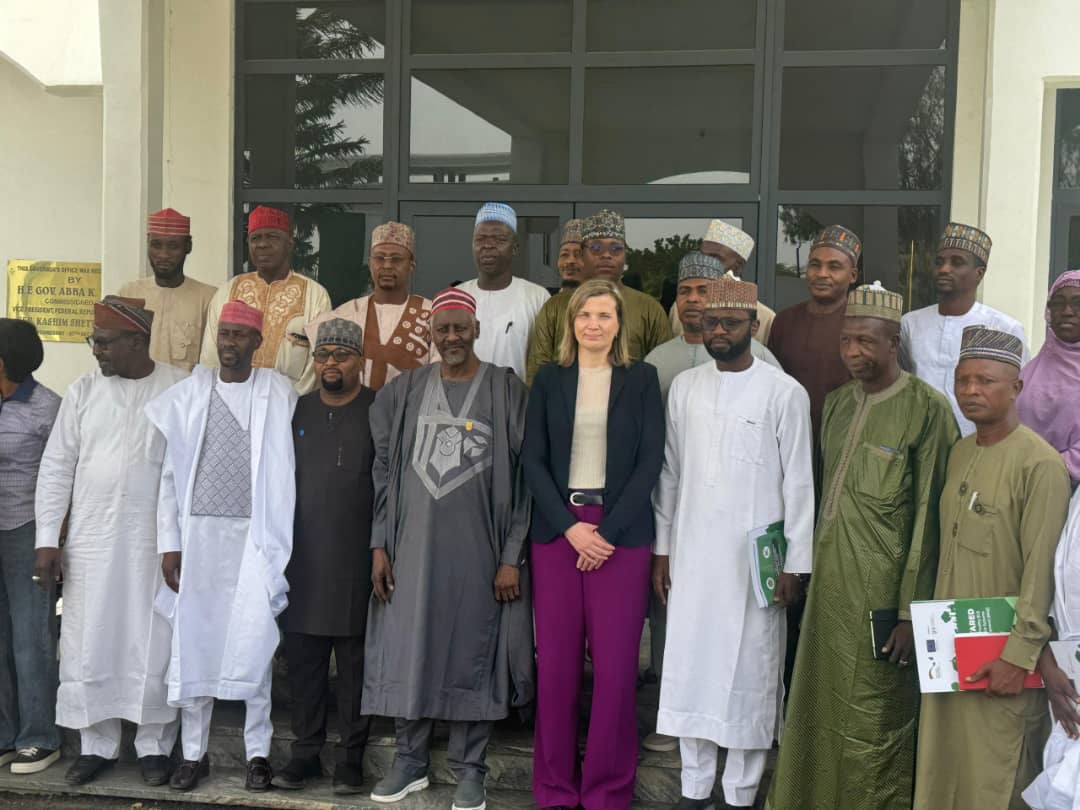
The governor stated this on Wednesday while receiving a delegation from the European Union, including officials of the EU-VACE Agriculture Value Chain Facility and the Transformative Agriculture Systems for Rural Economic Development programme, at the Government House, Kano.
This was contained in a statement issued on Wednesday by the Governor’s Chief Press Secretary, Mustapha Muhammad.
Represented by his Chief of Staff, Dr Sulaiman Wali Sani, Yusuf described the visit as timely, saying it aligned with his administration’s efforts to revitalise agriculture and enhance food security.
He said the state government was repositioning agriculture as a major driver of development, citing the creation of the Ministry of Livestock Development as a strategic move to unlock the sector’s potential.
“Our administration sees agriculture not only as a means of food production, but as a pathway to jobs, wealth creation and sustainable development,” he said.
According to him, the government has commenced initiatives to modernise livestock production through artificial insemination services, deployment of modern farming equipment and targeted support for farmers across the agricultural value chain.
“We are determined to move from traditional practices to modern, technology-driven systems that will increase productivity and improve incomes for our farmers,” the governor said.
He added that animal health remained a priority, with interventions aimed at preventing and controlling livestock diseases while protecting farmers’ livelihoods.
The governor said the livestock sector had huge potential for job creation, youth and women empowerment, as well as poverty reduction.
“We are committed to creating an enabling environment for investment, expanding market access and attracting agribusiness opportunities,” Yusuf said.
He expressed confidence that collaboration with the EU would provide technical expertise, encourage innovation and strengthen market linkages for farmers and agribusinesses in the state.
“We believe this partnership will open new opportunities for our people, especially young entrepreneurs and women involved in agribusiness,” he added.
Speaking earlier, the European Union Representative to Nigeria, Hugh Briggs, said the organisation valued its longstanding partnership with Kano because of the state’s agricultural potential and strategic importance in food production.
“Kano occupies a strategic place in Nigeria’s agricultural economy, and we are pleased to deepen our cooperation with the state government,” Briggs said.
He said EU support was focused on climate-smart agriculture, investment promotion, food security and innovation to improve productivity.
“Our intervention is designed to help farmers adapt to climate challenges, improve yields and connect better with markets,” he said.
Briggs added that the union was working with Nigeria to tackle challenges such as climate change and inadequate investment, while empowering farmers, women and youths in agricultural value chains.
“We are particularly interested in ensuring that women and young people benefit from agricultural transformation because they are central to future growth,” he added.
Also speaking, Dr Andrea Ruedigar of the Deutsche Gesellschaft für Internationale Zusammenarbeit said Germany currently had over 30 development projects in Nigeria, with five already being implemented in Kano State.
She said the projects targeted key agricultural value chains, including dairy, tomatoes, ginger and cocoa.
“Our programmes are focused on practical solutions that will improve production, reduce post-harvest losses and encourage private sector investment,” Ruedigar said.
She added that the initiative would also create employment opportunities and strengthen food systems in the state.
“We want to support Kano in building resilient agricultural systems that create jobs and ensure long-term food security,” she said.
Kano State Commissioner for Livestock Development, Dr Aliyu Isah Aliyu, described partnerships with development agencies as vital to boosting agricultural productivity and strengthening the livestock sector in the state.
“No government can achieve lasting agricultural transformation alone. Collaboration with credible partners remains essential to achieving our goals,” the commissioner said.