




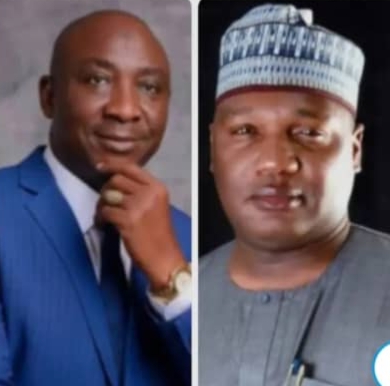
By Ado Salisu
A prominent football stakeholder, Ahmed Shuaibu Gara-Gombe, has defended President of the Nigeria Football Federation, Ibrahim Musa Gusau, over the Super Eagles’ failure to qualify for the 2026 FIFA World Cup, attributing the setback to internal sabotage and longstanding structural challenges within Nigerian football.
The Super Eagles will miss the 2026 FIFA World Cup after losing to the Democratic Republic of the Congo on penalties in the African qualifying playoffs.
The outcome marks Nigeria’s second consecutive absence from football’s biggest tournament, having also failed to qualify for the 2022 World Cup in Qatar.
Speaking with journalists, Gara-Gombe argued that the failure was the result of collective shortcomings rather than the actions of a single individual, insisting that blaming Gusau alone was unfair and misleading.
“Football administration is a collective responsibility. It cannot be reduced to the actions or decisions of one individual,” he said.
According to him, Gusau carried out his responsibilities as NFF president but encountered obstacles beyond his direct control.
“Gusau may have performed his duties diligently, but others within the football structure failed to deliver on their assignments,” he stated.
Gara-Gombe further alleged that certain individuals within the football system deliberately undermined efforts to secure qualification.
“There were persons within the system whose actions worked against the federation’s objectives for personal interests. Such developments amounted to sabotage,” he said.
He noted that despite the disappointment, the NFF president accepted public criticism without shifting blame to others.
“A good leader takes responsibility during difficult times. Gusau absorbed the pressure and criticism instead of passing it on to subordinates,” Gara-Gombe added.
Describing Gusau as a humble administrator, he said the NFF president often credits others for successes while accepting responsibility during setbacks.
“When results are positive, he acknowledges the contributions of others. When outcomes are poor, he shoulders the burden,” he said.
Gara-Gombe also maintained that the current NFF leadership inherited several challenges that predated Gusau’s administration.
“The foundation he met was already problematic. Correcting deep-rooted issues requires time, patience and careful management,” he said.
He explained that some of the policies affecting coaching appointments and football operations were established before Gusau assumed office.
He also cited outstanding debts, including players’ bonuses and allowances, as part of the burdens inherited by the current administration.
In addition, Gara-Gombe pointed to controversies surrounding FIFA mini-stadia projects as issues that originated before Gusau became NFF president.
“Many of the problems being blamed on Gusau were inherited. The public often overlooks the historical context behind such issues,” he said.
Questioning the criticism directed at the NFF president, he asked why similar scrutiny was not applied to previous administrations.
“Was Gusau responsible for Nigeria’s failure to qualify for the 2022 FIFA World Cup in Qatar? The answer is clearly no,” he stated.
He emphasized that the Super Eagles’ qualification failure should be viewed within the broader context of systemic and institutional challenges affecting Nigerian football.
“Gusau is not the problem of Nigerian football. Those blaming him alone are ignoring the real causes of the setback,” Gara-Gombe said.
He urged stakeholders to focus on addressing structural deficiencies, improving football administration and strengthening the game’s development framework ahead of future international competitions.