



By Rabiu Sanusi
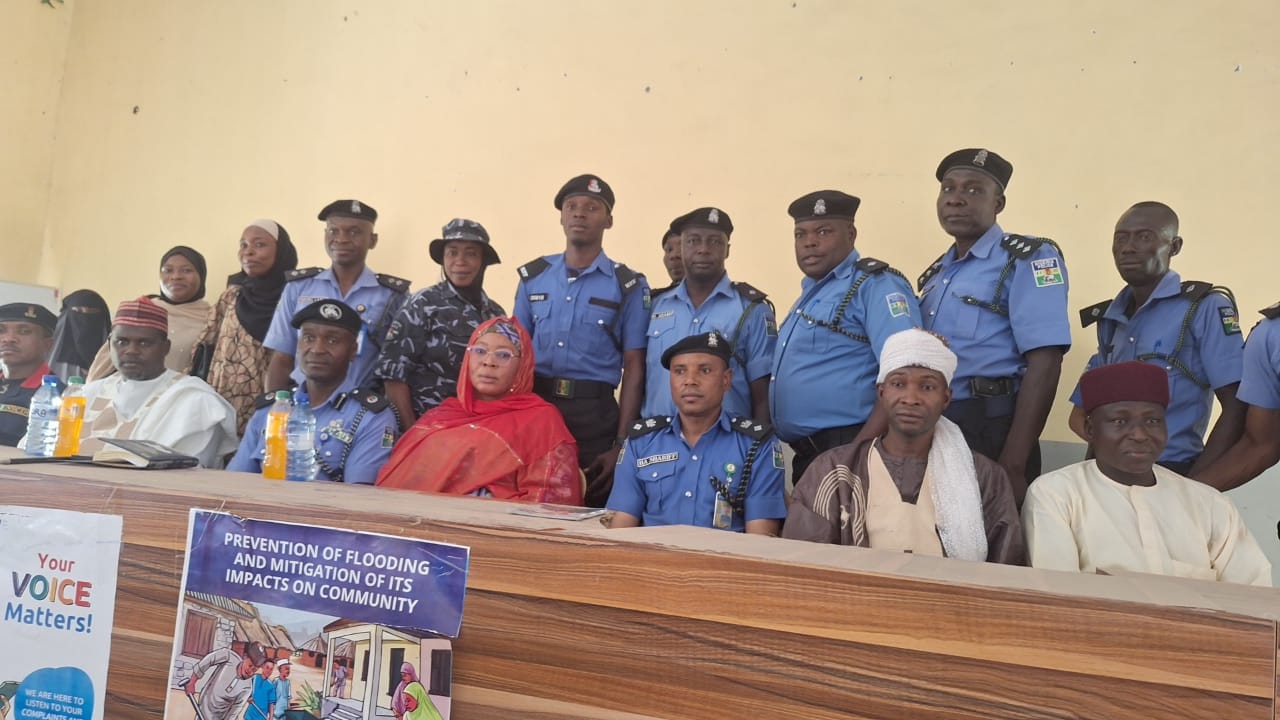
A renewed push to strengthen peace safety and grassroots security architecture in Kano State received a major boost as the Office of the Special Adviser on Community Policing, led by Ambassador Dr. Maimunat Umar Sharif, organized a one-day sensitization programme on Community Policing in collaboration with the Nigeria Police Force and the Ministry for Local Government in Wudil local government.
The event, which drew participation from Islamic scholars, students, community leaders, security stakeholders and members of the press, focused on promoting public vigilance, strengthening police-community relations and encouraging collective responsibility in tackling insecurity.
Speaking during the programme, Dr. Maimunat Umar Sharif said the gathering reflected the shared determination of government, security agencies and citizens to improve security alert systems and adopt proactive measures against crime and disorder across the state.
She stressed that security should not be left in the hands of government alone, noting that every resident has a role to play in safeguarding lives and property.
The Special Adviser commended the administration of Governor Abba Kabir Yusuf for what she described as purposeful and people-oriented leadership that has recorded remarkable progress in security and community development.
According to her the present administration has continued to strengthen community policing structures, improve collaboration with security agencies and support grassroots initiatives aimed at protecting communities.
She added that investments in security infrastructure, intelligence gathering and sustained engagement with traditional rulers, religious leaders and community stakeholders have boosted public confidence and improved coordination at all levels.
Dr. Sharif also praised the Commissioner of Police, Ibrahim Bakori for his professionalism, strategic leadership and commitment to law and order in the state.
She explained that the sensitization programme addressed critical issues such as gender-based violence prevention, community vigilance, respect for fundamental human rights and the urgent need to tackle drug abuse and other social vices threatening young people and society.
“Our cooperation, vigilance, trust and mutual respect remain essential in building safer and more peaceful communities,” she said, urging participants to sustain partnerships and embrace community policing as a lasting pathway to peace.
DPO Wudil Calls for Timely Information Sharing:
Also speaking at the event, the Divisional Police Officer of Wudil Local Government H.A. Sharif, emphasized the importance of timely intelligence sharing between residents and security agencies.
He said policing becomes more effective when communities trust law enforcement agencies and provide useful information that can prevent crimes before they occur.
The DPO urged parents, teachers and religious leaders to guide the younger generation away from drug abuse, violence and other harmful behaviours capable of destroying their future.
He assured residents that the police would continue to work closely with communities to ensure peace and rapid response to security concerns.
LG Secretary Reaffirms Grassroots Support:
In his remarks, the Secretary of Wudil Local Government, Barrister Ahmad Musa, who represented the Local Government Chairman, reaffirmed the council commitment to supporting all initiatives that promote peace and security.
He said local governments remain the closest tier of government to the people and must therefore play a leading role in mobilizing communities for vigilance, conflict resolution and peaceful coexistence.
Barrister Ahmad Musa commended the Kano State Government the police command and the Office of the Special Adviser on Community Policing for organizing the programme, describing it as timely and impactful.
He called on residents to remain law-abiding, cooperate with security agencies and contribute positively to the development of their communities.
The event ended with renewed calls for stronger collaboration among government institutions, traditional leaders, civil society groups and residents in building a safer and more secure Kano State.