





By Sani Ibn Salihu
The aftermath of any high-profile political engagement in Nigeria often serves as a litmus test for the maturity of our democratic discourse.
Following the summit between President Bola Ahmed Tinubu and the elders and stakeholders of Plateau State, the public sphere has been inundated with varied narratives.
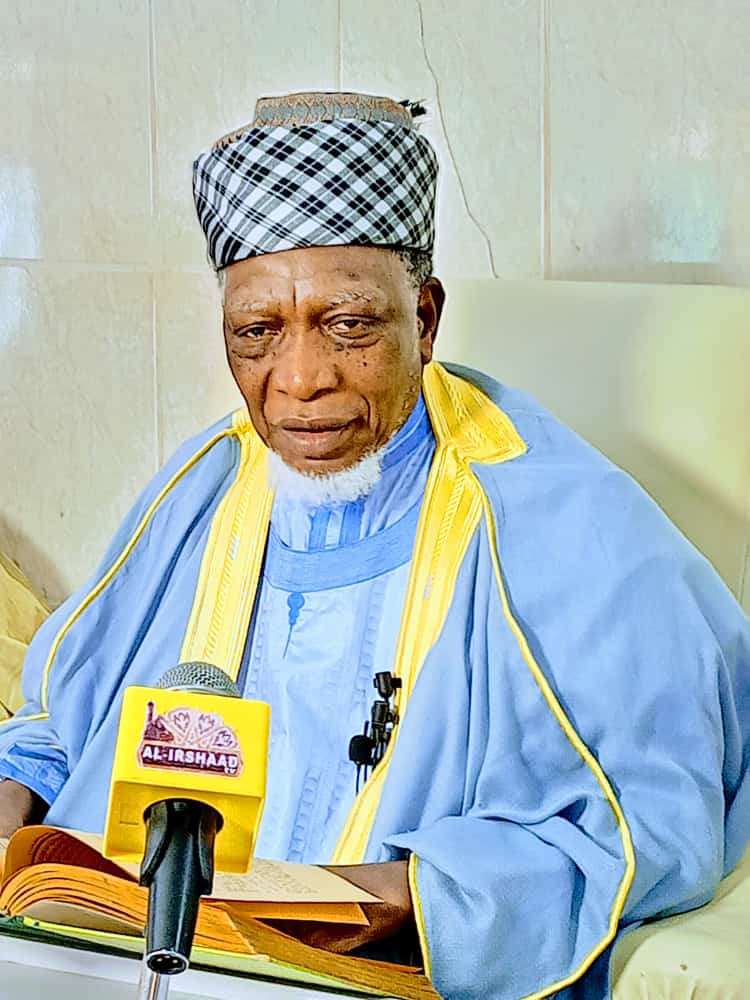
Regrettably, a prominent and deeply concerning fallout has been the targeted vilification of Sheikh Muhammad Sani Yahaya Jingre, the National Chairman of the Council of Ulama of Jama’atu Izalatil Bid’ah Wa Ikamatus Sunnah (JIBWIS).
Sheikh Jingre’s offense, in the eyes of his critics, was a straightforward and universally accepted democratic plea: a call for fairness, equity and justice in government appointments.
However, this advocacy has been twisted through a parochial lens, triggering a wave of unfounded witch hunts rooted in the volatile politics of “indigene-ship” versus “settler-ship.”
To understand the injustice of this attack, one must dissect the fallacies underlying the perception that certain demographics – specifically Muslims of Hausa-Fulani descent – have no legitimate stake in the socio-political destiny of Plateau State.
The Fallacy of the “Outsider” Narrative:
The primary weapon deployed against Sheikh Jingre is the assertion that he is advocating for a group deemed “nonindigenous” to Plateau State and, therefore, not entitled to equitable representation.
This argument is both historically flawed and constitutionally unsustainable.
Historical Integration: The Hausa and Fulani communities on the Plateau are not recent transients; they are deeply rooted parts of the state’s historical fabric, dating back generations.
Their labor, commerce and civic contributions have heavily shaped the economic landscape of centers like Bukuru, Jos, Dorawawar Babuje, Maii Adik and beyond among others.
History cannot be selectively erased to serve contemporary political exclusion.
The Constitutional Reality: Section 42 of the 1999 Constitution of the Federal Republic of Nigeria explicitly prohibits discrimination against any citizen based on their community, ethnic group, place of origin, sex, religion, or political opinion.
When an elder statesman and religious leader calls for justice in appointments, he is not demanding a favor; he is demanding the operationalization of constitutional mandates.
By framing a call for equity as an existential threat to “indigenous” rights, critics reveal a preference for exclusionary politics over constitutional democracy.
Misconstruing advocacy for agitation:
Sheikh Jingre’s role as the leader of JIBWIS places upon his shoulders the responsibility to advocate for the welfare, peaceful co-existence and fair treatment of his congregants and the wider society.
Key Distinction: There is a fundamental difference between advocating for systemic fairness and agitating for dominance.
When the Sheikh calls on the federal government to ensure that federal appointments reflect the diverse reality of Plateau State, he is reinforcing the principle of the federal character.
Inclusive governance is the most potent antidote to civil unrest.
Conversely, when a segment of society feels systematically locked out of governance and opportunities based on identity, it breeds resentment and destabilizes the peace.
Therefore, Sheikh Jingre’s advocacy should be viewed as a proactive contribution to peacebuilding, not an act of aggression.
The danger of scapegoating religious leadership:Witch-hunting religious leaders for participating in civic dialogues is a dangerous trend that threatens Nigeria’s fragile social cohesion.
Harming a leader of Sheikh Jingre’s stature polarizes the state further along the fault lines that have historically cost Plateau State dearly in human and financial terms.
It reduces complex managerial and political questions to a zero-sum game of ethnic and religious rivalry.
Conclusion: Moving towards an inclusive Plateau: The hostile reactions to Sheikh Jingre’s statements miss the broader picture.
Plateau State, known as the “Home of Peace and Tourism,” can only live up to its name when peace is anchored on justice.
No sustainable peace can be built on the foundation of exclusion or the silencing of voices that call for equity.
The witch-hunt against Sheikh Jingre is unfounded, counterproductive and detrimental to the collective progress of the state.
Rather than vilifying a leader for championing the constitutional rights of a significant demographic, stakeholders across Plateau State should engage in constructive dialogue.
True statesmanship lies in expanding the table of governance to ensure every law-abiding citizen, regardless of ethnicity or creed, feels valued, seen and fairly represented.
Salihu is a public commentator and former General Manager NTA Lafia.


