




From Sani Gazas Chinade, Damaturu
Stakeholders have called for urgent reforms in local government administration across North-East Nigeria, warning that continued delays could worsen governance deficits and undermine service delivery at the grassroots.
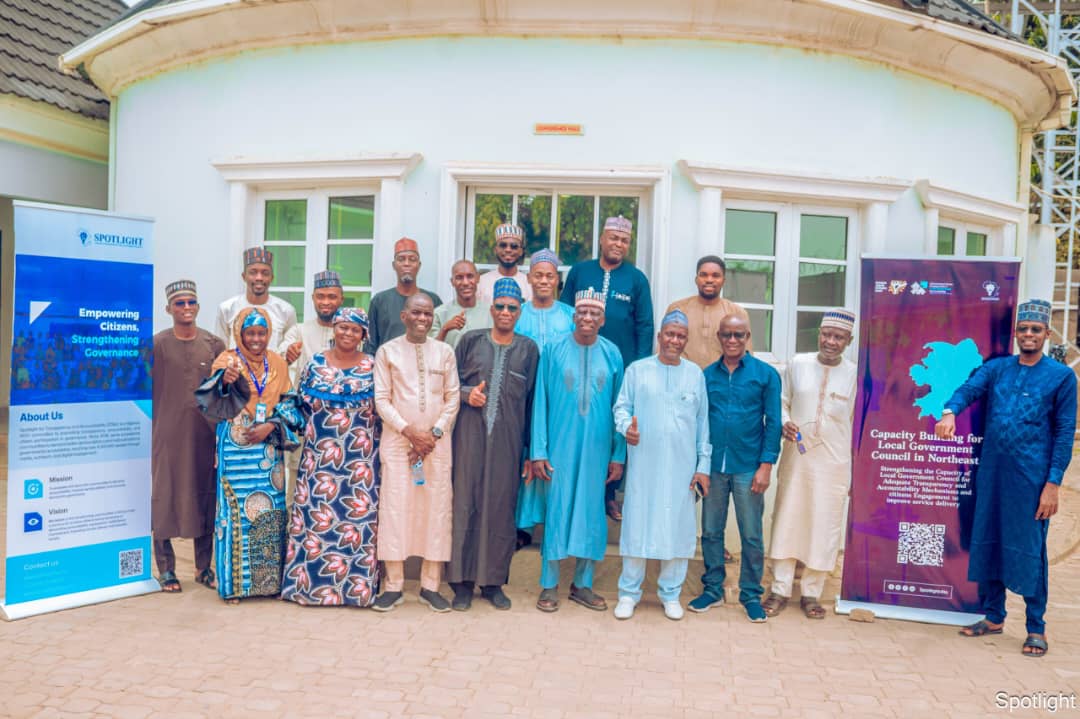
The call follows a recent capacity-building workshop in Adamawa State, where local government officials were said to have openly acknowledged institutional weaknesses and financial irregularities, marking what organisers described as a significant shift in attitude.
The two-day workshop, organised by the Spotlight for Transparency and Accountability Initiative with support from the Nigeria Youth Futures Fund, focused on strengthening transparency and accountability in local governance.
Participants, drawn from various councils in Adamawa State, were said to have moved beyond routine participation to actively interrogating discrepancies in financial records and committing to concrete reforms.
Organisers described the development as a transition from passive compliance to active ownership, noting that such openness had been largely absent in previous engagements.
For communities across the North-East, many of which are still grappling with the aftermath of insurgency, displacement and economic hardship, the renewed commitment to accountability is seen as long overdue.
Years of weak governance at the local level have been linked to poor service delivery, including inadequate funding for schools, under-equipped health centres and deteriorating infrastructure.
The Chief Executive Officer of Spotlight NG, Muazu Alhaji Modu, said the initiative was designed to produce practical outcomes rather than theoretical discussions.
“Local government plays a critical role in delivering basic social services. A functional and accountable system is essential for meaningful improvements,” he said.
He added that the organisation was deliberately investing in transparency mechanisms and citizen engagement to drive sustainable reforms.
Participants at the workshop were also introduced to financial transparency frameworks and civic technology tools such as Bayani AI, aimed at improving public access to governance data.
However, organisers cautioned that technology alone would not guarantee accountability, stressing that its effectiveness depends on the willingness of institutions to embrace openness and the capacity of citizens to engage with available data.
Observers noted that the developments in Adamawa could signal a broader shift in governance culture across the region if sustained.
They emphasised that rebuilding public trust in institutions must begin at the grassroots through empowered officials, informed citizens and consistent accountability practices.
The workshop ended with a renewed commitment by participants to implement reforms in their respective councils, raising cautious optimism that local governance in the North-East may be entering a new phase of transparency and responsiveness.