





By Umar Idris Shuaibu
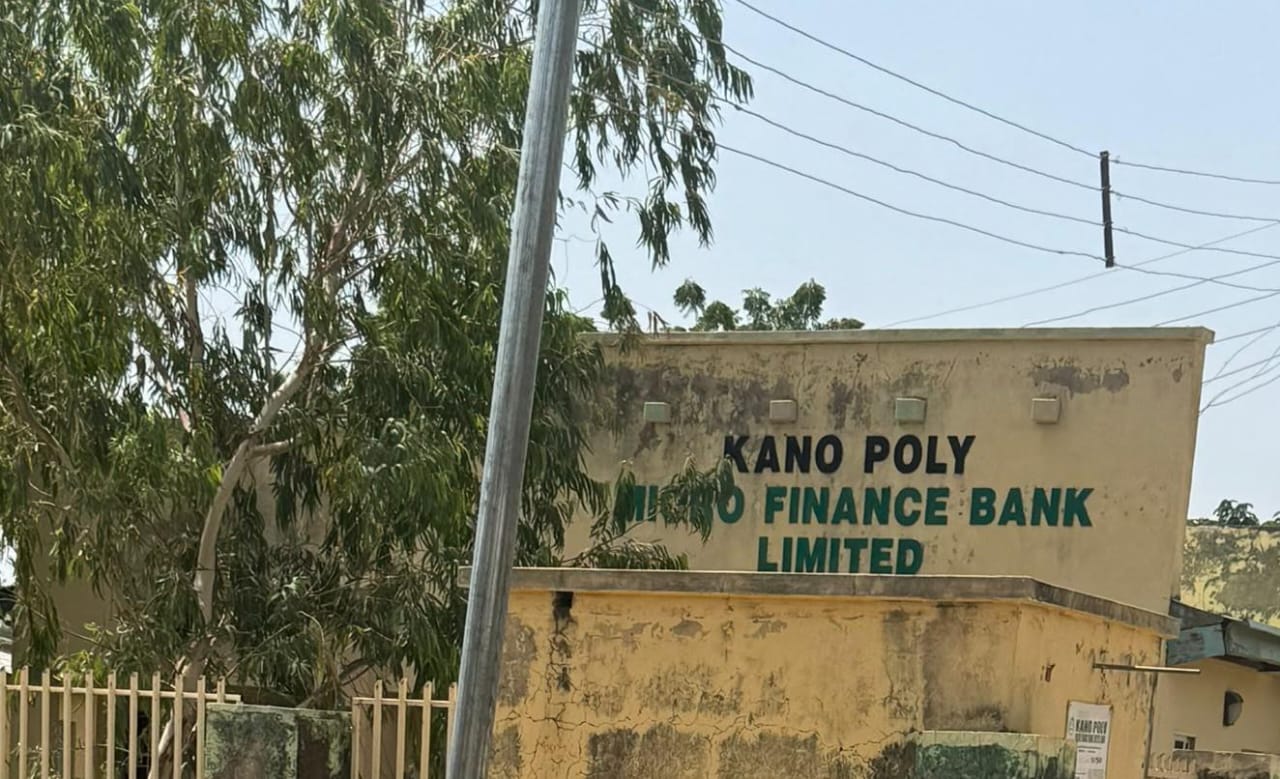
The closure of Kano State Polytechnic Microfinance Bank (Kanopoly MFB) raises important questions about financial management, institutional accountability and the sustainability of investments established by public institutions to generate revenue and serve their communities.
For an institution such as Kano State Polytechnic, a microfinance bank should be more than a commercial venture. Properly managed, it can serve as a financial services provider for students, staff, small-scale entrepreneurs and surrounding communities while contributing to the institution’s internally generated revenue.
However, the reported closure of Kanopoly MFB in July 2026 following regulatory action by the Central Bank of Nigeria (CBN) has brought the bank’s financial sustainability into question.
The circumstances surrounding its collapse deserve closer examination, not merely to understand why the bank failed, but also to determine what lessons Kano State Polytechnic and other public institutions can learn from the experience.
Beyond the loss of a financial institution, the development raises a fundamental question: how did a bank established to serve the polytechnic community and support financial inclusion reach a point where it could no longer meet the regulatory requirements for continued operation?
The Purpose of Polytechnic Microfinance Banks
Polytechnic microfinance banks can play an important role in connecting educational institutions with the financial needs of their host communities.
For institutions offering programmes in Accountancy, Banking and Finance, Business Administration and related disciplines, an operational bank can also provide opportunities for practical training, internships and industrial experience.
Beyond their educational value, these banks can provide savings facilities and appropriately assessed credit to small businesses, artisans, traders and other customers who may struggle to access conventional banking services.
For farmers, market women and small-scale entrepreneurs, access to financial services can support business expansion, improve cash flow and create opportunities for economic advancement.
An institutionally linked microfinance bank can also serve members of the polytechnic community, including students and staff, by offering accessible financial services.
Where the bank is professionally managed and financially sustainable, its activities may generate returns for shareholders and strengthen the institution’s financial position.
For the parent institution, the benefits may extend to internally generated revenue, practical training opportunities and stronger engagement with businesses operating within its immediate environment.
However, these benefits are not automatic. A microfinance bank must operate within the regulatory framework established by the CBN, maintain adequate capital, manage credit risks and protect depositors’ funds.
Institutional ownership alone cannot guarantee financial stability.
What Led to the Closure of Kanopoly MFB?
Available information on the reported closure points to serious financial weaknesses, including insufficient assets to meet liabilities and failure to maintain the required minimum capital unimpaired by losses.
These are significant regulatory concerns because a bank’s ability to protect depositors depends partly on the strength of its capital base and the quality and availability of its assets.
Capital erosion occurs when accumulated losses diminish the funds that support a financial institution’s operations. If those losses become sufficiently severe, the bank may no longer meet the minimum capital requirements prescribed by its regulator.
Similarly, insolvency concerns arise when an institution’s financial position is no longer adequate to meet its obligations. A shortage of liquid funds may also make it difficult to honour withdrawals and other payments when they fall due.
Such conditions can undermine public confidence and threaten depositors’ money.
The CBN’s regulatory intervention, as described in the available account, therefore raises a fundamental question: how did an institution established to provide financial services reach a position in which it could no longer satisfy the applicable regulatory requirements?
Answering that question requires more than identifying the financial condition that triggered the closure. It requires an examination of the decisions, controls and institutional arrangements that preceded it.
The precise regulatory findings, the applicable capital requirements and the sequence of events leading to the revocation of the bank’s licence should be established from the CBN’s official notice and other relevant records.
While the reported financial weaknesses may explain the regulatory action, they do not, on their own, establish how those weaknesses developed or whether they could have been prevented.
That is where questions about management, oversight and institutional accountability become particularly important.
Beyond the Regulator’s Decision: The Question of Management
Information available to The Historica Nigeria raises concerns about the management of the bank and the oversight exercised by its parent institution, Kano State Polytechnic.
These concerns warrant investigation. However, without access to the bank’s audited financial statements, regulatory examination reports, board records and responses from the relevant authorities, it would be premature to conclude that specific individuals or institutions were responsible for its collapse.
Nevertheless, the questions are legitimate.
What was the bank’s financial position before the reported closure? Were warning signs identified early enough? Did the management and board respond appropriately to financial weaknesses? What oversight mechanisms did the parent institution maintain? Were the bank’s lending activities, operating expenses and financial risks properly monitored?
These are not merely administrative questions. They go to the heart of institutional governance.
A bank does not ordinarily lose its financial strength without developments that can be examined through its accounts, lending records, capital position and management decisions. Determining whether those developments were identified and addressed would be essential to understanding the Kanopoly MFB case.
The responsibility for providing a comprehensive explanation rests with the relevant institutions, particularly those with access to the records necessary to establish what happened.
Investigation Ordered, but Where Is the Outcome?
In the aftermath of the bank’s closure, the Rector of Kano State Polytechnic, Dr. Abubakar Umar Farouk, reportedly constituted a committee to investigate the circumstances that led to the collapse of the institution’s microfinance bank.
The decision to establish the committee suggested an acknowledgement of the need to examine the events surrounding the bank’s closure and determine the factors responsible for its financial difficulties.
However, information available to The Historica Nigeria indicates that the outcome of the committee’s investigation has yet to be made public, raising questions about the status of its assignment and whether its findings have been submitted to the appropriate authorities.
The apparent absence of a publicly communicated outcome leaves important questions unanswered.
Has the committee completed its assignment? If so, has it submitted its report to the Rector or the institution’s governing authorities? If the investigation remains ongoing, what has caused the delay? And what measures, if any, have been taken to address the issues that led to the bank’s closure?
These questions are particularly important given the seriousness of the reported financial problems that prompted the regulatory action.
An investigation committee should serve a clear purpose beyond its establishment. Its work should help establish the facts, identify institutional weaknesses, recommend corrective measures and, where evidence warrants it, refer suspected misconduct to the appropriate authorities.
The absence of publicly available findings does not necessarily mean that the committee’s work has been abandoned or that its report has been suppressed. Nevertheless, without an official update, the public cannot readily assess the progress of the investigation or determine whether meaningful corrective action has followed.
If the committee has completed its work, Kano State Polytechnic should clarify its findings and the steps being taken in response, subject to any legitimate legal or confidentiality restrictions. If the report has not been completed, the institution should explain the status of the assignment.
The Rector’s office and the relevant authorities should also have an opportunity to respond to the concerns raised about the investigation.
For an institution entrusted with public responsibilities, transparency in the aftermath of such a significant financial failure is essential.
The public deserves to know not only why the bank closed but also what the institution has learned from the experience and what measures are being taken to prevent a recurrence.
Until these questions are answered, concerns about the bank’s closure and the effectiveness of the institutional response are likely to persist.
Why Institutional Investments Fail
The reported closure of Kanopoly MFB also presents an opportunity to examine a broader challenge facing public institutions: the difficulty of sustaining commercial ventures established to support their core responsibilities.
Establishing a business is one thing; keeping it financially viable is another.
Institutional investments require competent leadership, clear accountability, effective internal controls and a long-term business strategy. Without these elements, even a venture with a potentially useful purpose can become financially unsustainable.
One possible source of difficulty is weak corporate governance. Where responsibilities are poorly defined, oversight is ineffective or management decisions are not subjected to adequate scrutiny, financial problems may remain unresolved until they become severe.
Another risk is inadequate financial monitoring. Regular financial reporting, independent audits, loan-recovery assessments and periodic reviews of capital adequacy can help identify weaknesses before they threaten an institution’s survival.
Credit risk is equally important for a microfinance bank. Lending without proper assessment of borrowers’ repayment capacity, inadequate loan monitoring and weak recovery mechanisms can expose a bank to mounting losses.
Operating costs must also remain proportionate to revenue. Institutions that fail to control expenditure or develop sustainable income sources may struggle to maintain their operations.
Leadership continuity and institutional oversight are equally important. Changes in management should not disrupt financial controls, weaken accountability or leave important decisions without proper supervision.
These are general risks associated with financial institutions, not established findings about Kanopoly MFB. Determining which, if any, contributed to its closure would require evidence specific to the bank.
The wider lesson, however, is clear: public institutions cannot rely on their ownership structures or statutory status to guarantee the success of their commercial investments.
They must apply sound financial and managerial practices while ensuring that their operations comply with the law.
The Cost to the Polytechnic and Its Community
The implications of a microfinance bank’s closure can extend beyond its immediate management and shareholders.
For a polytechnic, a functioning bank may offer opportunities to support practical training, provide financial services to the campus community and contribute to institutional revenue.
Its closure may therefore mean the loss of a potential source of income and an opportunity to connect academic instruction with practical financial-sector experience.
For students studying Accountancy, Banking and Finance, and Business Administration, an operational bank could provide a setting for internships, industrial training and exposure to everyday financial operations.
The closure may also affect customers who relied on the bank for savings, credit and other financial services.
For these customers, the immediate concern is the status of their deposits, the settlement of outstanding obligations and the procedures for resolving claims.
The extent of these consequences in the Kanopoly MFB case should be established from official records rather than assumed.
The CBN and any appointed liquidator or other authorised resolution body should provide clear information about the status of depositors’ claims, the process for recovering eligible funds and the steps customers must take.
Customers should rely on official communications when seeking information about their accounts and any applicable deposit-protection arrangements.
Transparency during such a process is essential to protecting customers and maintaining confidence in the financial system.
What Should Kano State Polytechnic Do Now?
The closure should not end the conversation. It should begin a process of institutional learning and accountability.
First, Kano State Polytechnic should provide a clear account of its relationship with the bank, including its oversight responsibilities, the support it provided and the circumstances that led to the institution’s financial difficulties.
Second, the relevant authorities should establish the bank’s financial position before closure, including the extent of its losses, outstanding liabilities, loan-recovery challenges and capital deficiencies.
An independent review, where appropriate and legally permissible, could help establish the causes of the failure and identify any weaknesses in governance or financial controls.
Third, the institution should clarify the status of the investigation committee established by the Rector. If a report has been completed, its findings should inform appropriate corrective measures. If the investigation is ongoing, the institution should communicate its progress and explain any significant delays.
Fourth, any evidence of misconduct, financial irregularities or breaches of duty should be referred to the appropriate authorities for investigation and action in accordance with the law. Accountability should be based on evidence, with due process observed.
Fifth, the polytechnic should review the governance arrangements for any other commercial ventures under its supervision. Lessons from the bank’s experience should inform stronger reporting requirements, independent audits, risk-management procedures and performance monitoring.
Finally, the institution should ensure that students and staff who relied on the bank for practical training are not unnecessarily disadvantaged. Where necessary, alternative arrangements with properly licensed financial institutions could provide relevant internship and industrial-training opportunities.
The objective should not simply be to identify what went wrong. It should be to prevent a recurrence.
A Wider Lesson for Public Institutions
The experience of Kanopoly MFB raises a broader question about the management of public-sector investments in Nigeria.
Public institutions often establish commercial ventures with legitimate objectives: generating revenue, improving service delivery, creating employment and supporting their surrounding communities.
Yet these objectives can only be achieved when investments are supported by sound business models, competent professionals and effective oversight.
Where an institution’s commercial venture fails, the public deserves a clear explanation of the circumstances, the financial implications and the measures being taken to address the consequences.
This does not mean that every failed investment automatically proves negligence or misconduct. Businesses can encounter difficult economic conditions, regulatory changes, unexpected losses and other challenges.
However, where a regulated financial institution reportedly fails to maintain its required capital and becomes unable to meet its liabilities, the public interest demands a thorough examination of how the situation developed and whether it could have been prevented.
That examination should be guided by documentary evidence, independent scrutiny and the right of all affected parties to respond.
The reported establishment of an investigative committee by the Rector makes this issue even more pressing. An investigation should lead to a clearer understanding of the circumstances, appropriate recommendations and, where necessary, corrective action.
Without a clear account of the outcome, an important opportunity to strengthen institutional governance may be lost.
The Death of an Institutional Investment: The Need for Answers
The reported closure of Kano State Polytechnic Microfinance Bank is a reminder that institutions established to serve the public must be managed with professionalism, transparency and accountability.
The regulatory reasons cited in the available account point to serious financial difficulties. But understanding the full story requires answers to deeper questions about the bank’s financial history, management decisions, oversight arrangements and the measures taken before its licence was revoked.
Equally important is the need to establish what became of the investigation reportedly initiated by the Rector after the closure.
Was the committee able to identify the causes of the bank’s failure? Were recommendations made? Have any corrective measures been implemented? These questions deserve clear answers from the institution.
For Kano State Polytechnic, the priority should be to establish the facts, protect legitimate interests, learn from the experience and strengthen the management of its investments.
For the relevant regulators and authorities, transparent communication about the closure and its consequences is equally important.
Ultimately, the question is not simply why Kanopoly MFB closed. It is whether the circumstances that led to its closure will be thoroughly examined and whether the lessons will be used to prevent similar failures.
A public institution’s responsibility does not end with establishing an investment. It also includes ensuring that the investment is managed responsibly, its risks are monitored and its failures, when they occur, are properly investigated.
When an institution established to support financial inclusion and institutional development collapses, the public deserves more than an explanation of its financial failure. It deserves answers about the decisions that preceded it, the accountability that follows and the lessons that will shape the future.
Umar Idris Shuaibu is a digital journalist in Kano and can be reached through shuaibuumaridris@gmail.com


