



From Musa Muhammad Kutama, Calabar
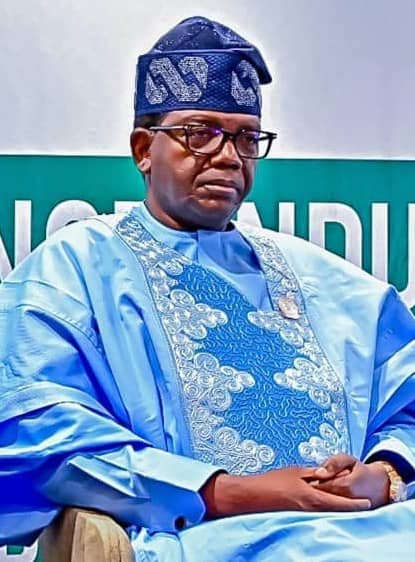
The Senior Special Assistant to President Bola Ahmed Tinubu on Marine and Blue Economy, Professor Busayo S. Fakinlede, has attributed developments in Nigeria’s maritime sector to the President’s vision and the establishment of the Federal Ministry of Marine and Blue Economy.
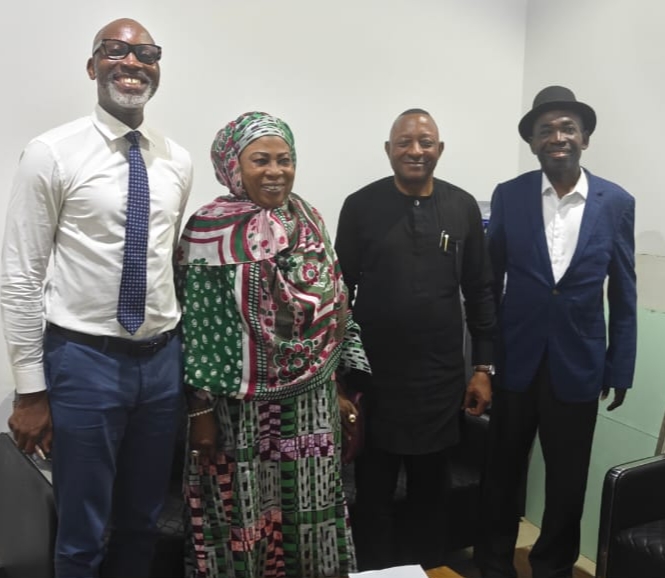
Fakinlede made the remarks on Thursday in Abuja during a strategic dialogue with a delegation from the Africa Blue Economy Roundtable (ABER), which visited to discuss opportunities for collaboration and commend the Federal Government’s blue economy initiatives.
According to a statement made available to journalists in Calabar by Dr Piriye Kiyaramo, Convener and Founder of ABER, the meeting focused on Nigeria’s maritime development, economic opportunities and the need to strengthen the country’s position in Africa’s blue economy.
The delegation was led by Dr Amenya Kartay, Chief of Staff to ABER’s convener and Head of its Abuja Liaison Bureau, who represented Kiyaramo.
Other members included Hajiya Medina Dauda Nadabo, Director of Communication and Public Affairs, and Prince Ibiok, Director of ICT at Blue Council Africa.
During the meeting, Fakinlede, a professor of maritime technology and former senior adviser to the World Bank, outlined a strategic framework built around three priorities: identifying, protecting and harnessing Nigeria’s maritime resources.
He explained that the framework involved comprehensive mapping of the country’s maritime domain, strengthening institutional governance and protection, and responsibly developing opportunities in subsea minerals, offshore wind energy, subsea cabling, desalination and aquaculture.
Fakinlede also highlighted the economic potential of the Gulf of Guinea, citing estimates that value its annual economic activities at $1 trillion, with Nigeria accounting for approximately 74 per cent of the activities.
He, however, expressed concern over capital flight in the maritime sector, noting that about 80 per cent of the 4,000 vessels operating in Nigerian waters are serviced abroad.
He also identified the underutilisation of more than 10,000 kilometres of navigable inland waterways and Nigeria’s annual expenditure of over $2 billion on fish imports as areas requiring urgent attention.
Commending President Tinubu and the Minister of Marine and Blue Economy, Adegboyega Oyetola, Fakinlede said the creation of the ministry had provided a framework for advancing the sector.
“First, everything that is happening in the sector happened because of the person that created the Federal Ministry of Marine and Blue Economy, President Asiwaju Bola Ahmed Tinubu, whose foresight and vision gave birth to the new ministry,” he said.
He also praised Oyetola’s administrative experience and private-sector background, describing him as well positioned to lead the ministry.
“All the praise and encomiums have to go to Mr President and the Honourable Minister. I am just trying to catch up with what they are doing. When you have a very good leader leading you, all you have to do is run after that leadership,” Fakinlede added.
ABER Lists Achievements in Marine and Blue Economy
Earlier, Kartay, representing ABER Convener Piriye Kiyaramo, commended the President and the ministry under Oyetola for what the organisation described as significant progress in Nigeria’s marine and blue economy since the ministry was established in August 2023.
“When Mr President created this ministry in August 2023, many saw it as merely administrative. Today, it has clearly proven to be an economic masterstroke,” he said.
The delegation highlighted several developments, including an increase in reported sector revenue from ₦700.79 billion in 2023 to ₦1.83 trillion in 2025, representing a rise of approximately 161 per cent.
Other milestones cited included the approval of Nigeria’s first National Policy on Marine and Blue Economy in May 2025 and efforts to address longstanding congestion at Apapa Port.
The delegation also highlighted the commissioning of the Funtua Inland Dry Port, with projects in Moniya, Ijebu-Ode and Jos identified as part of broader efforts to improve inland trade and connectivity with the African Continental Free Trade Area (AfCFTA).
On maritime security, ABER cited four consecutive years without reported piracy incidents in the Gulf of Guinea, attributing the progress to initiatives including the Deep Blue Project.
Other achievements presented included the operationalisation of the Regional Maritime Development Bank after 16 years, Nigeria’s return to the International Maritime Organization (IMO) Category C Council after 14 years, and the implementation of a ₦200,000 minimum wage for shipping workers.
The delegation also cited reported fish production of 1.4 million metric tonnes, full compliance with turtle excluder device requirements, the transition to fibreglass fishing boats and the adoption of an Enterprise Content Management System (ECMS).
It further highlighted the transformation of the Nigerian Shippers’ Council into the Port Economic Regulatory Agency.
ABER Proposes Continental Blue Economy Initiatives
The meeting also featured the formal submission of three proposals to strengthen cooperation in the blue economy.
They included a proposal to nominate President Tinubu as Grand Patron of ABER, establish a Continental Blue Hall of Fame in Nigeria, and launch the Africa Blue Ocean Guardians youth initiative.
The meeting resolved that briefing notes would be prepared for a proposed investiture of the Grand Patron at a future date.
ABER also announced Fakinlede’s appointment as Patron of the Roundtable and expressed its readiness to collaborate with the Presidency on policy advocacy, the inclusion of young people and women, blue finance mobilisation and knowledge exchange across Africa.
The proposed partnership is intended to support the development of Nigeria’s marine and blue economy while strengthening cooperation with stakeholders across the continent.