



By Atiku Sarki, Abuja
The Trade Union Congress of Nigeria (TUC) has strongly condemned the persistent increase in electricity tariffs across the country, describing it as unjustifiable in the face of poor service delivery.
The Congress said Nigerians are being forced to pay higher tariffs despite enduring unreliable power supply, estimated billing, and poor customer service.
It noted that the current tariff band system has worsened the situation, with many consumers paying premium rates without receiving commensurate electricity supply.
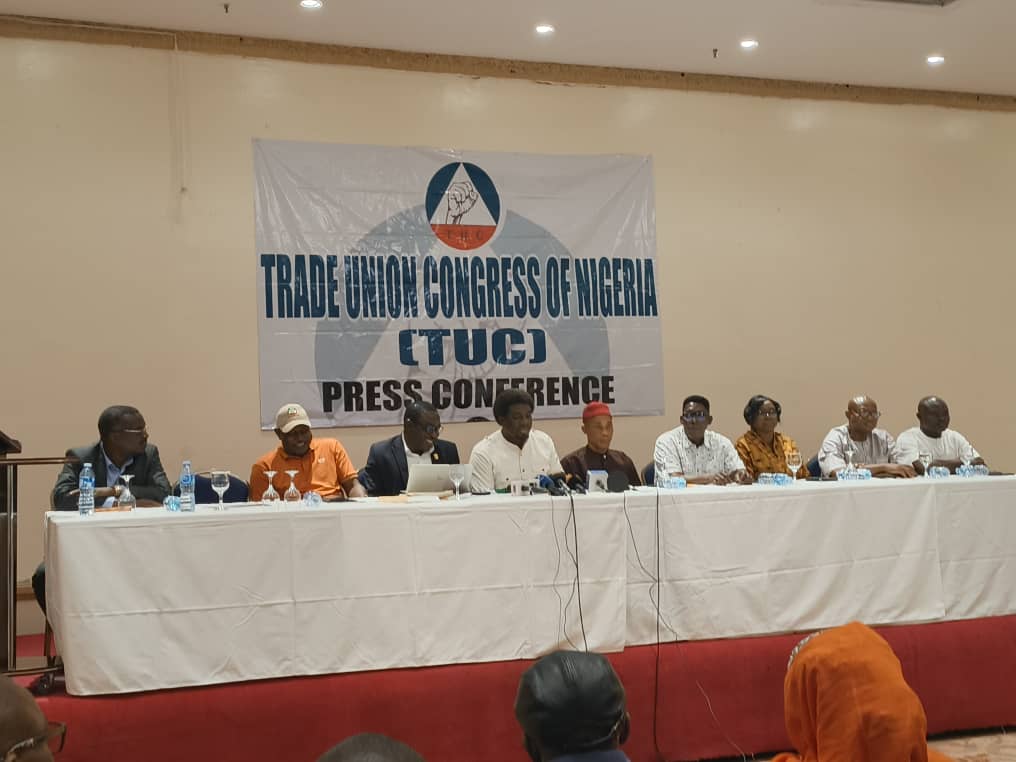
Briefing journalists on the communiqué issued at the end of the National Executive Council (NEC) meeting held on Monday in Abuja, the President of the TUC, Comrade (Engr.) Festus Osifo, insisted that Nigerians must not be made to pay for inefficiency.
He stressed that any tariff regime must be fair, transparent, service-based, and accountable.
He also called on the Federal Government, the Nigerian Electricity Regulatory Commission (NERC), and electricity distribution companies to ensure universal metering, eliminate estimated billing, improve supply, and engage organised labour before implementing policies that impose additional burdens on citizens.
Osifo explained that the NEC meeting reviewed the state of the nation, developments within the congress, reports from affiliates and State Councils, preparations for the 2026 May Day celebration, and other critical issues affecting Nigerian workers.
The Council also expressed deep concern over the ongoing Iran–US tensions and their implications for the global economy, particularly on energy prices, shipping costs, supply chains, inflation, food security, and foreign exchange stability.
According to him, despite Nigeria being an oil-producing nation, increases in global oil prices have not translated into relief for workers, but instead worsened hardship through rising fuel costs, imported inflation, and pressure on the naira.
He called on the Federal Government to treat the situation as both a foreign policy and domestic economic emergency, urging immediate steps to protect Nigerians abroad, curb profiteering, strengthen local refining capacity, and ensure transparent use of additional crude oil revenues to cushion the impact on citizens.
On insecurity, the TUC President expressed grave concern over the rising cases of kidnapping, banditry, terrorism, communal clashes, and other violent crimes across the country, noting that the situation has become both an economic and labour crisis.
He observed that insecurity has disrupted farming activities, hindered safe movement of workers, displaced communities, and led to job losses and business closures.
Osifo called on all tiers of government and security agencies to adopt a coordinated, intelligence-driven, and community-based approach to security, with priority given to protecting farms, schools, highways, workplaces, and rural communities.
He also urged targeted support for displaced persons and affected workers.
On rising fuel prices, he warned that the combined effects of global crude oil volatility, exchange rate pressures, and domestic supply constraints continue to worsen living conditions.
He proposed that part of excess crude revenue be used to subsidise crude oil supplied to domestic refineries, including the Dangote Refinery and other local plants, as a transparent, production-linked measure to reduce the cost of petroleum products without reverting to the old subsidy regime.
The TUC also demanded a 50 per cent reduction in taxes on manufacturing companies and workers to ease economic pressure and boost productivity.
On workers’ welfare, Osifo welcomed the Federal Government’s N10 billion housing loan scheme for civil servants but stressed that it must be accessible, affordable, and transparent.
“The scheme must not be hijacked by privileged interests,” he said, urging state governments to replicate similar initiatives for workers at all levels, including those in the private sector and retirees.
The NEC commended affiliates and State Councils for their commitment to workers’ welfare and noted progress toward acquiring a befitting national secretariat for the Congress.
On internal matters, the TUC reaffirmed Comrade Hannah Omeje as the duly elected Chairperson of its Lagos State Council and directed that non-financial members occupying positions should step down in line with Congress rules.
The Council also reviewed preparations for the 2026 May Day celebration, stressing the need for affiliates to use the platform to advocate for decent work, economic justice, social protection, and job security.
The TUC further condemned casualisation and unfair labour practices, particularly in the food and beverages sector, and urged the Minister of Health to intervene in the dispute between NAFDAC and distilled companies.
Reaffirming its commitment to national development, the Congress warned that it would not hesitate to mobilise workers if policies continue to undermine their welfare and deepen hardship.