


By Hussaini Ibrahim Sulaiman
The Resource Centre for Human Rights and Civic Education has said 2025 was a year marked by worsening economic hardship, insecurity, shrinking civic space and democratic decline, warning that Nigeria risks deeper crisis if urgent reforms are not implemented in 2026.
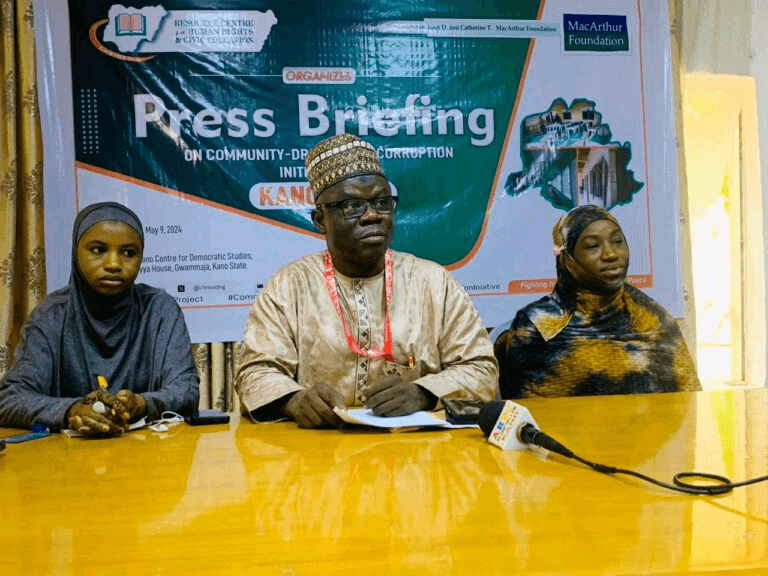
The Executive Director of CHRICED, Comrade Ibrahim M. Zikirullahi, stated this on Saturday in Abuja while delivering the organisation’s end-of-year media briefing on the state of the nation.
Zikirullahi said Nigerians entered 2025 with hope that governance would improve following the challenges of previous years, but were instead confronted with rising inflation, a weakened naira, unemployment and a cost-of-living crisis that pushed millions to the brink.
According to him, despite official claims of economic stabilisation, the lived reality of citizens remained grim, with soaring transport costs, unaffordable healthcare, food insecurity and declining purchasing power.
“Prices may have dropped for some food items, but many Nigerians still cannot afford them due to lack of income,” he said, adding that farmers were also counting losses due to high costs of fertiliser, transportation and labour.
He warned that the situation could discourage farming activities in the coming season, posing a serious threat to food security.
Zikirullahi criticised government economic policies, describing them as burdensome to ordinary citizens, while public officials remained insulated from the effects of hardship.
On governance, the CHRICED boss decried what he described as extravagant public spending amid scarcity, noting that the failure to implement the Oronsaye Report had sustained a bloated and costly government structure.
“It is immoral for leaders to ask citizens to endure hardship while expanding their own privileges,” he said.
He also expressed concern over the conduct of elections in 2025, citing reports of voter suppression, violence and the erosion of democratic competition, particularly in local government polls dominated by ruling parties.
Zikirullahi further warned that Nigeria was drifting towards a one-party state, following mass defections of opposition lawmakers and governors to the ruling party.
“This trend undermines accountability, weakens institutions and fuels public disillusionment,” he said.
On security, he lamented the persistence of kidnappings, banditry and insurgency despite huge budgetary allocations, noting that farmers had abandoned their fields, schools had been disrupted and communities displaced.
He also raised alarm over the shrinking civic space, accusing the state of targeting protesters, activists and journalists instead of addressing insecurity and governance failures.
“The systematic narrowing of civic space reflects a growing fear of dissent,” he said.
Zikirullahi said Nigeria stood at a crossroads, urging the government to urgently reduce the cost of governance, reform security and judicial institutions, strengthen INEC, protect civic freedoms and tackle corruption transparently.
He also called on citizens to take responsibility for defending democracy by rejecting vote-buying, demanding accountability and standing united against impunity.
“Nigeria can rise, but only if citizens refuse to surrender their power,” he said.