


By Hussaini Ibrahim Sulaiman
Kano State Governor, Abba Kabir Yusuf, has called for a visionary and accountable civil service capable of anchoring Nigeria’s development goals, insisting that the future of the country depends on the strength of its public institutions.
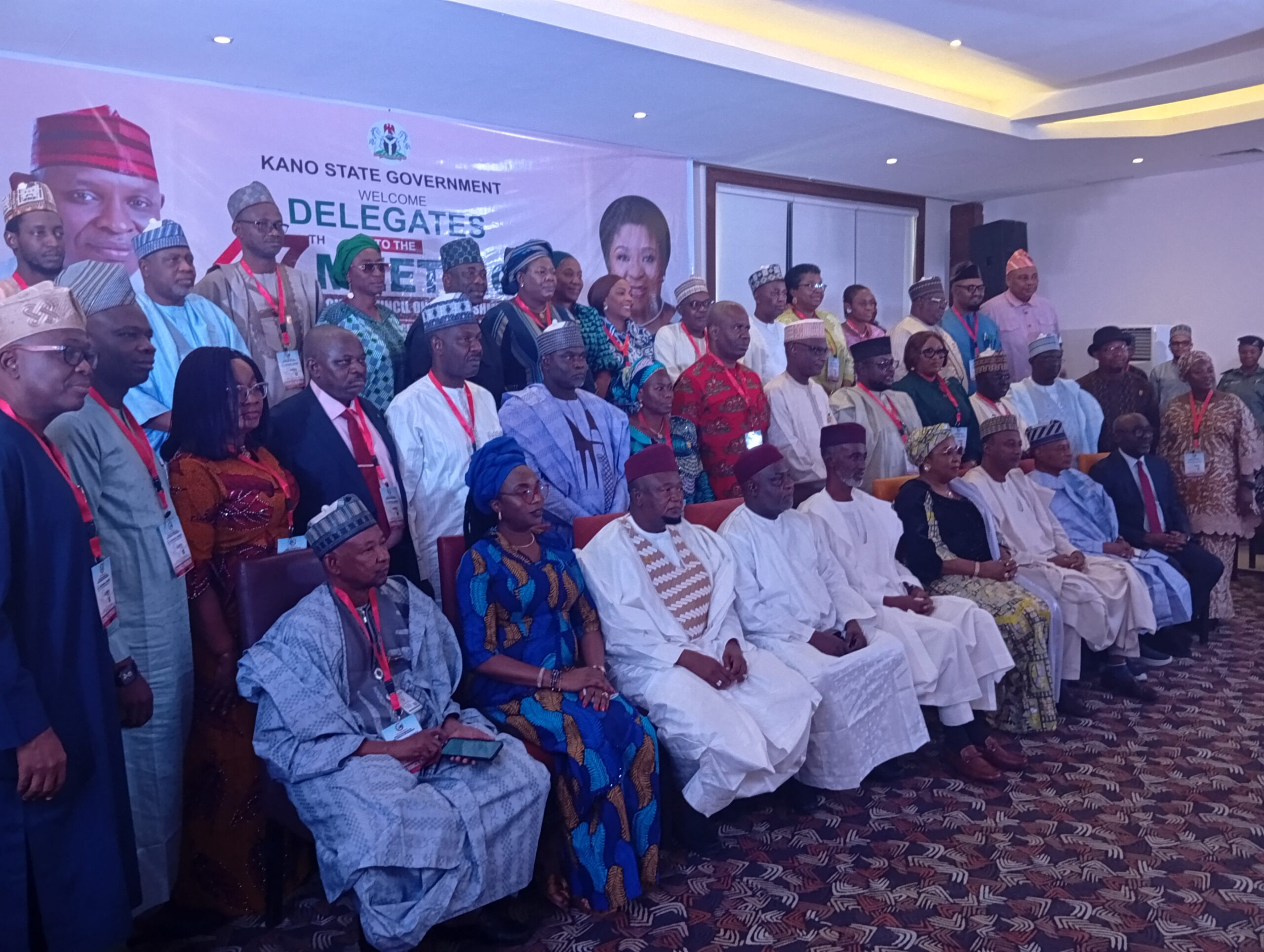
The governor, represented by the Secretary to the State Government, Alhaji Farouq Ibrahim, made the remark on Wednesday while declaring open the plenary session of the 47th National Council on Establishments in Kano.
He told participants that Kano has historically maintained a strong partnership with the Office of the Head of the Civil Service of the Federation, a relationship he said continues to shape Nigeria’s administrative evolution.
“Our civil service must reflect excellence, discipline, and integrity because it remains the engine of national development,” he said.
Ibrahim noted that several prominent federal civil servants who contributed significantly to Nigeria’s growth hailed from Kano, adding that their legacy reflects the state’s longstanding commitment to nation-building.
He also highlighted that many initiatives now widely adopted across the federation—such as the school feeding programme, the Agency for Mass Education, and technical colleges—were pioneered in Kano before being replicated nationally.
According to him, beyond policy discussions, the council must confront deeper questions relating to national cohesion and unity, which he described as recurring challenges demanding honest reflection.
“We must ensure that what we hand over to the next generation is a legacy they can remember with pride, not regret,” he said.
Earlier in her address, the Head of the Civil Service of the Federation, Mrs Didi Esther Walson-Jack, announced that the Federal Government would embark on a comprehensive personnel audit as part of reforms to modernise the public service.
She said the audit, alongside a skills gap analysis, would eliminate ghost workers, strengthen payroll integrity, and support evidence-based human resource planning.
Walson-Jack disclosed that work had commenced on a successor framework to the Federal Civil Service Strategy and Implementation Plan (FCSSIP-25), which winds down this year.
The new framework, she said, will prioritise digital governance, innovation hubs, leadership development, and global reform standards.
“One of our key targets is to deliver a fully paperless civil service by December 31, 2025. Ministries and departments must accelerate their onboarding processes,” she said.
The HoS further revealed that the Federal Executive Council recently approved three new policies—the Rewards and Recognition System, the Incentives and Consequence Management framework, and the Mentoring Policy and Guidelines—to strengthen accountability and performance across the service.
She commended the Kano State Government for its hospitality and commitment to public sector excellence, describing the state as a “pillar of national unity and progressive governance.”
The council, was attended by the Head of Civil Service of the Federation as chairman, Heads of Service from 36 states and FCT as well as Permanent Secretaries and Directors of Establishments as members.