


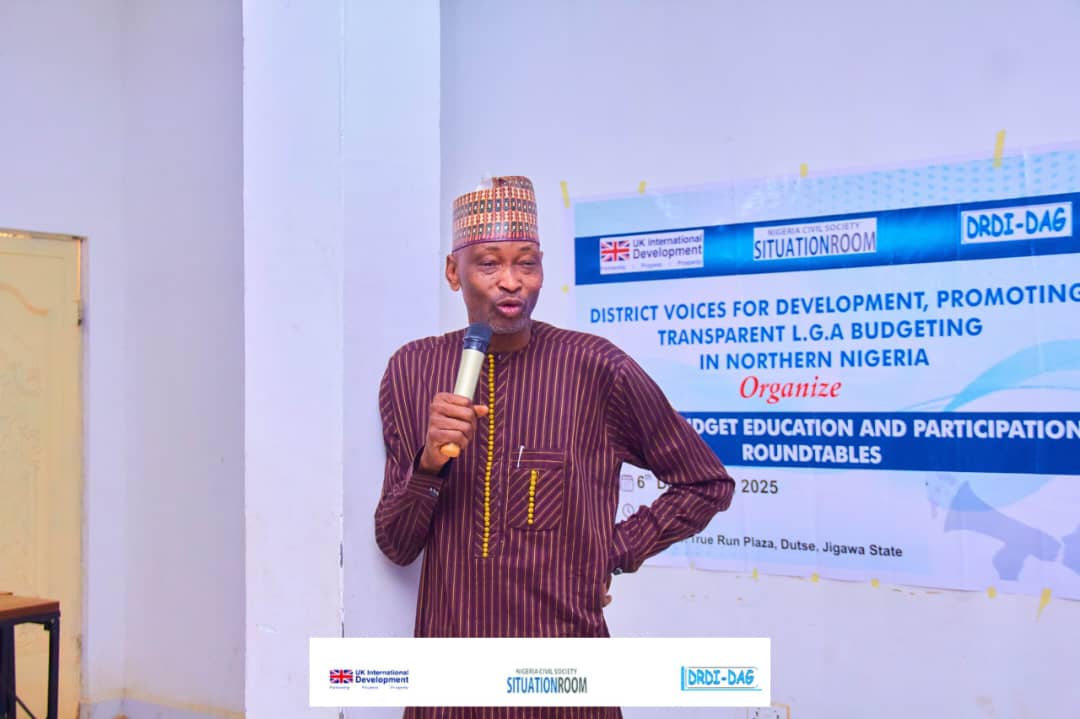
By Hussaini Ibrahim
The Dispute Resolution and Development Initiative has called for urgent policy reforms to strengthen financial autonomy, transparency and accountability in local government administration across Kano State.
The call followed findings from a Rapid Response Research on Local Government Financial Autonomy conducted by the organisation in six local government areas—Bichi, Dambatta, Fagge, Kano Municipal, Karaye and Tudun Wada.
In a statement issued to The Triumph on Saturday, the Executive Director of DRDI, Dr Muhammad Mustapha Yahaya, said the study assessed citizens’ perceptions of the fiscal independence of local councils and examined how financial autonomy could improve grassroots governance and service delivery.
According to him, the research revealed strong public support for increased local government autonomy, with many respondents believing that greater control over resources would enhance service delivery, create jobs and drive community development.
However, Yahaya identified persistent challenges undermining local government autonomy, including state-level control through the State Joint Local Government Account, weak transparency mechanisms, limited technical capacity among council officials and poor citizen participation in governance.
He recommended strengthening fiscal transparency by ensuring that annual budgets, quarterly expenditure reports and Internally Generated Revenue performance data are made publicly available, both online and on community noticeboards.
Yahaya also called for institutionalised participatory budgeting and regular town hall meetings involving citizens, women, youth, business groups and persons with disabilities to deepen public participation.
To improve efficiency, he urged capacity-building for local government staff in financial management, procurement, audit compliance and digital record-keeping.
He further advocated legal and administrative reforms, including constitutional amendments to guarantee direct allocation of funds to local governments and stronger oversight mechanisms.
The DRDI executive director also proposed improved accountability measures such as independent community feedback systems, local monitoring committees and transparent procurement processes.
According to him, while there have been modest improvements in access to budget information and fiscal autonomy, significant gaps remain.
Yahaya stressed that addressing these challenges would enhance public trust, improve service delivery and enable local governments to effectively perform their constitutional role as the foundation of Nigeria’s democratic and development system.