

By Hussaini Ibrahim
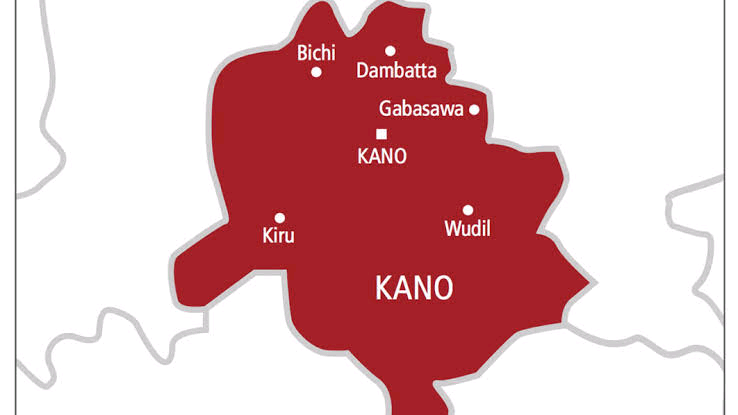
The Federal Government, Kano State Government and the Islamic Development Bank have commissioned the ISDB–UBEC Bilingual Boarding Education School in Kiru Local Government Area of Kano State, in a move aimed at expanding access to inclusive and quality basic education.
The commissioning ceremony, held on Tuesday, attracted top federal and state officials, development partners and education stakeholders, and was described as a major boost to efforts to address the challenge of out-of-school children in the state.
Speaking at the event, Kano State Governor, Abba Kabir Yusuf, represented by the Secretary to the State Government, Umar Farouk Ibrahim, said the project reflected his administration’s commitment to repositioning the education sector through strategic investments in human capital development.
Yusuf said the school, funded through a partnership between the Federal Government and the Islamic Development Bank, was designed to deliver culturally relevant and globally competitive education by integrating Western education with Arabic and Islamic studies.
He recalled that his administration declared a state of emergency in education shortly after assuming office, leading to reforms such as massive teacher recruitment, infrastructure expansion and improved funding for the sector.
According to the governor, over 13,815 qualified teachers have been recruited, thousands of classrooms constructed and renovated, while free uniforms and textbooks have been distributed to pupils across the state.
He added that Kano had increased budgetary allocation to education beyond the UNESCO benchmark and assured that adequate arrangements had been put in place to ensure the smooth take-off and sustainability of the Kiru school.
In her remarks, the Minister of State for Education, Prof. Suwaiba Sa’id Ahmad, said sustained investment in education remained central to President Bola Ahmed Tinubu’s Renewed Hope Agenda.
She said the bilingual model schools initiative underscored the Federal Government’s commitment to equipping learners with strong linguistic foundations alongside vocational, technical and digital skills.
According to her, multilingual education enhances adaptability and productivity, while also improving learning outcomes through modern teaching approaches.
She urged host communities to take ownership of the facilities to ensure their protection and long-term sustainability.
The Executive Secretary of the Universal Basic Education Commission, Hajiya Aisha Garba, said the Kiru facility was one of 30 Bilingual Education Model Schools being developed across nine states, with four located in Kano at Doguwa, Ganduje, Ungoggo and Kiru.
Garba explained that the schools integrate English and Arabic literacy, technical and vocational education, ICT-driven learning and secure boarding facilities, with each school designed to accommodate over 1,000 students.
Also speaking, the Director-General, Corporate Services of the Islamic Development Bank, Dr Mohammed Simsim, reaffirmed the bank’s commitment to supporting initiatives that expand access to quality education.
He said the Kiru school was expected to significantly reduce the number of out-of-school children and improve educational outcomes in Kano State and neighbouring communities.
The project, stakeholders said, represents a collaborative effort by federal and state authorities and development partners to strengthen basic education delivery and promote inclusive learning in northern Nigeria.