


By Shafa’atu Suleiman, Sokoto
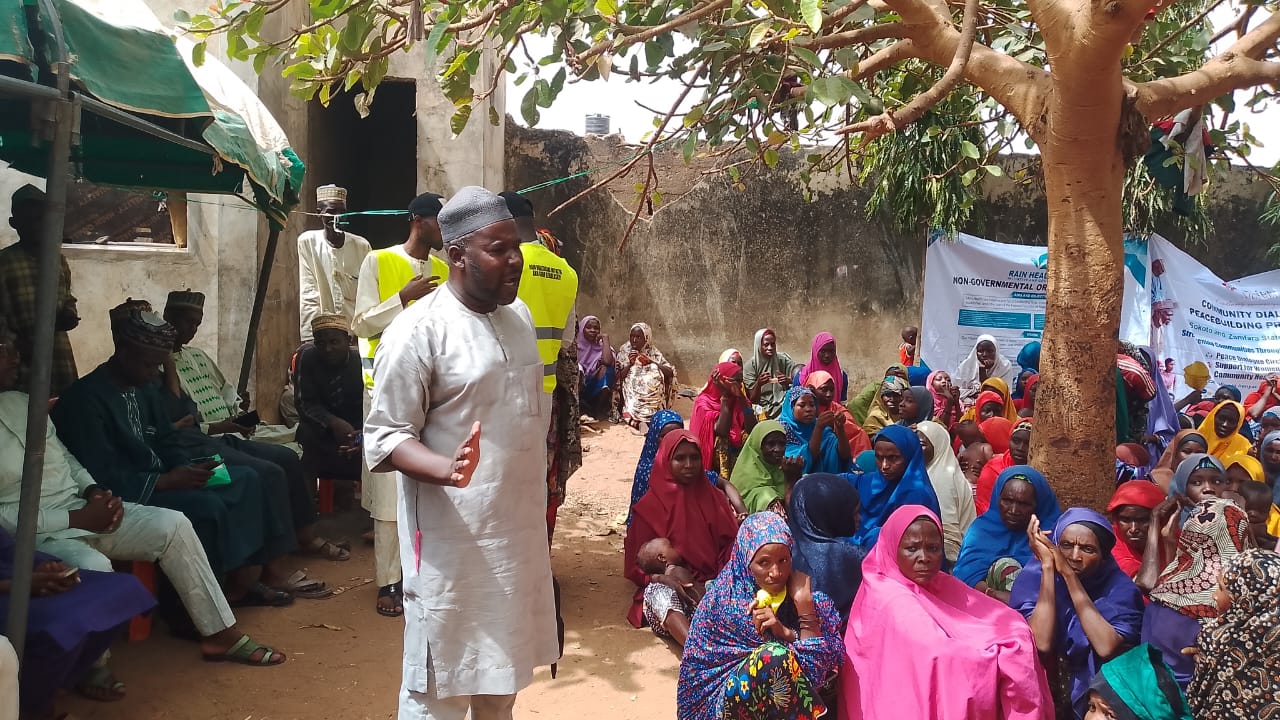
No fewer than 200 internally displaced persons (IDPs), mostly women, have benefited from a community dialogue and psychosocial support programme organised by Catholic Caritas Foundation of Nigeria in collaboration with United Nations Interregional Crime and Justice Research Institute at the Guiwa IDP Camp in Sokoto State.
The intervention, held under the theme, “Building Community Resilience: Supporting Women’s Role in Conflict Prevention and Mediation,” targeted conflict-affected women and vulnerable families displaced by insecurity across the North-West region.
Speaking during the event, the Project Lead of CARITAS Nigeria, Jude Akwo, said the initiative was aimed at strengthening women-led peacebuilding efforts and promoting community resilience against insecurity and violent extremism.
Akwo explained that the programme forms part of the UNICRI-funded project titled, “Assessing and Addressing the Nexus between Organized Crime and Terrorism in Africa.”
According to him, the initiative is part of broader efforts to address the links between organised crime, terrorism and community vulnerabilities while strengthening inclusive peacebuilding mechanisms in conflict-affected communities.
“Women constituted about 70 per cent of the participants in this dialogue because of the incredible role they play in peacebuilding,” he said.
Also speaking, Mahmoud Malami Sadik, a consultant with CARITAS Nigeria, disclosed that findings from field research conducted in Sokoto and Zamfara states revealed that women remain the worst-hit victims of banditry and displacement.
“We discovered that women are the major category of people affected. Many have lost their husbands and are now widows, while some were raped,” Sadik said.
He noted that the research covered Wurno and Goronyo Local Government Areas of Sokoto State, where interviews were conducted with IDPs, community leaders, security experts and other stakeholders.
Sadik lamented the poor living conditions in many IDP settlements, revealing that some displaced women still face abuse and insecurity even after fleeing violent attacks.
“Some of them are living in uncompleted buildings without proper security. Some places do not even have perimeter fences, while others lack basic sanitary facilities such as toilets and access to potable water,” he added.
He stressed that the project seeks to transform women from victims of conflict into agents of peace and mediation within their communities.
“We want to turn the narrative from women being just victims to becoming agents of peace. As mothers, daughters and wives, they have critical roles to play in conflict prevention and mediation,” he said.
A major highlight of the event was a psychosocial support session facilitated by Fauziyya Sani, a certified psychosocial specialist, who provided guidance on trauma management, emotional wellbeing and resilience-building.
Also speaking, Abdulkareem M. Lawali, representing the Special Adviser to the Governor of Sokoto State on Resident Communities and IDPs, reaffirmed the state government’s commitment to supporting programmes aimed at improving the welfare of displaced persons and promoting sustainable peace.
He commended CARITAS Nigeria and its partners for implementing interventions that address both the humanitarian and social dimensions of displacement.
Participants expressed appreciation to CARITAS Nigeria and UNICRI for the intervention, describing the support as timely amid growing humanitarian challenges facing displaced families.