


From Shuaibu Ibrahim Gusau
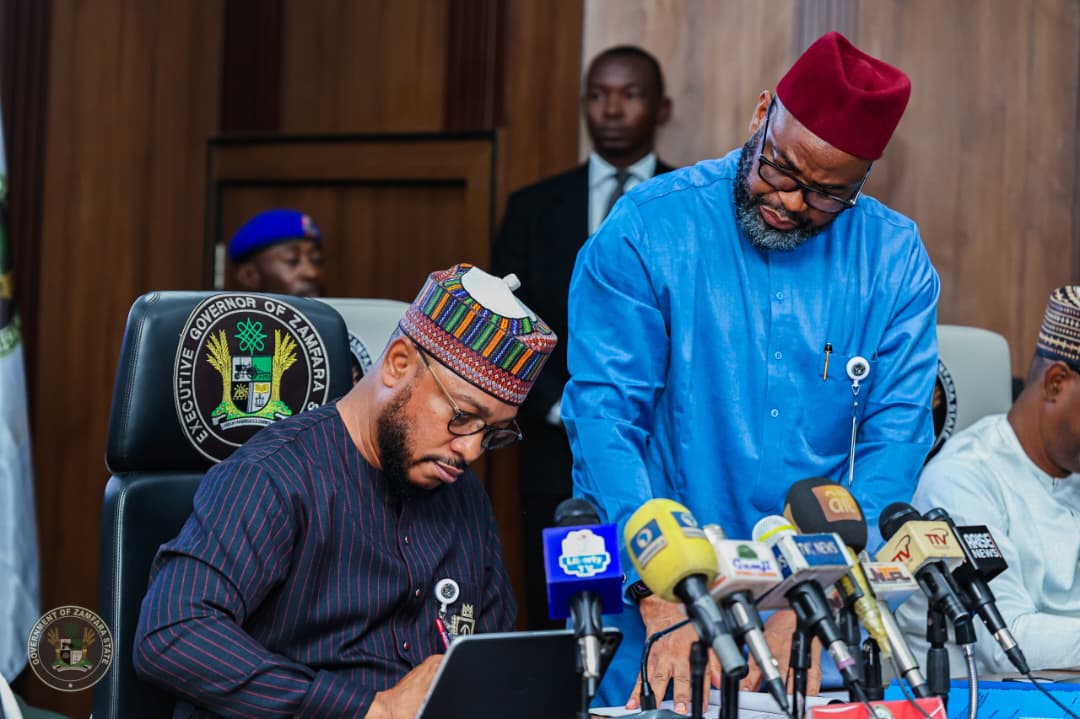
Zamfara State Governor, Dauda Lawal, has signed a series of Executive Orders aimed at transforming the state’s education sector through improved governance, financing, school protection, quality assurance, health services, and security.
The governor announced the reforms on Tuesday during a stakeholders’ meeting at the Government House, Gusau, where he also launched the distribution of the national curriculum to public schools across the state.
According to a statement by the governor’s spokesperson, Sulaiman Bala Idris, the Executive Orders provide a comprehensive framework to address key challenges affecting the education sector, including school administration, operations, student welfare, school feeding programmes, transportation safety, safe school implementation, and the regulation of graduation ceremonies.
The reforms also cover unified examinations, school health services, merit-based appointment of school leaders, inclusive education, and the promotion of Science, Technology, Engineering and Mathematics (STEM), Technical and Vocational Education and Training (TVET), as well as digital learning.
Speaking at the event, Governor Lawal described education as more than a social service, stressing that it remains a critical tool for poverty reduction, peace building, security enhancement, economic growth, and preparing young people for the demands of a knowledge-based global economy.
“Today, we are turning that commitment into concrete institutional reforms by signing and presenting these Executive Orders.
“These Executive Orders are not isolated directives. Together, they constitute a comprehensive governance framework designed to strengthen school administration, improve accountability, protect public educational assets, enhance financing, promote safety, raise educational standards, improve learning outcomes, and prepare our children for the demands of the twenty-first century,” the governor said.
Governor Lawal noted that previous education reforms had largely focused on physical infrastructure, such as classrooms, laboratories, and learning facilities, but stressed that infrastructure alone cannot guarantee quality education without strong systems and effective management.
Earlier, the Commissioner for Education, Science and Technology, Abdulmalik Abubakar Gajam, said sustainable education development requires collaboration among government institutions, teachers, parents, communities, traditional leaders, development partners, and the private sector.
He added that the reforms would go beyond policy documents and translate into safer schools, stronger governance, healthier learners, improved teaching standards, better learning outcomes, and increased public confidence in Zamfara’s education system.