


By Lamara Garba
Kano is beginning to speak with a more united political voice. As the 2027 general elections draw closer, politicians who once occupied different political camps are increasingly converging under the banner of the All Progressives Congress, APC, creating a political landscape that is noticeably different from the familiar pattern of fierce rivalry and fragmentation.
The arrival of prominent politicians, former elected officials, party leaders and thousands of supporters from different political backgrounds is therefore more than a routine exercise in political realignment; it signals an emerging consensus around stability, continuity and the search for a broader political platform capable of carrying Kano into its next chapter.
The significance of this development extends beyond the movement of politicians from one party or political group to another. It represents an emerging political convergence and a growing search for unity, stability and a shared vision for Kano.
The entry of prominent political figures, on Saturday , 5th September, 2026 including Senator Rufa’i Sani Hanga and former Governor Kabiru Ibrahim Gaya, alongside other experienced politicians and stakeholders, has added a new dimension to the political equation in the state.
Their movement into the APC, together with the reported influx of thousands of new members, suggests that Kano’s political landscape is undergoing a significant realignment as the state prepares for another crucial electoral contest.
Politics is ultimately a game of confidence. Political platforms may change and alliances may evolve, but people are generally drawn towards where they see hope, opportunity and the prospect of a better future.
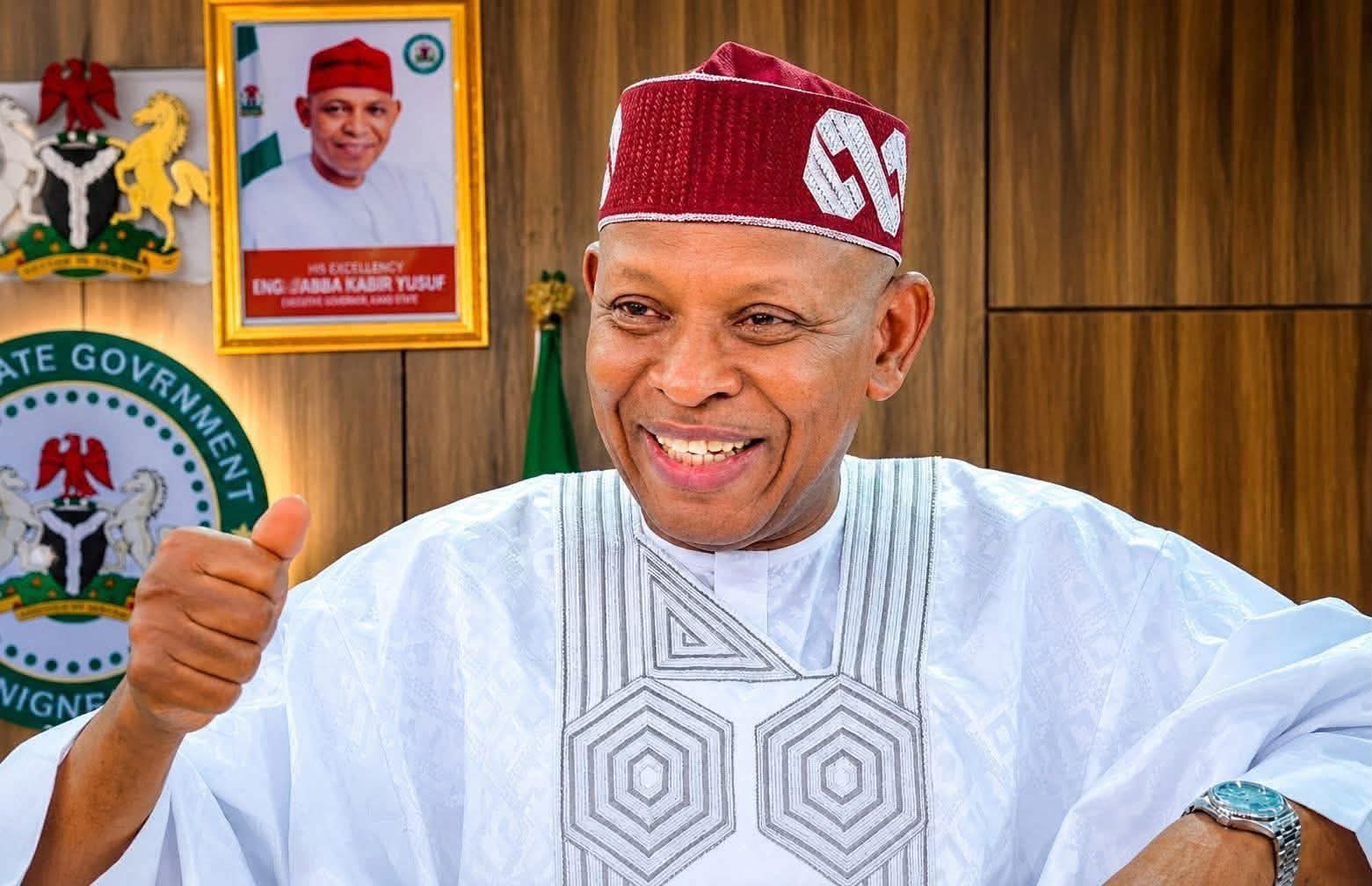
That is why the growing political convergence around Governor Abba Kabir Yusuf and the APC deserves attention. The movement of politicians into the APC is undoubtedly significant, but the more important question is why the political landscape is changing.
One possible explanation lies in the growing public acceptance of Governor Yusuf and the direction of his administration, particularly its emphasis on people centred policies, human capital development and programmes intended to improve the lives and prospects of citizens.
At the heart of this approach is a simple but profound philosophy: government must ultimately be about the people.
The greatest political strength of any leader does not lie only in the number of influential personalities standing beside him, but in the confidence of ordinary citizens who believe that government understands their needs and aspirations.
People do not live on political slogans; they live with the consequences of government policies. Parents worry about the education and future of their children, young people seek opportunities to develop their potential, families require access to essential services, while communities expect development that they can see and experience.
It is in this relationship between government and the people that Governor Yusuf has sought to build the political foundation of his administration.
The emphasis on people centred policies and human capital development reflects an understanding that the most valuable resource of Kano State is not merely what lies beneath its soil or the structures that stand above it, but its people.
A government that invests in people is investing in the future; a society that educates its children is preparing tomorrow’s leaders; a government that creates opportunities for young people is building hope; and a leadership that places human development at the centre of governance is laying a foundation that can outlive any political administration.
This is why the question of continuity has become increasingly important as Kano moves towards 2027.
Development is not an event; it is a process. No meaningful policy achieves its full potential overnight. Educational investments require time, human capital programmes require consistency, while development plans need stability of leadership and the patience of the people.
The argument for the continuity of Governor Yusuf’s administration must therefore be viewed beyond the narrow prism of political ambition.
It is about allowing policies to mature, consolidating development programmes, deepening investments in the people and giving a government that has established a development direction the opportunity to take that journey further.
This provides a philosophical foundation upon which the case for a second term can be made.
There is also a broader political significance in the growing convergence of leaders and supporters under the APC.
For years, Kano politics has been characterised by intense competition, and political rivalry is not necessarily a bad thing because democracy thrives on choices, competing ideas and different visions for society.
However, competition must never become a permanent source of division.
The people of Kano deserve an election season that inspires confidence rather than fear, and they deserve political leaders who understand that the collective interest of the state is greater than personal disagreements.
The growing unity therefore deserves to be encouraged because the coming together of political leaders with different histories and backgrounds provides an opportunity for Kano to reduce tension and strengthen democratic stability as 2027 approaches.
Kano is too politically important to remain trapped in endless divisions. Its population, commercial influence and political consciousness make it impossible to ignore, and whatever happens politically in Kano often carries consequences beyond its borders.
The state therefore requires leadership capable of uniting rather than dividing, inspiring confidence rather than uncertainty and placing development above partisan bitterness.
Governor Yusuf’s growing political acceptance and the expanding support for the APC offer an opportunity to build such a broad political consensus, although political unity must always be accompanied by responsibility.
The arrival of influential politicians and thousands of new supporters should not create complacency. Rather, it should strengthen the determination of the government and the party to deliver more meaningful results.
The true measure of political popularity is not the size of the crowd at a rally, but the confidence that remains in the hearts of the people after the political excitement has faded.
That confidence must be earned continuously through performance, inclusive governance, accountability and policies that address the real needs of citizens.
Governor Yusuf and the APC therefore have an opportunity to present the people of Kano with a compelling argument as 2027 approaches, but that argument should not rest merely on promises.
It must rest on performance, policies and the visible impact of governance.
The people will ask what has been achieved, what has changed, what opportunities have been created and what remains to be done.
They will ultimately decide whether the journey deserves to continue, and that is the essence of democracy.
Yet the growing political convergence in Kano has already provided an important indication of the changing mood.
The decision of prominent political figures and thousands of their supporters to come together under one broad political platform reflects a growing belief that unity and continuity may offer Kano a stronger path towards the future.
The coming together of these political forces has also helped to reduce some of the anxieties traditionally associated with election seasons. Where leaders are willing to dialogue, cooperate and place the larger interest of society above personal differences, the political atmosphere becomes more stable.
For Governor Abba Kabir Yusuf, however, the greatest task remains governance. Political support can be won, but public confidence must be sustained; a leader must continue to listen to the people, a government must continue to respond to their needs and development must continue to reach beyond political speeches into the daily lives of citizens.
The strongest argument for a second term will therefore be found not merely in the number of politicians who have joined the APC, but in the number of people whose lives have been touched by the policies and programmes of the administration.
That is the true meaning of people centred governance. As Kano moves towards 2027, the state appears to be entering a new political phase in which the convergence of experienced politicians, the growing support for the APC and the increasing confidence in Governor Yusuf have created a momentum that cannot easily be ignored. But the most important political force remains the people, and they will have the final word.
If the administration continues to deepen its people centred policies, strengthen human capital development, sustain public confidence and promote political inclusion, then the argument for continuity will become even stronger.
The politicians may have found a common umbrella, but the ultimate purpose of politics must remain the welfare of the people.
If the emerging unity in Kano is sustained and translated into purposeful governance, then the road to 2027 may become more than a contest for political power; it may become a collective decision about the future Kano wants to build and the leadership it believes should continue that journey.
For Governor Abba Kabir Yusuf and the APC, unity has created an opportunity, but performance must justify it.
The political realignment may be gathering momentum, but the enduring question will remain whether that momentum can be converted into better governance, greater opportunity and a more united Kano.
In the final analysis, it is the people who will decide, and their verdict will be shaped not simply by political alliances, but by their lived experience of governance.
Lamara Garba, a veteran journalist, writes from Kano