


By Rabiu Sanusi
The People Influence and Action (PIA) Project has called for stronger citizen participation in governance, urging communities to become more active in influencing decisions and demanding accountability from public institutions.
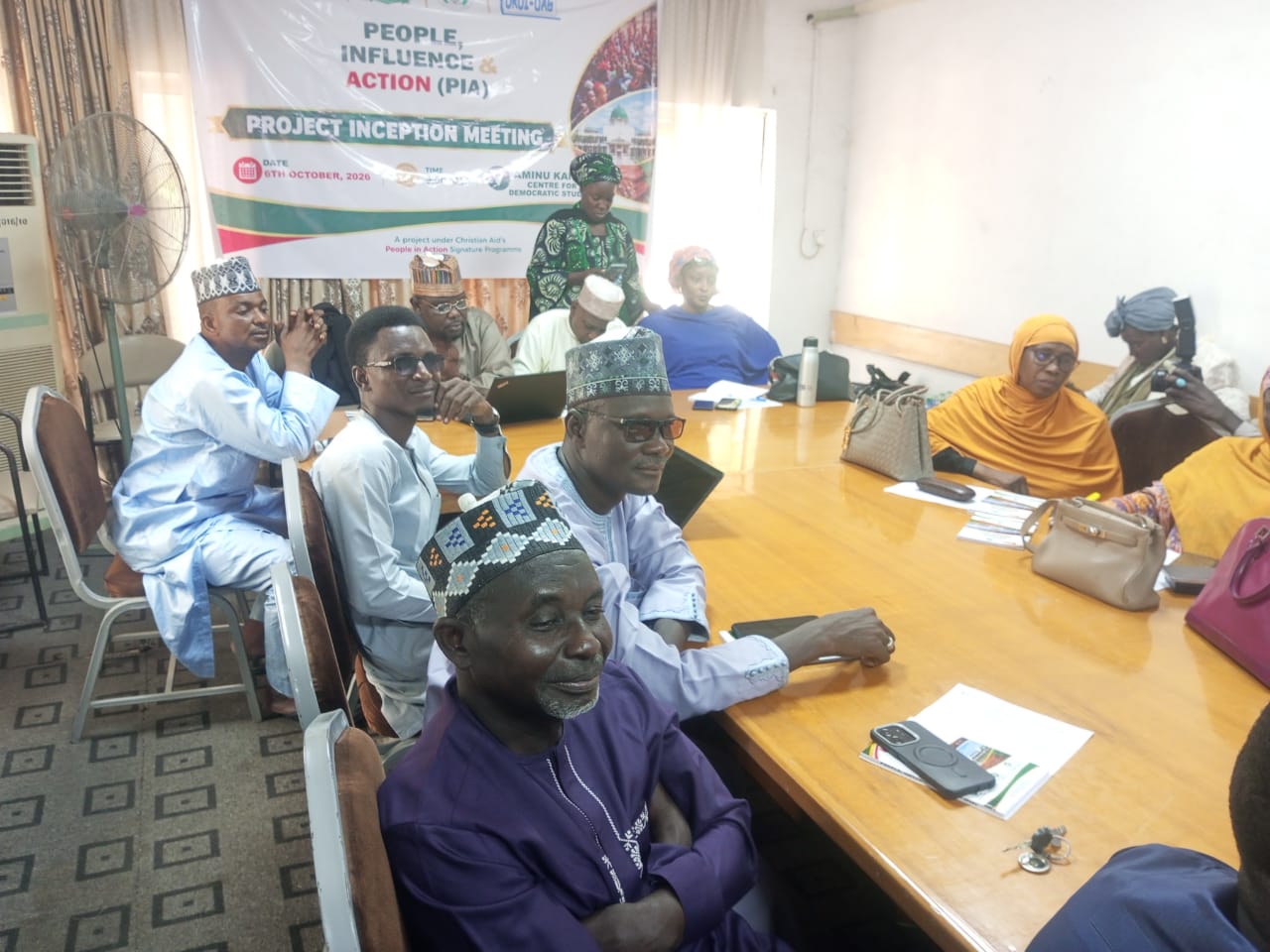
The call was made at the inception meeting of the PIA Project held at Mubayya House Kano where stakeholders stressed the need to strengthen civic participation protect citizens’ rights and build a more responsive relationship between communities and decision-makers.
The project, implemented by the Tax Justice and Governance Platform (TJ&GP) in collaboration with the Civil Society Legislative Advocacy Centre (CISLAC) and Founded by Christian Aid is designed to empower citizens to organise around issues affecting their communities and collectively push for meaningful policy and governance reforms.
Speaking at the meeting, Kaduna state Coordinator Tax Justice and Government Platform, Simeon Olatunde said the initiative would provide communities with the tools to transform their concerns into evidence that could be used for policy engagement, advocacy and accountability.
Olatunji explained that the project would focus on civic space, citizen participation and gender inclusion while creating stronger platforms through which communities could engage government and demand responses to issues affecting their lives.
He stressed that governance goes beyond the activities of elected officials and public servants, noting that citizens also have a critical role to play in shaping decisions that directly affect their communities.
According to him, the PIA Project seeks to move citizens from merely observing governance processes to actively participating in them, particularly by equipping communities with knowledge and collective strength to engage decision-makers.
Participants at the meeting also highlighted the importance of ensuring that Women, Young people and persons with disabilities are not excluded from civic and governance processes.
A participant representing the groups said inclusive governance could only be achieved when citizens, regardless of their background or status have meaningful opportunities to express their concerns and influence decisions.
Stakeholders further maintained that accountability cannot be achieved through government institutions alone, stressing the need for organised and informed citizens who can consistently demand transparency and responsible leadership.
They said stronger civic participation would also help bridge the gap between communities and government by ensuring that policies and programmes reflect the realities and priorities of the people.
The organisers said the success of the PIA Project would ultimately be measured by its ability to convert citizens’ concerns into collective action, and collective action into measurable influence on governance.
They therefore urged communities and civil society actors to seize the opportunity provided by the project to strengthen civic engagement and promote a governance system that is more inclusive, accountable and responsive to citizens needs.