


By Musa Tanko Muhammad, Anipr
There are professional experiences that leave lasting impressions, not merely because of the events themselves, but because of the opportunities they create for learning, intellectual growth, exposure and a deeper appreciation of one’s chosen profession.
My participation in the 13th World Public Relations Forum (WPRF), Abuja 2026, was undoubtedly one of such experiences.
To me, I have never had it so good. It was a tremendous honour and privilege to be part of the distinguished gathering of communication professionals, scholars, policymakers and thought leaders from different parts of the world.
Beyond the excitement of attending an international event of such magnitude, the experience offered an exceptional opportunity to appreciate how far public relations has evolved and how much more it can contribute to governance, leadership, international relations and the collective well-being of humanity.
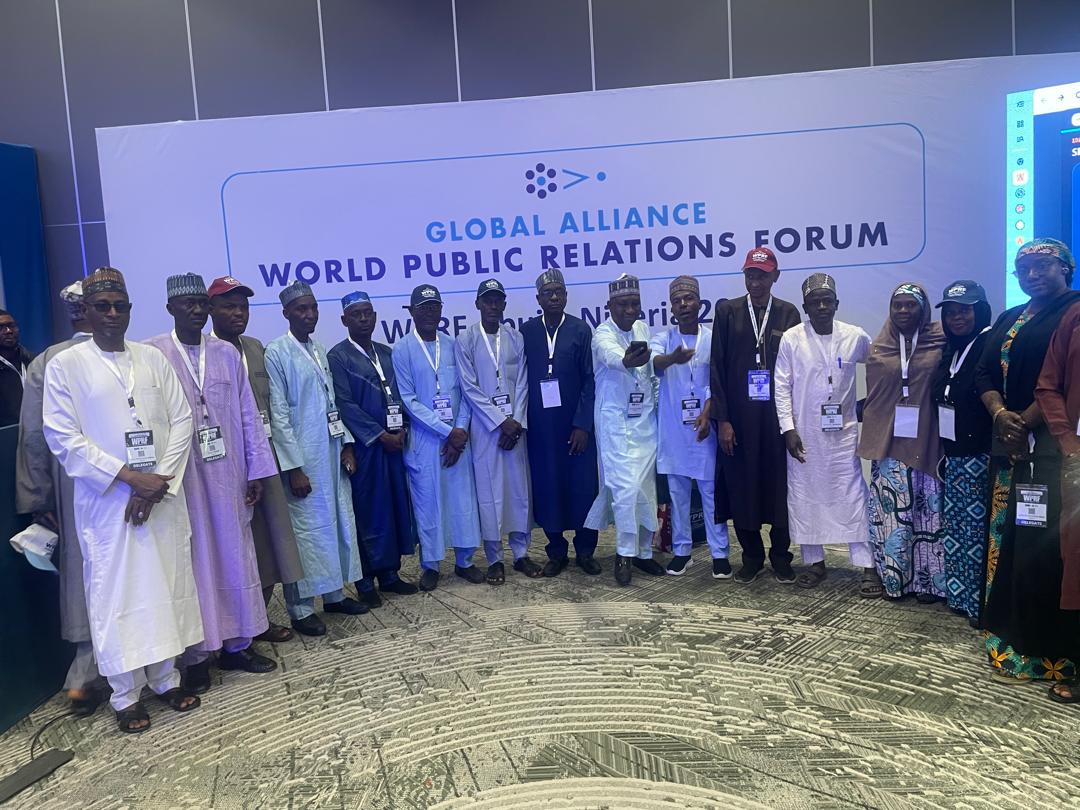
Held at the Transcorp Hilton Hotel, Abuja, from 15th to 22nd November 2026, the forum brought together more than 3,000 delegates from 126 countries under the theme, “Responsible Communication: The Voice of the World.”
It was a remarkable assembly of intellectual resources, professional experiences and global perspectives, providing a platform for meaningful conversations about the future of public relations and strategic communication.
For Nigeria, hosting the prestigious forum was itself a significant achievement. It was the first time the World Public Relations Forum was held in the West African sub-region, with the Nigerian Institute of Public Relations (NIPR) playing a central role in bringing the international gathering to the country.
The significance of the occasion was further underscored by the presence of the Vice President, Senator Kashim Shettima, who represented President Bola Ahmed Tinubu at the opening ceremony and formally declared the conference open.
The participation of governors, ministers, ambassadors, high commissioners and other distinguished personalities reinforced the importance attached to the forum and its relevance beyond the professional boundaries of public relations.
A Rare Opportunity for Professional Growth
One of the most remarkable aspects of my participation was being part of the 45-member delegation sponsored by the Kano State Government, led by the Honourable Commissioner for Information and Internal Affairs, Hon. Sanusi Bature Dawakin Tofa.
What made this gesture particularly commendable was its timing. Barely a few days after his swearing-in as Commissioner, Hon. Sanusi Bature Dawakin Tofa demonstrated an immediate commitment to professional development by facilitating the participation of 45 persons, including himself, at the international forum.
This was not simply an opportunity to attend a conference. It was an investment in people, professional competence and the future of public communication in Kano State.
I consider the initiative especially worthy of commendation when viewed against the Commissioner’s earlier public position on the importance of supporting the media industry and its practitioners.
At a one-day North-West Zonal Security Summit for Journalists, themed “Journalism in a Challenging Security Environment: Safety, Professionalism, and Media-Security in the North-West,” he described the administration of Governor Alhaji Abba Kabir Yusuf as media-friendly and disclosed that billions of naira had been expended in support of the media industry and journalists since the administration assumed office.
Such a position deserves attention because a vibrant, professionally equipped and adequately supported media sector remains indispensable to democratic governance. The media informs citizens, strengthens accountability, provides platforms for public debate and helps society understand government policies and programmes.
Equally important is the recognition that journalists, public relations practitioners and government information managers require continuous exposure, training and professional development to remain relevant in an increasingly complex communication environment.
The sponsorship of the Kano delegation to WPRF 2026 provides a practical illustration of this understanding. It reflects the value of investing in the intellectual and professional capacity of people whose responsibilities directly affect public information, institutional reputation and public confidence.
For those of us who benefited from the opportunity, the experience was invaluable. I am particularly grateful to the Commissioner for the initiative, as well as Professor Sule Ya’u Sule, whose leadership, commitment and support contributed to making the participation a memorable experience.
Indeed, I believe the exposure has enlarged our professional perspectives and equipped us with fresh ideas that can be translated into improved communication practice across our respective areas of responsibility.
Public Relations Has Gone Far Beyond Publicity.
Perhaps one of the most important lessons I took away from the forum is that public relations has moved considerably beyond its traditional perception as a profession largely concerned with issuing press releases, preparing press statements, projecting favourable institutional images and maintaining relationships with the media.
Those functions remain relevant, but they no longer adequately define the full scope of contemporary public relations.
The profession has become an increasingly strategic instrument for relationship management, reputation building, stakeholder engagement, conflict management, institutional development and the promotion of mutual understanding.
In today’s interconnected world, communication is no longer simply about transmitting information from one point to another. It is about understanding audiences, appreciating different perspectives, building confidence, managing expectations and creating relationships that can withstand disagreements and changing circumstances.
This broader understanding has important implications for governments, corporate organisations, international institutions and society at large.
For government communication professionals, in particular, the responsibility extends beyond announcing policies and reporting government activities. It involves helping citizens understand public decisions, providing credible information, listening to legitimate concerns, correcting misconceptions and creating channels through which government and the governed can engage constructively.
A government communication officer must therefore be more than a writer of statements or a manager of publicity. The role requires strategic thinking, institutional understanding, professional integrity and the capacity to communicate in ways that promote public confidence.
The conversations and professional engagements at WPRF reinforced my conviction that public relations practitioners must continuously expand their intellectual horizons if they are to respond effectively to the demands of modern governance and society.
A University That Could Redefine the Future of Public Relations
Among the most historic developments associated with the forum was the formal unveiling and presidential endorsement of the proposed University of Public Relations and Leadership (UPRL), an initiative of the Nigerian Institute of Public Relations.
The announcement, made by Vice President Kashim Shettima on behalf of President Bola Ahmed Tinubu, represented an important milestone in Nigeria’s ambition to assume a stronger position in the global advancement of public relations education and professional leadership.
Located at Gudi in Akwanga Local Government Area of Nasarawa State, the university is being developed on 101 hectares of land donated by the Nasarawa State Government under Governor Abdullahi Sule.
The initiative has also attracted collaboration involving the NIPR, the Nasarawa State Government and the Global Alliance for Public Relations and Communication Management, among other stakeholders.
The project had earlier recorded important milestones, including the signing of a Memorandum of Understanding in July 2025 and the foundation-laying ceremony in December of the same year. The developments announced at WPRF 2026 therefore represent further progress in the realisation of an ambitious educational vision.
Promoted as the world’s first specialised university dedicated to public relations and leadership, the institution is expected to provide specialised academic and professional training in areas including public relations and communication studies, strategic communication, leadership and development studies, media entrepreneurship, governance and institutional leadership.
To me, the significance of this initiative goes far beyond the establishment of another university.
It is a recognition that public relations deserves a more prominent place in the academic and intellectual development of nations. It is also an acknowledgement that communication, leadership and institutional effectiveness are closely interconnected.
The world is increasingly confronted with complex challenges that cannot be addressed solely through economic policies, political declarations or military strength.
Many of these challenges require dialogue, negotiation, consultation, mutual understanding and the ability to build relationships across differences.
This is where the wider philosophy of public relations becomes particularly relevant.
If properly developed and strategically applied, the discipline can contribute to the creation of a society in which institutions and individuals are better equipped to understand one another, manage competing interests and pursue common objectives.
I see the proposed university as an opportunity to develop a new generation of communication professionals and leaders who can bring these values into public administration, diplomacy, international relations, corporate leadership and other areas of human endeavour.
For Nigeria, it is also an opportunity to contribute meaningfully to global knowledge, professional standards and the intellectual direction of the public relations industry.
Public Relations as an Instrument for Peace and Global Understanding:
One of the broader reflections inspired by the forum is the enormous potential of public relations in promoting peace, dialogue and the general well-being of humanity.
The world is currently confronted by conflicts, diplomatic tensions, political disagreements, social divisions and other challenges that threaten peaceful coexistence. In many instances, differences that could have been addressed through dialogue and mutual understanding escalate into prolonged disputes with devastating consequences for communities and nations.
While public relations alone cannot resolve wars or replace diplomacy, international law and political responsibility, its underlying principles offer valuable tools for creating the understanding and confidence required for peaceful engagement.
The ability to listen, communicate honestly, appreciate different perspectives, manage disagreements and establish mutually beneficial relationships is essential to peaceful coexistence.
These are not merely professional techniques. They are important ingredients of responsible leadership and sustainable human relationships.
I therefore believe that the future of public relations should be understood in a much wider context than the management of institutional images or the protection of reputations. Its contribution should also be measured by how effectively it helps individuals, organisations and nations understand one another and manage their differences constructively.
Imagine a world in which nations increasingly prioritise consultation, negotiation and dialogue before allowing disagreements to deteriorate into destructive confrontations. Imagine international institutions using communication more effectively to build trust, reduce suspicion and promote cooperation among people with different political, cultural and ideological backgrounds.
Such a world may appear ambitious, but it is a worthwhile aspiration.
The proposed University of Public Relations and Leadership could become an important contributor to this vision by producing professionals and leaders who understand that communication is not merely about influencing opinions, but also about building relationships, facilitating understanding and advancing shared human interests.
This, to me, is one of the most compelling reasons why the establishment of the institution deserves national and international attention.
Artificial Intelligence and the Responsibility of the Modern Practitioner:
Another important dimension of contemporary public relations that deserves serious consideration is the growing influence of artificial intelligence.
The rapid advancement of AI is transforming the way communication professionals work.
From content development and media monitoring to research, audience analysis, information processing and digital engagement, emerging technologies are creating opportunities that were almost unimaginable only a few years ago.
The possibilities are enormous. AI can improve efficiency, assist in analysing information, support strategic planning and help practitioners respond more effectively to the increasing demands of modern communication.
However, the adoption of technology must not be allowed to weaken the ethical foundations of the profession.
Artificial intelligence may generate content, process information and identify patterns, but it cannot relieve the practitioner of the responsibility to exercise professional judgement.
Technology cannot replace human empathy, contextual understanding, accountability and the obligation to communicate truthfully.
This is particularly important in public-sector communication, where inaccurate information about government policies, healthcare programmes, public benefits or institutional decisions can mislead citizens, create confusion and undermine confidence in public institutions.
Every message produced with the assistance of AI must therefore undergo appropriate human scrutiny to establish its factual accuracy, relevance, fairness and consistency with approved institutional positions.
Public relations practitioners must also remain conscious of data privacy, intellectual integrity, misinformation and the responsible use of citizens’ information.
The challenge before the modern practitioner is not simply to embrace artificial intelligence, but to understand how to use it responsibly and professionally.
AI should strengthen our capacity to communicate, not weaken our responsibility to communicate truthfully.
Technology may improve the speed of communication, but integrity must determine its direction.
This is an important lesson for government information managers, media professionals and all those entrusted with communicating on behalf of institutions.
The more powerful our communication tools become, the greater our responsibility to ensure that they serve the public interest.
The Importance of Continuous Learning and Professional Networking
Beyond the formal sessions and intellectual discussions, the forum provided an exceptional opportunity for interaction with communication scholars, experienced practitioners and professionals from different countries.
The value of such engagements cannot be measured only by the number of presentations attended or the certificates received. Sometimes, the most enduring lessons come from conversations, professional exchanges and the opportunity to understand how others approach similar challenges in different institutional and cultural environments.
The experience further demonstrated that public relations is a constantly evolving discipline. What may be considered an effective communication strategy in one environment may require adjustment in another, depending on the political, social, cultural and technological realities involved.
This makes continuous learning indispensable.
For practitioners in government institutions, the need is even more pressing. Public expectations are changing, communication channels are expanding, and the speed at which information circulates continues to increase.
Government information managers must therefore remain intellectually alert, technologically competent and professionally prepared to meet emerging demands.
I returned from the forum with a stronger appreciation of the need for continuous professional development, knowledge sharing and the practical application of international best practices within our local institutional environments.
The experience has also strengthened my belief that professional networks should not end with the conclusion of conferences. They should become enduring channels for collaboration, exchange of ideas and the development of solutions to common communication challenges.
Bringing the Lessons Home to Kano State
Perhaps the most important question after an international professional gathering is: What happens next?
What practical value can participants bring back to their institutions, their communities and the people whose interests they serve?
For me, the true value of attending WPRF 2026 will ultimately be determined by how effectively the knowledge and exposure gained are translated into improved professional practice.
Kano State has a dynamic governance environment, a vibrant media community and a large population with diverse information needs.
These realities make strategic communication particularly important.
The lessons from the forum should encourage stronger collaboration between government communication offices, media organisations, professional associations and other stakeholders.
There is also a need to deepen the application of research-based communication, improve the use of digital platforms, strengthen public engagement and ensure that government information is timely, accurate, accessible and responsive to citizens’ concerns.
Equally important is the need to invest continuously in the training and retraining of information officers, public relations practitioners and other communication professionals.
The experience of the Kano delegation should therefore be seen not merely as a successful international outing, but as an opportunity to strengthen the state’s communication capacity.
Those who benefited from the sponsorship have a responsibility to share knowledge, encourage professional standards and contribute to the improvement of communication within their respective institutions.
In this regard, I sincerely commend the leadership demonstrated by Governor Abba Kabir Yusuf’s administration through the Honourable Commissioner for Information and Internal Affairs, Hon. Sanusi Bature Dawakin Tofa. Supporting professional development is a meaningful way of strengthening the people and institutions upon which effective governance depends.
A Personal Experience That Will Remain Memorable.
Looking back, my participation in WPRF Abuja 2026 was much more than an opportunity to attend an international conference. It was an intellectual journey, a professional awakening and a valuable opportunity to appreciate the expanding responsibilities of public relations in a rapidly changing world.
The gathering brought together people, ideas and experiences from different parts of the globe, yet it also reinforced a common understanding: responsible communication is essential to building trust, strengthening institutions and promoting peaceful coexistence
I returned with a broader appreciation of the profession, a renewed commitment to professional ethics and a stronger conviction that public relations practitioners must be prepared to contribute beyond the traditional boundaries of publicity and media relations.
I am particularly grateful to the Kano State Government for making the opportunity possible, to Hon. Sanusi Bature Dawakin Tofa for facilitating the participation of the 45-member delegation, and to Professor Sule Ya’u Sule for his support and commitment.
The experience has reinforced my belief that when public institutions invest in the intellectual development of their personnel, the benefits extend beyond the individuals who receive the opportunity. They ultimately contribute to stronger institutions, improved professional standards and better service to society.
Above all, WPRF 2026 has left me with a conviction that public relations must continue to evolve in response to the needs of humanity.
The profession must embrace technology without surrendering ethics, protect institutional reputation without compromising truth, promote national interests without undermining international understanding, and communicate with influence while remaining accountable to the public.
The future of public relations is therefore not simply about communicating more effectively. It is about communicating more responsibly, understanding more deeply and building relationships that make peaceful and sustainable progress possible.
For me, the memories of Abuja 2026 will remain significant. But more importantly, the lessons, professional relationships and renewed sense of responsibility acquired from the experience will continue to shape my understanding of what public relations can achieve.
Indeed, the world does not merely need more communication. It needs more responsible communication, guided by integrity, informed by knowledge and directed towards the common good of humanity.
Musa Tanko can be reached via musatanko70@gmail.com