


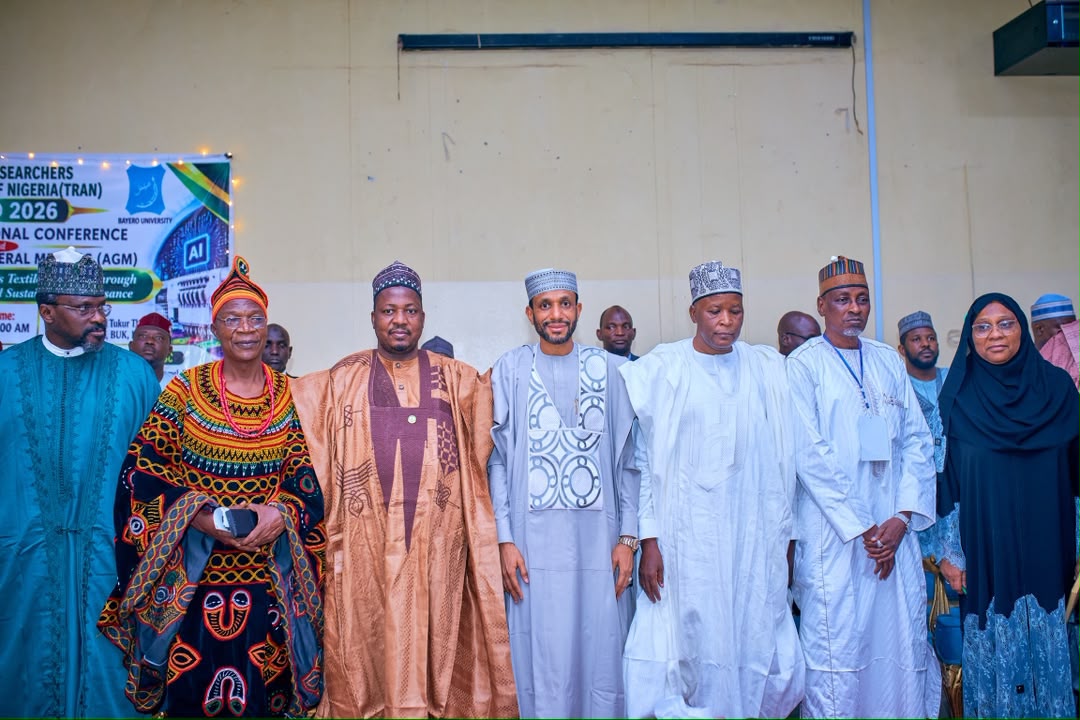
The Kano State Government has called for the adoption of artificial intelligence and sustainable production practices to revive Nigeria’s textile industry and restore its contribution to the economy.
The Deputy Governor, Murtala Sule Garo, made the call on Tuesday while representing Governor Abba Kabir Yusuf at the opening of the 13th International Conference and 16th Annual General Meeting of the Textile Researchers Association of Nigeria, held at Bayero University, Kano.
The conference, themed “Reviving Nigeria’s Textile Industry through AI, Innovation and Sustainable Renaissance,” brought together researchers, academics, industrialists and other stakeholders to discuss ways of repositioning the sector.
Garo described Kano as an appropriate venue for the conference, given its history as a major textile production and commercial centre, particularly its ancient Kofar Mata dye pits and the Kurmi Market.
He recalled the industry’s contribution to employment and economic development in the country, noting that its decline had been driven by challenges including inadequate infrastructure, smuggling and irregular power supply.
The deputy governor said the Kano State Government recognised the textile and garment sector as a major driver of economic transformation, job creation and poverty reduction.
He said the administration was supporting Micro, Small and Medium Enterprises through the Kano State Enterprise Development Agency, with interventions including soft loans, business development training and modern equipment for tailors, weavers and fashion entrepreneurs.
Garo, however, called for stronger collaboration among government, universities and private-sector operators to address the challenges confronting the industry.
He urged researchers to develop practical solutions that would improve local production, promote AI-driven designs and encourage the use of environmentally friendly materials capable of competing in international markets.
He also called on the Federal Government to sustain policies that protect and strengthen local industries.
Earlier, the Vice-Chancellor of Bayero University, Kano, Prof. Haruna Musa, said Nigeria’s textile industry had more than 180 mills and employed over 500,000 workers during the 1970s and 1980s, with Kano serving as one of the country’s major industrial centres.
Musa reaffirmed the university’s commitment to supporting the revival of the sector through research, innovation and partnerships with government, industry players and development organisations.
He urged participants to develop practical recommendations that would bridge the gap between academic research and industrial application.
Also speaking, the National President of the Textile Researchers Association of Nigeria, Prof. Gwari Williams Bako, said the association had continued to recognise individuals who made outstanding contributions to the textile profession through its annual fellowship awards.
He commended the conference organising committee for its efforts in organising the event.
Garo also congratulated the newly inducted fellows of the association and commended TRAN, the university management and the organising committee for their contributions to textile research and development.
He expressed optimism that the two-day conference would produce practical recommendations for revitalising the industry, adding that its revival was important not only for economic growth but also for preserving Nigeria’s cultural heritage, empowering young people and creating employment opportunities.