


By Hussaini Ibrahim
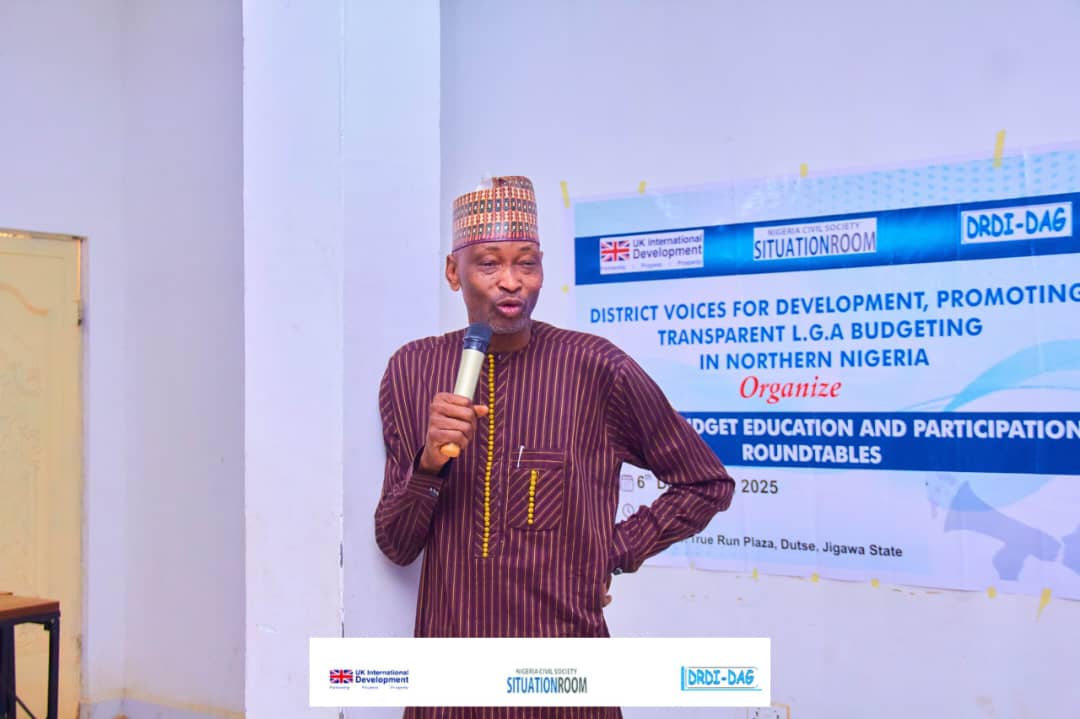
The Dispute Resolution and Development Initiative has held a one-day close-out and sustainability meeting for stakeholders from Kano and Jigawa states under its “District Voices and Development: Promoting Transparent LGA Budgeting in Nigeria” project.
The event, organised in partnership with the Nigeria Civil Society Situation Room and supported by UK International Development, marked the end of the eight-month project and was held on Wednesday at Mambayya House in Kano.
Speaking at the event, the Executive Director of DRDI, Dr Muhammad Mustapha Yayaha, said the close-out meeting was not the end of the initiative but a transition to sustained engagement at the grassroots level.
“This is not the end of the project. We want to see continuous reporting from stakeholders for sustained engagement within their respective communities,” he said.
He emphasised the need for collective responsibility in driving development, noting that local government areas remain the closest tier of government to the people.
“No one will solve our problems unless we do it ourselves. All that we are doing is geared towards having better local government areas, as they are the grassroots level closest to the people,” he added.
Yayaha also lamented the growing pressure on urban centres, attributing it to neglect of youth development and infrastructure in rural local government areas.
“Cities have become congested due to the neglect of youth and infrastructural development in LGAs outside the metropolis,” he said.
Earlier, the Project Manager of DRDI, Abdulbaki Muhammad, presented an overview of the project, highlighting its objectives, activities, achievements, challenges, lessons learned and recommendations.
He said key activities carried out during the project included district mapping and stakeholder engagement, participatory planning meetings, local government budget analysis, media roundtables and advocacy campaigns.
“We also undertook media publicity, rapid response initiatives on LGA financial autonomy, and promoted citizen participation and community reporting,” he said.
According to him, the project recorded notable achievements, including increased citizen engagement, strengthened collaboration among stakeholders and improved public awareness on local government budgeting processes.
“This project has significantly improved awareness and participation of citizens in budget processes at the local government level,” he said.
However, he identified challenges encountered during implementation, including limited access to financial data, low initial awareness among stakeholders and logistical constraints.
“Access to data was a major challenge, alongside initial low awareness and some logistical difficulties during implementation,” he noted.
On lessons learned, Abdulbaki stressed the importance of sustained stakeholder engagement, the role of the media in advocacy and the need for continuous capacity building.
“The role of the media in amplifying advocacy efforts cannot be overstated, and there is a need for continuous training and engagement of stakeholders,” he said.
He recommended improved access to financial information, institutionalisation of citizen participation and stronger partnerships with the media to sustain the gains of the project.
“We must ensure improved access to financial data, institutionalise citizen participation and strengthen collaboration with media organisations for long-term impact,” he added.
The project manager also expressed appreciation to donors, partners, stakeholders, government agencies and community members for their contributions to the success of the initiative.
“We are grateful to all our partners and stakeholders for their support, and we look forward to sustaining this collaboration to ensure lasting impact,” he said.
Participants at the meeting reiterated the need for continued advocacy and community engagement to promote transparency and accountability in local government administration.