


By Khalid Imam
Let me join thousands of fans and foes in mourning the sad demise of Mallam Nasiru El-Rufa’i’s mother, Hajiya Umma El-Rufa’i, who sadly passed on March 27, 2026, while he was still detained by his perceived political adversaries over alleged corruption charges and avoidably reckless claims he was said to have made during an interview he granted to Arise TV on February 13, 2026.
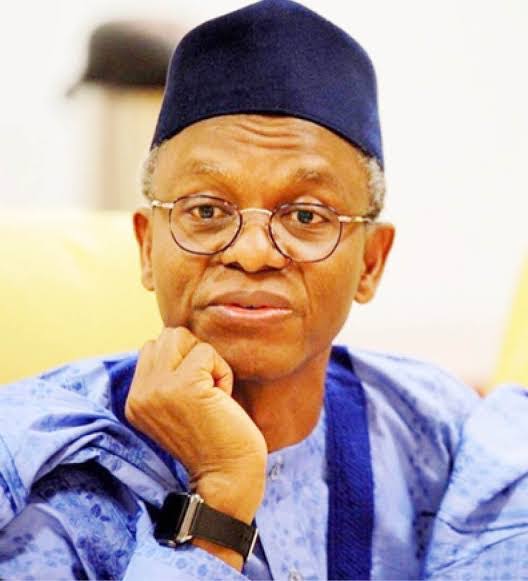
El-Rufa’i’s pain at losing his mother was visibly written on him throughout her funeral session at the Abuja National Mosque. As the Hausa people often say: “Labarin zuciya a tambayi fuska” (literally meaning: the face always reveals what the mind has concealed).
Although I have never been an El-Rufa’i fan since his days as Minister of Abuja—after watching on NTA News, with great dismay, how some FCT staff acting under his orders publicly humiliated the late Justice Bashir Sambo, arguably one of the few respected learned jurists and authors—yet, as a Muslim and fellow citizen, I extend my sincere condolences to him and his extended family members.
Indeed, El-Rufa’i is someone, whether you like or hate him, you can describe as courageous, dogged, and very controversial. But now he looks, without doubt, completely shattered and humbled. Surely, this is his most crushing moment and a time of immense grief at losing something so precious and irreplaceable.
No doubt, the priceless bond between a child and his mother, no matter how old that child is, is better imagined than described. Truly, I can say without mincing words that I know the true taste of grief and the demoralizing pangs of parting with one’s beloved mother.
Six years ago, exactly on the 8th day of Ramadan observed by Muslims in 2020, I lost my dear mother, Hajiya Maryam Shu’aibu, during the life-threatening peak of the Coronavirus pandemic. Since then, my life has completely changed, and my mother’s counseling words about how intriguing and mysterious life—and living with people—can be continue to echo within me.
Indeed, life has been a new teacher to me since the departure of my mother. Mothers are not just sources of unconditional love and guidance to their children; they also serve as bulwarks. With my biological mother—who was my most reliable shield—finally gone, I was left with no option but to adjust my life, restraining myself from stepping into trouble and choosing instead to tread a path of peace and reconciliation with anyone with whom I have a strained relationship.
Yes, El-Rufa’i, as Minister of the FCT and later Governor of Kaduna, stepped on many toes, and he too was offended by many. I hope the death of his beloved mother will now guide him to begin treading the path of caution, reconciliation, and peace with himself and others, as Professor Isa Ali Pantami has voluntarily sought to guide him to embrace the scented spirit of tolerance, peace and reconciliation, always.
And Pantami’s swift action, triggered by the welcoming appearance of the likes of Nuhu Ribadu, the National Security Adviser, and Governor Uba Sani of Kaduna State, as well as many others believed to be El-Rufa’i’s most pierced political rivals now, at the funeral to sympathize with him demonstrates that sharp political polarity shouldn’t blind one—no matter the disagreement and bitterness—to being human and heeding the call of Islam, a religion that unmistakably emphasizes the virtue of peace, unity, reconciliation, and forgiveness.
And one bitter truth or lesson death has been reminding us is that life is indeed temporary, and its journey may end with the swooping speed of a cobra swallowing a lizard, without any final notice. Therefore, as we preoccupy ourselves with life and its multiple frivolities, we shouldn’t make the mistake of forgetting that death may knock at us any second; and as believers (Muslims or Christians), avoiding traps that would jeopardize us from winning in the life that is not ephemeral should be our first priority, always.
But El-Rufa’i and readers should note, this is not, in any way, an urging for the embattled Nasiru El-Rufa’i of the ADC to slow down in his chosen political struggle and activism; but as elder Hakeem Baba-Ahmed once advised him, there is conventional wisdom in halting any digging if one is already inside a ditch. Yes, we all cannot avoid sometimes finding ourselves underwater, but our ability to swim to the safe bank, against crocodiles and swallowing tides, is what makes us wise, even if not victorious.
Imam, is a Kano based Bilingual writer and the President of Kano Literary Space. He can be reached via: khalidimam2002@gmail.com