




By Shu’aib Alhassan Umar
In Nigerian politics, it is often easier to dismiss a politician’s success as the product of luck, political patronage or godfatherism than to acknowledge years of hard work and perseverance.
This tendency has shaped public discourse for decades, sometimes overshadowing the personal sacrifices and commitment that define genuine political leadership.
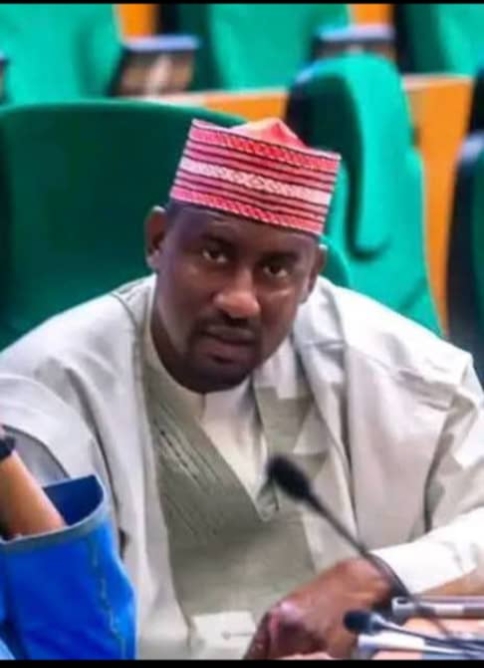
In my view, Rt. Hon. Hassan Shehu Hussain is one of those politicians whose journey deserves to be assessed beyond popular assumptions.
Many people associate his political rise with favourable circumstances.
However, those who have followed his political trajectory over the years know that his emergence was not an overnight achievement.
Rather, it was the outcome of years of dedication, discipline and unwavering commitment to grassroots politics.
From the era of the People’s Redemption Party (PRP) through the Social Democratic Party (SDP) and subsequent political developments, he remained actively involved in the political process, gradually earning the trust and confidence of those around him.
One lesson that can be drawn from his political journey is that sustainable leadership is rarely built on shortcuts.
It is cultivated through consistency, patience and a genuine connection with the people.
While political influence may open doors for some individuals, maintaining public confidence requires performance, humility and accessibility.
Since assuming office as the member representing Nassarawa Federal Constituency in the House of Representatives in 2023, Hassan Shehu Hussain has sought to demonstrate that representation should be measured not merely by occupying a legislative seat but by remaining connected to the people who entrusted him with their mandate.
In my opinion, this is one of the strongest aspects of his leadership.
Too often, elected representatives become distant from their constituents after elections, appearing only during political campaigns or official ceremonies.
This pattern has contributed to growing public distrust in democratic institutions.
Hassan Shehu Hussain appears to have adopted a different approach by maintaining regular contact with his constituents.
His frequent visits to his constituency, attendance at weddings, condolence visits, hospital visits and participation in community activities reflect an understanding that leadership extends beyond parliamentary debates and official engagements.
Accessibility may not always make newspaper headlines, but it remains one of the most valued qualities of effective representation.
People appreciate leaders who are willing to listen to their concerns, identify with their joys and sorrows, and remain present even when there are no elections around the corner.
This kind of relationship strengthens democratic accountability and reinforces public confidence.
Before his election into the House of Representatives, Hassan Shehu Hussain had already established himself as someone interested in youth development.
During his years of service at the National Assembly, he reportedly assisted many young people in securing employment opportunities in reputable federal institutions, including the Nigeria Customs Service, the Nigerian National Petroleum Company (NNPC) and the Department of Petroleum Resources (DPR).
His election into the National Assembly appears to have further expanded his capacity to support human capital development within his constituency.
Youth empowerment remains one of the most pressing responsibilities facing Nigerian leaders today.
With rising unemployment and economic uncertainty, young people increasingly expect elected officials to create opportunities rather than merely make promises.
While no single public office holder can solve every challenge, deliberate efforts to improve access to employment and empowerment programmes deserve recognition.
Infrastructure development also forms an important part of evaluating public performance.
Available information and community feedback suggest that projects such as road construction, borehole installation, educational support and healthcare interventions have received attention during his tenure.
Although development is a continuous process and much remains to be done, these interventions indicate an effort to respond to the practical needs of the people.
Equally important is the legislative aspect of representation.
Effective lawmakers are expected not only to attract constituency projects but also to contribute meaningfully to national policymaking.
Through legislative motions, debates and committee activities, Hassan Shehu Hussain has participated in discussions affecting not only Nassarawa Federal Constituency but also Kano State and the country at large.
Representation is most effective when local concerns are successfully projected onto the national stage.
Of course, no elected official is beyond criticism, and constructive criticism remains an essential component of democracy.
Every public servant should be held accountable for campaign promises, policy decisions and public conduct.
Nevertheless, criticism should be fair, evidence-based and balanced. It should recognise achievements where they exist while also pointing out areas that require improvement.
As Nigerians prepare for another electoral cycle, voters should evaluate leaders based on their accessibility, integrity, legislative performance, developmental initiatives and commitment to public service rather than on rumours or political sentiments.
Democracy functions best when citizens make informed judgments based on facts and observable performance.
From my perspective, Rt. Hon. Hassan Shehu Hussain represents a style of politics rooted in grassroots engagement, consistency and public service.
His political journey demonstrates that enduring leadership is built through patience, dedication and sustained interaction with the people.
Whether history ultimately places him among the most outstanding representatives of his generation will depend on the consistency of his service, but his record thus far suggests that his success is founded on much more than luck.
As the 2027 general elections draw closer, the people of Nassarawa Federal Constituency will once again decide who deserves their trust.
Whatever the outcome, one principle should remain constant: leadership should always be assessed on the basis of service, performance and commitment to the people.
Shu’aib Alhassan Umar writes from Kano and can be contacted via 08038477771