




By Usman Usman Garba
Kano State Government has released the results of the 2025 Senior Secondary School Qualifying Examination, involving a total of 163,457 candidates from the Kano Educational Resources Department (KERD), the Science and Technical Schools Board, and the Arabic and Islamic Education Department (AIED).
The government has also directed all schools to grant students unconditional access to their results.
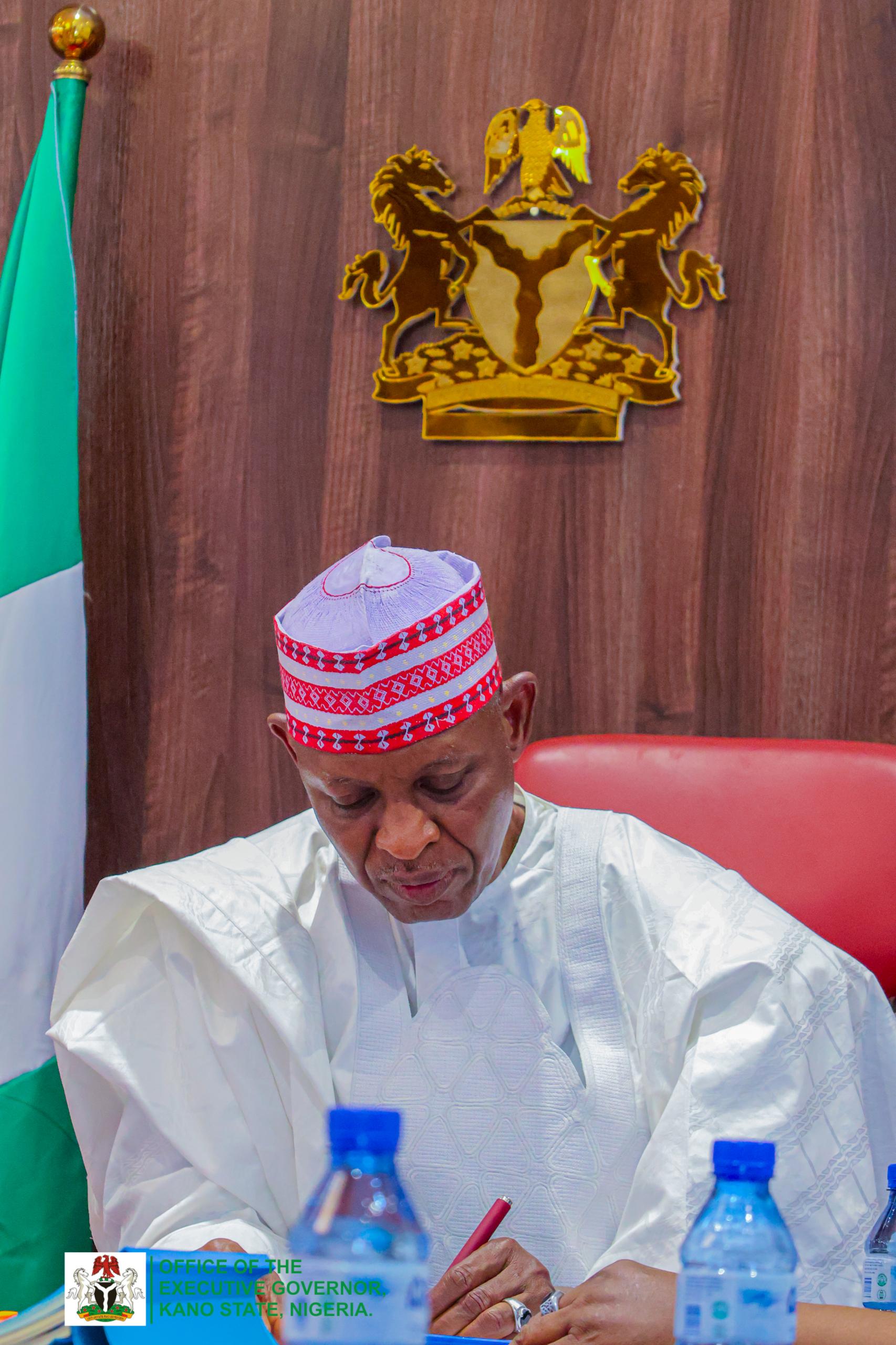
In addition, the state government, under the leadership of Abba Kabir Yusuf, has approved the sum of ₦4,450,552,700 to sponsor eligible students for external examinations.
This was disclosed by the Commissioner for Education, Dr. Ali Haruna Makoda, during a press conference held at the ministry’s headquarters in Gidan Murtala.
Dr. Makoda explained that, according to data from KERD, a total of 136,554 candidates from public and community schools sat for the examination across the state.
Out of this number, 130,707 candidates qualified for government sponsorship for the National Examinations Council (NECO), representing 95.7 percent.
Under the Science and Technical Schools Board, he noted that 4,725 candidates sat for the qualifying examination in the science category, out of which 4,340 candidates qualified for NECO sponsorship, representing 91.8 percent.
In the technical category, 3,764 candidates sat for the examination, with 3,102 candidates qualifying for sponsorship by the National Business and Technical Examinations Board (NABTEB), representing 82.24 percent.
He further explained that the combined total of candidates eligible for sponsorship in these categories stands at 74,042, with an overall success rate of 87.67 percent.
Dr. Makoda also revealed that 18,414 candidates sat for the Arabic and Islamic Education (AIE) examinations. Of this number, 15,625 candidates qualified for sponsorship by the National Board for Arabic and Islamic Studies (NBAIS) under the Senior Arabic and Islamic Secondary (SAIS) and Tahfiz categories, representing 82.9 percent.
He lastly emphasized that this development reflects the government’s strong commitment to supporting both conventional and Islamic education systems in the state.


