


From Umar Danladi Ado, Sokoto
The Sokoto State Government has commended both the European Union and the United Nations Children’s Fund (UNICEF) for their dedication to expanding the State Social Register.
This initiative aims to include more impoverished and vulnerable individuals, thereby granting them access to future social protection programs and interventions.
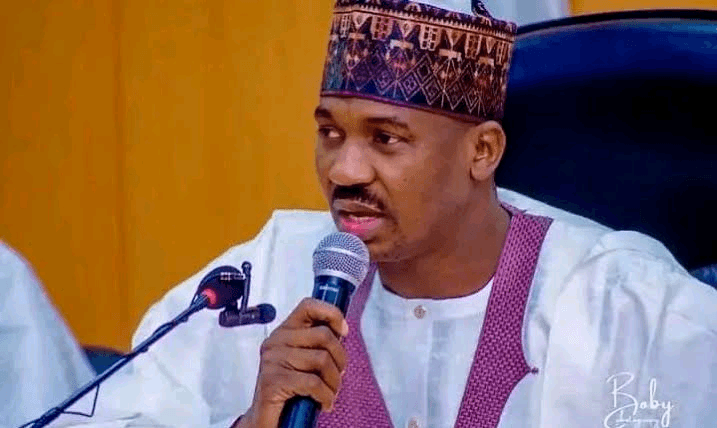
The acknowledgment came from Dr. Abubakar Muhammad Zayyana, the Sokoto State Commissioner of Budget and Economic Planning, during a consultation meeting on the Multidimensional Model of National Social Register Expansion at Sokoto Guest Inn.
He emphasized the urgency of this expansion, noting that approximately 3,041 communities and settlements in the state remain unlisted in both the national and state social registers.
This exclusion significantly undermines the fundamental human rights of residents, limiting their access to essential services and income support through social protection programs.
The Commissioner reiterated the State Government’s commitment to collaborate with the European Union and UNICEF, aiming to successfully enroll 250,000 beneficiaries into the social register between November 2025 and November 2026.
Alhaji Sani Umar, the District Head of Gagi and a representative of the Sultanate, stressed the importance of engaging urban local governments, especially in the Sokoto metropolis, given the increased migration of vulnerable individuals to the state capital due to insecurity and banditry.
He urged for ongoing involvement of traditional rulers to prevent errors in including and excluding households in need of social assistance.
Comrade Abdullahi A Yabo, the Sokoto State Vice Chairman of the Nigeria Labour Congress (NLC), highlighted the necessity of including both private and public sector workers in future distributions of commodities and cash assistance provided by governmental and partner initiatives.
He pointed out that many workers live below the national poverty threshold of 1.25 US dollars per day.
During the session, Mr. Isah Ibrahim, a Social Policy Specialist from UNICEF’s Sokoto Field Office, announced plans for the European Union and UNICEF to enroll 1,000,000 poor and vulnerable households across Abia, Benue, Sokoto, and Oyo states by the end of the next fiscal year, with an allocation of 250,000 households per state.
He outlined a revised targeting and community engagement approach that focuses on multidimensional poverty aspects, aiming to create an inclusive, service-linking, and interoperable National Social Register that will address various deprivations while informing cross-sectoral planning.
The pilot model aims to generate demand for services and social protection programs by identifying and registering the most impoverished and vulnerable households.
According to Mr. Isah, the new model seeks to integrate a multidimensional poverty perspective into the operations of the National Social Register, positioning it as a gateway to health, nutrition, education, and social services through established referral systems while ensuring inclusivity, equity, and transparency through enhanced community engagement and grievance redress mechanisms.