



From Joseph Asegba, Yola
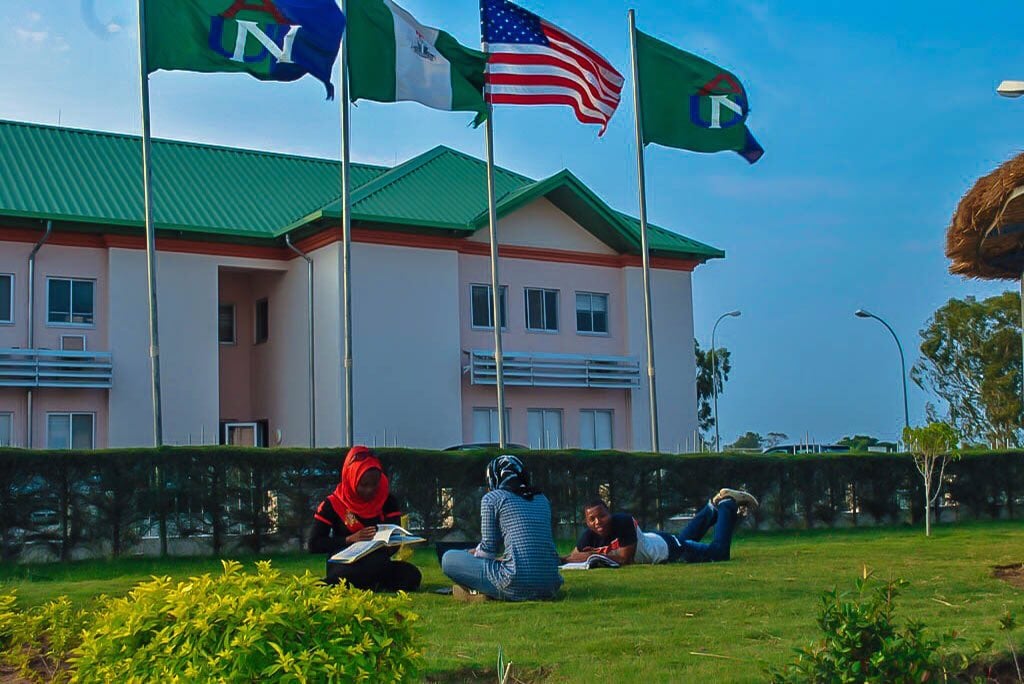
The American University of Nigeria (AUN), Yola, is set to make history on May 9, 2026, as twelve young women who survived the 2014 Chibok school abduction by Boko Haram will graduate as degree holders, symbolising resilience, hope, and triumph over adversity.
Twelve years after their dreams were violently interrupted, the survivors will walk across the graduation stage not as victims, but as empowered women ready to embrace the future.
What terrorism once sought to destroy is now being rebuilt through education, one graduate at a time.
AUN President, Professor DeWayne Frazier, described the upcoming ceremony as one of the most emotional moments in the university’s history.
“When these 12 girls cross that stage,” he said, “it will echo far beyond Yola. The world once chanted ‘Bring Back Our Girls.’ On May 9, we are not just bringing them back, we are sending them forward as educated, confident, and empowered women.”
Adding significance to the occasion, award-winning CNN journalist, Stephanie Busari whose reporting brought “proof of life” videos of the Chibok girls to global attention will serve as the keynote speaker.
Her presence symbolises a full-circle moment, from amplifying their plight to witnessing their triumph.
Professor Frazier noted that the story goes beyond the 12 remarkable women, highlighting broader transformations within the institution.
Under his leadership over the past three years, AUN has recorded its strongest enrolment growth, overcome post-COVID-19 challenges, cleared longstanding debts, and achieved financial stability without external bailouts.
More than 30 per cent of students now benefit from scholarships, reflecting the founder’s vision of a world-class university accessible not only to the elite but also to those whose lives can be transformed through education.
The university has also embraced innovation, forging partnerships with global technology giants Huawei and MTN to develop advanced digital infrastructure, including gigabit-speed internet, smart classrooms, and AI-supported learning systems.
Students have further demonstrated innovation by developing “AUN 360,” a campus application that provides services ranging from navigation to food delivery, featuring an AI assistant named “Ask Stanley.”
In addition, AUN has expanded its recreational facilities, including the solar-powered Giants Bank complex, new tennis courts, and upgraded hostels, creating a conducive environment for both academic and personal development.
International collaborations with institutions in the United Kingdom, Spain, Italy, and the United Arab Emirates have also enhanced student exchange opportunities while maintaining relatively affordable tuition.
Frazier expressed confidence that AUN’s model, combining academic excellence, technological innovation, and social impact—positions it to produce future leaders.
“Nigeria’s greatest resource is not oil,” he said. “It is its people.”
He further made a bold prediction: “One day, a president of this country will emerge from this university—and most likely, it will be a woman.”
For the 12 Chibok survivors sponsored by the Federal Government, the May 9 ceremony represents far more than a graduation.
It stands as a powerful declaration that while terrorism may steal time, it cannot steal destiny where courage, education, and hope prevail.
The young women once taken from their dormitories in the dead of night will now step into a new chapter—defined not by their past, but by their achievements.
Education has not only prevailed it has triumphed.