


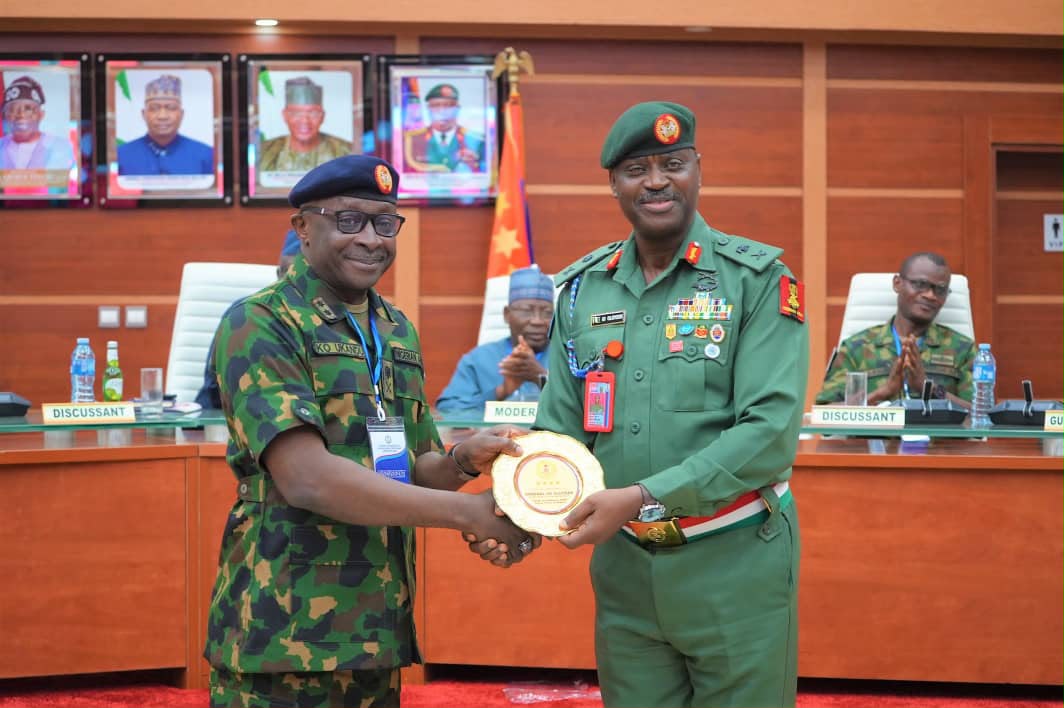
By Atiku Sarki, Abuja
The Chief of Defence Staff (CDS), General Olufemi Oluyede, has reaffirmed the commitment of the Armed Forces of Nigeria (AFN) to leveraging psychological and influence operations as strategic tools for conflict prevention, national stability and sustainable peace.
General Oluyede made the assertion at the closing ceremony of the two-day Defence Headquarters Psychological Operations Workshop, held in Abuja from July 23 to 24, 2026.
According to a statement issued by the Director of Defence Information, Major General Samaila Uba, and made available to Defence Correspondents in Abuja, the CDS, who was represented by the Chief of Defence Training, Rear Admiral Abolade Ogunleye, stressed that building national resilience requires a coordinated whole-of-government and whole-of-society approach.
He said such an approach must involve government institutions, security agencies, traditional and religious leaders, civil society organisations, the media and local communities.
Speaking on the workshop’s theme, “Building National Resilience: The Role of Influence Operations in Conflict Prevention and Stabilization,” General Oluyede described the event as timely and significant, noting that influence operations have become indispensable in addressing the root causes of conflict, countering misinformation and disinformation, strengthening public trust and promoting peaceful coexistence.
The Special Guest of Honour, Director-General of the Nigerian Television Authority (NTA), Dr. Salihu Abdulhamid Dembos, represented by the Director of News, Hajiya Halima Musa, highlighted the importance of strategic communication in countering hostile narratives and safeguarding national unity.
Also speaking, the Director-General of the Voice of Nigeria (VON), Mallam Jibrin Baba Ndace, said sustainable peace can only be achieved through credible communication, active public engagement and stronger collaboration among stakeholders.
He noted that influence operations remain critical to building trust, national cohesion and resilience.
At the end of the workshop, participants drawn from the Armed Forces, security and intelligence agencies, government institutions, academia, civil society organisations and the media adopted key recommendations aimed at strengthening Nigeria’s national resilience through enhanced strategic communication and coordinated influence operations.
Among the recommendations were deeper inter-agency collaboration, institutional capacity building, improved public engagement and the integration of influence operations into national conflict prevention and stabilization strategies.
The workshop concluded with a renewed commitment by stakeholders to sustain collaboration in countering misinformation, preventing violent extremism, strengthening public confidence in state institutions and promoting lasting peace, national unity and development across Nigeria.