


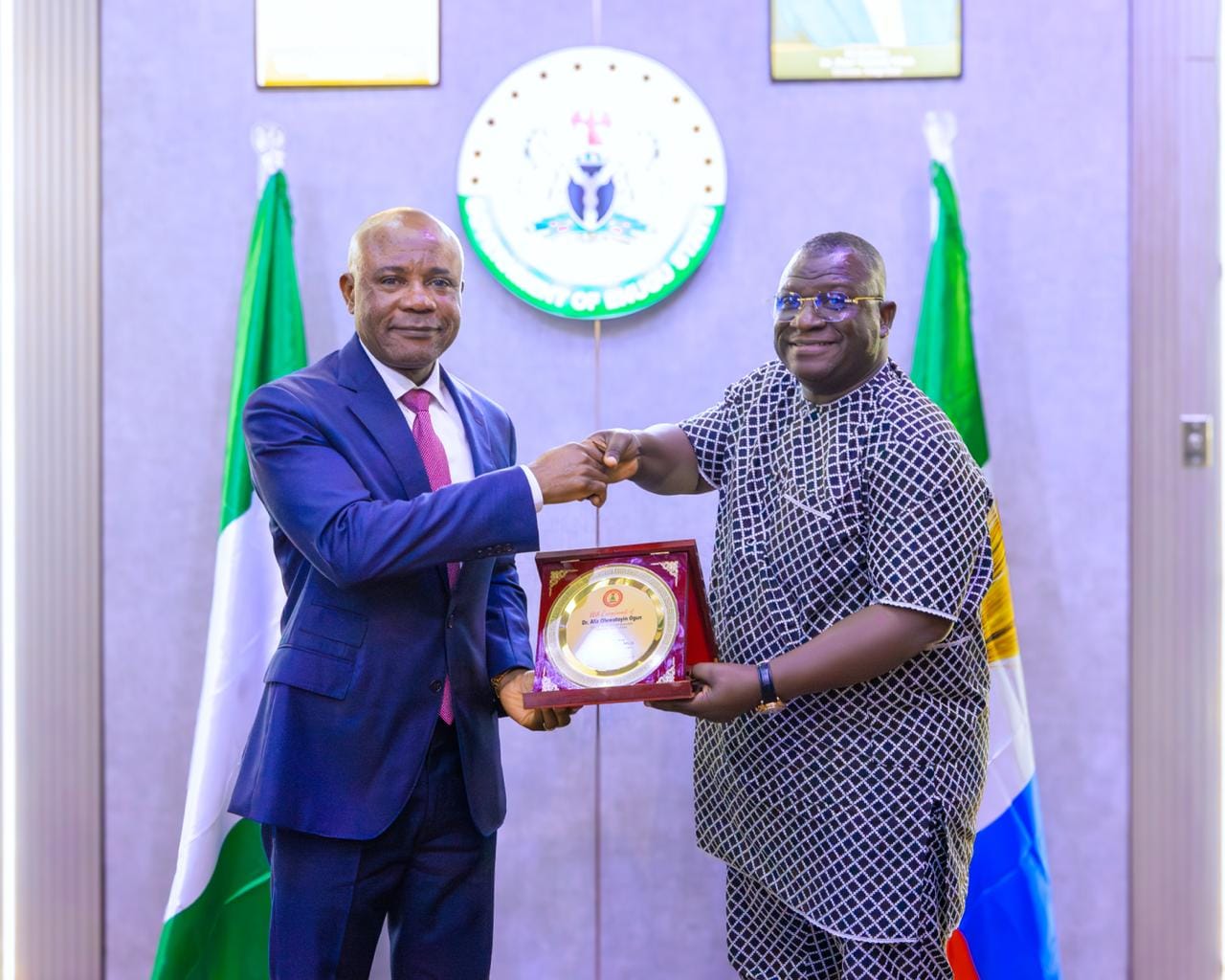
From Atiku Sarki, Abuja
The Enugu State Government has approved the allocation of land in the state capital for the establishment of a state-of-the-art Digital Fabrication Centre by the Industrial Training Fund (ITF).
The Director of Press and Public Relations of the ITF, Mr. Thomas Ngor, disclosed this in a statement issued in Abuja, following a courtesy visit by a delegation of the Fund to the Enugu State Government House.
Speaking during the visit, the Executive Governor of Enugu State, Dr. Peter Ndubisi Mbah, described the proposed project as timely and consistent with his administration’s vision of transforming Enugu into a leading destination for investment, innovation and technology-driven industrial development.
Governor Mbah said the future of economic prosperity lies in deliberate investments in human capital and emerging technologies, noting that his administration had continued to create an enabling environment for innovation, enterprise and sustainable growth.
He explained that technical education had been made compulsory in the state’s basic education system, with emphasis on digital literacy, robotics and mechatronics to prepare young people for the future of work.
According to him, many traditional trades are increasingly being driven by digital technologies, making it necessary to equip young Nigerians with relevant technical skills that would enable them to compete globally and contribute meaningfully to economic development.
The governor further disclosed that his administration had constructed smart schools across the state, equipped with robotics centres, mechatronics laboratories and other modern learning facilities to prepare students for the demands of the evolving global economy.
He noted that artificial intelligence is projected to contribute about $20 trillion to the global economy in the coming years.
Governor Mbah therefore stressed the need for the state to be deliberate in upskilling its citizens, saying the establishment of the ITF Digital Fabrication Centre would strengthen Enugu’s drive towards building a knowledge-based economy, fostering innovation, promoting local manufacturing and creating employment opportunities for its growing youthful population.
Earlier, the Director-General of the ITF, Dr. Afiz Oluwatoyin Ogun, who led the delegation, said that upon his appointment by President Bola Ahmed Tinubu, he was mandated to upskill Nigerian artisans to international standards.
He said the Fund had subsequently repositioned its technical and vocational skills development programmes through strategic initiatives, including the Skill-Up Artisans (SUPA) Programme, designed to train, certify and licence Nigerian artisans to international standards.
Dr. Ogun disclosed that the ITF had already established a Digital Fabrication Centre in Ikeja, Lagos, with the capacity to produce more than 400 different products.
He therefore requested the allocation of land by the Enugu State Government for the establishment of a similar centre with the same production capacity.
According to him, the initiative is aimed at promoting industrialisation, reducing Nigeria’s dependence on imports and preparing Nigerians for opportunities in the Fourth Industrial Revolution.
He also reaffirmed the Fund’s readiness to enter into Public-Private Partnerships (PPPs) capable of transforming Nigeria’s artisanal ecosystem.
The ITF Director-General further noted that digital technologies, including artificial intelligence, robotics and computer-aided manufacturing, were rapidly transforming the global economy.
He stressed that Nigeria must deliberately invest in upskilling its workforce to remain competitive in the global economy.
The ITF delegation later embarked on a guided tour of facilities at one of the Smart Schools established by the Enugu State Government.