


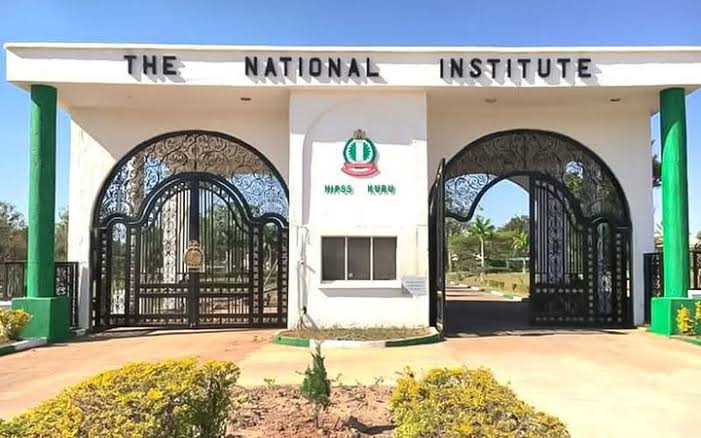
By Christiana Gokyo, Jos
The Director-General of the National Institute for Policy and Strategic Studies (NIPSS), Kuru, near Jos, Professor Ayo Omotayo, has formally apologised to the Berom Nation over remarks he made during a television interview that sparked widespread condemnation and a threat of legal action from the Berom Youth-Moulders Association (BYM).
The controversy followed comments made by Prof. Omotayo after recent attacks on the institute, during which he reportedly referred to youths allegedly demanding compensation for ancestral land as “Berom militias.”
The statement drew strong reactions from the Berom community and other stakeholders across Plateau State, who described the remarks as offensive and misleading.
The Berom Youth-Moulders Association subsequently threatened to institute legal proceedings against the NIPSS Director-General, accusing him of making derogatory comments capable of damaging the image and reputation of the Berom ethnic nationality.
In response, Prof. Omotayo wrote a letter of apology to the Gbong Gwom Jos and Chairman of the Plateau State Council of Chiefs and Emirs, His Royal Majesty Da Jacob Gyang Buba.
The apology, dated July 6, 2026, was signed and released to journalists in Jos by the Head of Public Affairs at NIPSS, Dr. Osime Samuel.
In the letter, Prof. Omotayo expressed profound regret over the misunderstanding arising from his remarks, explaining that while responding to questions during a rapidly evolving security situation, he merely referred to reports and speculations already circulating in the public domain.
He clarified that he neither intended to accuse the Berom people of responsibility for the attacks nor suggest the existence of any organised militia linked to the Berom Nation.
The NIPSS Director-General offered his sincere apologies for the unintended offence and distress caused by his comments and appealed to the Gbong Gwom Jos to convey his message of reconciliation and goodwill to the Berom people.
Prof. Omotayo reaffirmed his respect for the Berom Nation, describing the community as one of the institute’s principal host communities.
He noted that NIPSS has enjoyed decades of cordial and mutually beneficial relations with the Berom people, built on trust, cooperation and a shared commitment to peace and national development.
He also highlighted several community development initiatives undertaken under his leadership, including annual summer coaching programmes for students, ICT and digital skills training for youths, mentorship programmes in secondary schools, support for girl-child education and other community-based projects.
According to him, these initiatives reflect the institute’s belief that the wellbeing of its host communities is closely tied to its own success and stability.
Prof. Omotayo urged all stakeholders to remain calm, exercise restraint and avoid statements capable of escalating tensions while security agencies continue investigations into the recent attacks on the institute.
He reiterated NIPSS’ commitment to peaceful coexistence, mutual respect and constructive engagement with all host communities.
Meanwhile, the Senator representing Plateau North Senatorial District, Dachung Musa Bagos, also condemned the controversial remarks.
In a statement issued by his Special Adviser on Media and Publicity, Eric Dung, the senator warned against attempts to stereotype or misrepresent the Berom people or any ethnic group in Plateau State.
He maintained that such narratives undermine the state’s long history of peaceful coexistence and described the Berom people as a community known for integrity, hospitality, communal harmony and peaceful relations with their neighbours and visitors.