


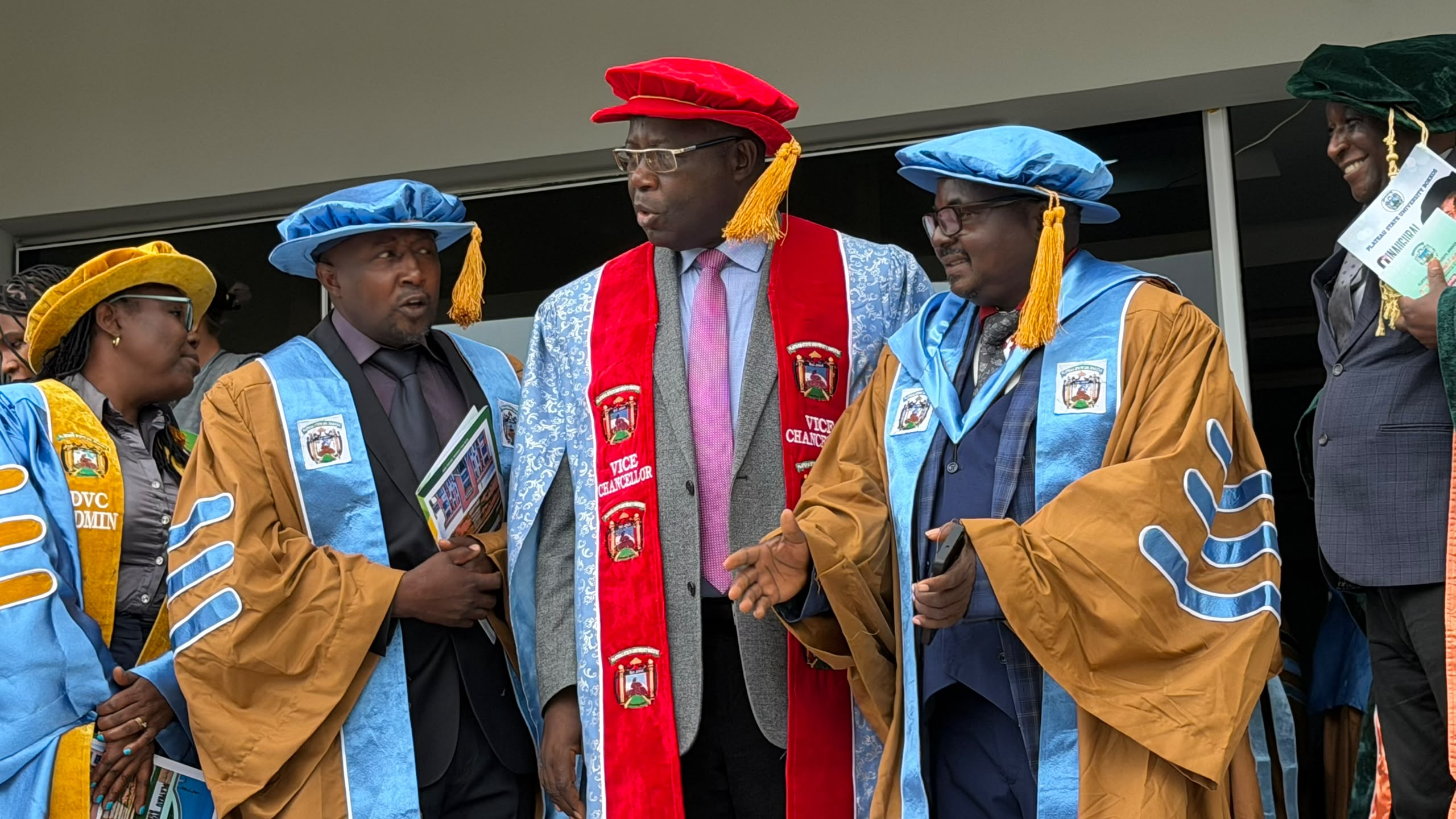
By Christiana Gokyo, Jos
Plateau State University, Bokkos (PLASU), has created investment opportunities in agriculture, energy, manufacturing and technology through sustained investment in research and development.
The Vice-Chancellor of the university, Prof. Shedrack Best, disclosed this recently during the institution’s 2nd Inaugural Lecture.
He said PLASU had transitioned from its early stages into an institution with growing capacity in teaching, research and innovation, and invited investors across various sectors to partner with the university in its ongoing expansion.
According to him, PLASU had moved beyond the stage of being considered a young university, adding that the institution was working towards becoming a university that meets the aspirations of the people of Plateau State.
“We don’t want to be ranked behind any state university in the North. There is no justification for that,” the Vice-Chancellor said.
He noted that the lecture, titled “An Exposé on the Global South: 21st Century Challenges and Opportunities,” underscored PLASU’s engagement with global developments in Artificial Intelligence (AI) and emerging technologies.
“This is a wonderful opportunity for investors in the private sector, agriculture and many other areas to partner with PLASU. The focus on the Global South shows you can have AI that appreciates and works with humanity to improve life,” he said.
Best added that Artificial Intelligence and machine learning were already being explored within the university.
“With respect to today’s lecture, artificial intelligence, machine learning and all of these are present in our university. We are delighted to celebrate a professor who has worked and taught in computer science and artificial intelligence.
“The moment PLASU has keyed into it, the entire Plateau State is in tandem with what is happening in the ICT world. We are part of a global community,” he added.
The Vice-Chancellor further disclosed that the university had started producing its own professors, with more than 10 professors of PLASU extraction so far.
He explained that inaugural lectures were an important academic tradition through which professors present the outcomes of their teaching, research and community service.
“The tradition of inaugural lectures is associated with universities worldwide. When academics reach the pinnacle of their careers, they present a summation of their teaching, research and community service.
“We want to open the space for our professors to give their inaugural lectures. What we have had today will be replicated.
“We have other professors lined up, and I envisage we will have two to three more before the close of this year, and more in 2027 based on the ongoing appraisal,” he said.
On the expansion of the university, Best said the institution had grown significantly since he assumed office.
“When I came, I met five faculties at 100 level trying to settle down. These five faculties are now transiting to 400 level.
We have introduced two new faculties now transiting to 200 level, and 16 new programmes about to commence at 100 level. More than that is the development of staff strength and quality,” he said.
He credited the Visitor to the university, as well as the government and people of Plateau State, for their contributions to the institution’s growth.
AI Opportunities in the Global South
Delivering the inaugural lecture, the guest lecturer, Prof. Luhutyit Peter Damuut of the Department of Computer Science, PLASU, highlighted opportunities presented by Artificial Intelligence to communities in the Global South, particularly within academia.
Damuut said the choice of the topic was informed by global developments and his research field, which he said he had been involved in since 2005.
“AI has been with us in different forms. We started out, and most of the things we were working on evolved into AI today,” he explained.
He noted that Artificial Intelligence had its roots in computer science and urged societies in the Global South to embrace the technology while addressing its associated challenges.
“AI found us and now it’s here to live with us. We have to embrace it, work with it and explore the opportunities in it while containing the challenges, especially those peculiar to us within the Global South,” Damuut said.