


From Umar Danladi Ado, Sokoto
The Federal Ministry of Labour and Employment has organised a state-level social dialogue in Sokoto to explore ways of extending social protection to workers in the informal economy and ensuring that they work and live under decent conditions.
The meeting was organised with the support of the Trade Union Congress (TUC), the Nigeria Labour Congress (NLC), and other international organisations.
In his keynote address, the Minister of Labour and Employment, Alhaji Muhammadu Maigari Dingyadi, Katukan Sokoto, said the Federal Government was engaging stakeholders across the country to promote understanding and support for extending social protection to informal workers.
“We are going round the country to mobilise support and understanding of the informal sector and our partners to ensure that we extend social security protection to informal workers in Nigeria,” Dingyadi said.
He described the initiative as an important step towards protecting workers, improving access to support services, and enhancing the living conditions of those who lack adequate social protection.
According to the minister, the initiative would help informal workers meet their daily needs and improve their overall welfare.
He explained that workers in the formal sector benefit from pensions and other services designed to promote decent work, provide social protection, and improve their working conditions.
However, he noted that many workers in the informal economy lacked similar benefits and were often left to fend for themselves without adequate social security.
“That is why we are going round to let people know, let government know, and let employers know that this protection is necessary. It is a right, and we need to extend it to the informal economy,” he said.
Dingyadi observed that the majority of Nigerian workers operate in the informal sector, stressing the need to establish a social protection system that would enable them to work and live under decent conditions.
“We are trying to ensure and promote that workers, especially those in the informal sector, contribute effectively to the growth of the country’s economy through this dialogue,” he added.
In his remarks, Sokoto State Governor Ahmed Aliyu, represented by the Secretary to the State Government, Alhaji Muhammad Bello Sifawa, described the initiative as timely and commendable.
The governor assured stakeholders of the state government’s readiness to partner with donor organisations willing to contribute to the state’s development.
He also pledged continued support for initiatives aimed at strengthening social protection and achieving targeted welfare goals for citizens across the state.
In her remarks, the Country Director of the International Labour Organisation (ILO), Vanessa Phala, said the organisation was collaborating with the Federal Ministry of Labour and Employment on the initiative, which is funded by the European Union and implemented by the ILO in partnership with UNICEF. Phala explained that the dialogue in Sokoto was designed to explore strategies for extending social protection to workers in the informal economy.
According to her, the engagement would enable Sokoto State to develop a roadmap identifying informal workers, assessing the protection currently available to them, and determining additional coverage needed to ensure that no one is left behind.
She added that the roadmap would also help design social protection mechanisms suited to the needs of workers in the informal economy.
“We are very pleased with the collaboration with the ministry, as well as the leadership of the Executive Governor of Sokoto State,” she said.
Phala noted that the governor’s presence at the dialogue demonstrated his commitment to the initiative and the collaboration among the stakeholders.
The meeting featured several presentations, including a lead paper titled Social Dialogue for Extending Social Protection to Workers in the Informal Economy, delivered by Emmanuel Danjuma, Project Manager of SUSI.
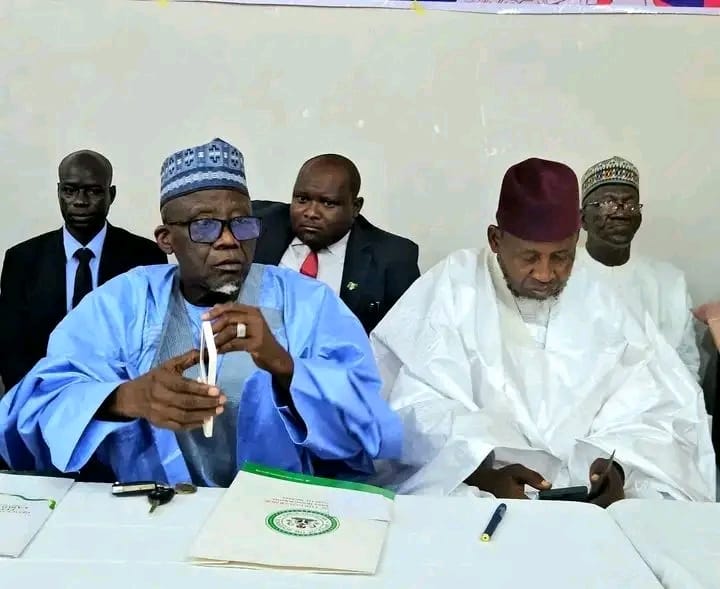
Participants included the Sultan of Sokoto, Alhaji Sa’adu Abubakar III, alongside leaders of various labour unions and representatives of organisations from across Nigeria.