


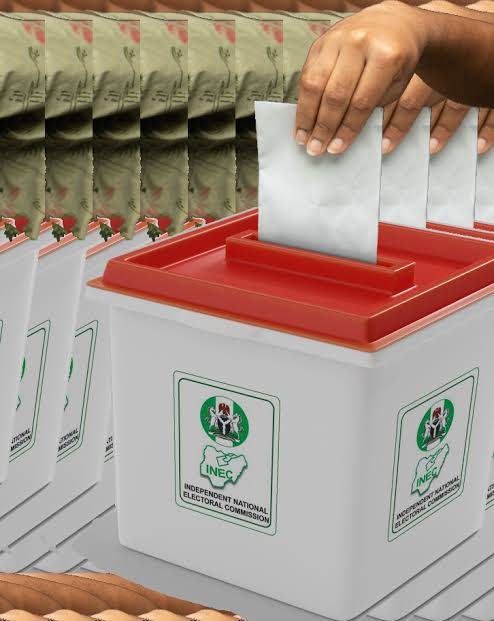
By Muhammad Bashir
In his insightful essay, “Why Bother with Elections”,Professor Adam Przeworski, narrates how many people who voted for the winners end up dismayed with their performance in office, adding “So most of us are left disappointed, either with the outcome or with the performance of the winner.”
Yet as Przeworski rightly stated, “dissatisfaction with the results of elections is not the same as dissatisfaction with election as a mechanism of decision-making”. Think about it, both are peculiar to the Nigerian context; why we shall return to them in subsequent paragraphs.
But first, elections as a route of ascending to the mantle of leadership emerged in political history toward the end of the eighteenth century, with first democratically elected government coming to power in the US in 1801.
However, about 3000 national elections took place worldwide between 1788 and 2008 while political power changed hands 544 times through the voting processes and 577 times through military takeovers.
This tells you the rarity of selecting government democratically or simply its establishment.
That said, election is a democratic chance for all eligible voters after periodic intervals to reward a performing government with a renewed mandate and throw a failing one out of power. It is therefore a good, but not the only, yardstick for measuring a functional democracy.
For instance, people from the third world, Africa or especially the Nigerian electorate know how incumbents manipulate electoral processes from intimidating opposition through vote rigging to arm-twisting petition tribunals after committing fraud to stay in office.
In fact, they cajole legislative bodies into amending term limits to serve endless tenures in the third world including many African countries.
The ruler might utter the (in)famous words of Anastazio Somoza of Nicaragua “You may have won the voting but I have won the counting”!
But leaving aside the nature and history of elections plus its likely outcome to succeeding analysis, what is the logic behind voting for a party or candidate other than to represent and protect the genuine interest of the people?
In as much as there is no political system able to make governments the perfect agents of the citizens,the party system in many of our countries exists as a mere route to power as political parties typify vehicles for elite rise to the corridors of power.
Take the case of Nigeria. In his Vanguard column of Thursday,16th April 2026,Dr Olu Fasan lamented how the non-ideological nature of Nigerian politics makes the electoral contest not between parties but “between a constellation of constantly shifting networks of elites, who simply use parties as vehicles for election in pursuit of power ambitions”.
According to Fasan, “Political parties exist not as repository of ideas, values and norms but as hollow, interchangeable conveyances for the self-serving ambitions”.
The words of Przeworski “When people react against the establishment they often mean either that no party represents their views or that governments change without an effect on their lives, indicating that elections do not generate change” accurately suit the Nigerian context.
Although the electorate continue to live under delusion that every new round of elections will bring a better standard of living, improved security and social welfare, there has been virtually no positive effect on the socio-economic lives.
Of course, the ruling PDP was defeated squarely in 2015 in presidential and many governorship and parliamentary elections.
Arguably, beyond the mere change in party or candidate names, the APC government executed neither the electoral reforms nor any meaningful economic transformation it promised during its campaign against the PDP. So what benefits do elections yield in NIgeria?
This brings us to the current agitations for APC’S ouster in 2027. The politically wise do not see the problem in power switching from one ruling party to another given the experiences of the three decades since the inception of the party rule in 2015.
In fact, who can even bet that the same people defecting to the ADC won’t switch back to APC in the event of electoral failure post 2027 or those in the APC cross over into the ADC and get full accommodation?
Of course, as the PDP failure from 1999 justified its expulsion by the APC coalition in 2015, the APC too should logically be shown the way out after eight years of woeful performance come 2027.
But a big question raises a finger : why did the APC and its elected representatives performed as abysmally or even worse after the humiliation of the PDP in various offices of the polity?
The answer was given by Dr Fasan above: the emergence process was similar or even worse. In other words, though this is not the time for a full anatomy, the political class in Nigeria exists merely to actualise selfish ambitions through parties specially created for that purpose. So with a system too flawed, a polity premised on monetisation from primaries to general elections, the emergence of ideological parties and credible candidates that will execute reforms and restore sanity is practically unthinkable.
But even if a sound system emerges with parties espousing good ideologies and fielding credible candidates, an enlightened citizenry which produce the aware voter must be in place to mobiise votes for the right candidates. And as practical contestants, political parties will be insufficient to carry out voter orientation tasks .
Therefore, a need will arise for the role of civil society organisations and other democratic pressure groups which, sadly, are lacking or acutely dormant despite the huge population in the North.
The typical Nigerian politician will raise hopes and expectations even where he knows he is incapable of delivery; alas, he finds accommodation in the confused or ignorant mentality of the people.
There are also hired pastors and imams who turn churches and mosques into campaign centres as well as voters indolently induced with petty money and food items on or prior to Election Day.
Despite having to live in darkness without electricity for years, and despite being forced now to chase drinking water in the night, there is proliferation of people, some with an optimum level of education, without ample understanding of their civic rights and responsibilities.
The sophisticated are those with a sworn tendency to vote “our own” or “someone together with our own”, that is a candidate from their own ethnic group, clan or religion.
The northern politician is thus readily shielded by ethno-religious sentiment to do as he wishes in office, with a very illogical mentality.
Where you find similar trait in the South, the contender would have contributed positively, politically or otherwise, toward community development. Thus, electing him figure would be a stepping stone to further public development and societal progress.
In concluding notes, granted that our political parties embody ethical values and democratic norms of featuring patriotic contestants; granted that the electorate receive the proper education from civil groups and associations to vote en masse for the right parties and candidates; given its tight grip of the present regime on the electoral umpire, the Judiciary that presides over petitions from the aggrieved and the security apparatus deployed during the exercise, how will the popular mandate be safeguarded against orchestrated robbery, open fraud and other manipulative tendencies where it disfavours the incumbent?
In their seminal book, AUTHORITARIANISM: What Everyone Needs to Know, Professors Natasha Ezrow and Erica Frantz say “simply holding multiparty election by no means guarantees that the contest will be free and fair.
A free election is one in which multiple parties are able participate and compete in a relatively even playing field absent widespread fraud. If a government bars a certain sector of the population from voting, such as specific ethnic group, the election is not democratic.
“Likewise, if a government bans a major political party from competing, jails its leaders, or stuffs the ballot box to ensure its own victory(to give but a few examples of what unfair means in practice),the election is not democratic.
This means that it is very possible to have multiparty election to fall short of standards of freeness and fairness, and consequently very possible to have multiparty electoral contest occur in authoritarian context. Still, an election may appear competitive on election day, but conceal unfair activities that occurred prior, such as the incumbent prohibiting opposition parties from accessing the media. Likewise, incumbents may lose a competitive election, yet opt to annul the results and stay in office”.
Indeed, fair elections entail an enabling structure which also includes mass preparedness and spontaneous tendency to resist imposition. Thus, in his elegant book,THE PLUNDERED PLANET, Oxford Professor Paul Collier argues that “ a typical African society reduces the chances of a clean election to around 3%,whereas india has around 80%”.
In a nutshell,as the clamour for a new ruling party gathers momentum, what are the chances that the 2027 exercise won’t repeat the disappointing outcome—from result to performance –like those witnessed in the past?
Bashir writes from Kaduna via: 07032259251; Email:muhammadmb2026@gmail.com; bashirsenior@yahoo.com