


By Usman Usman Garba
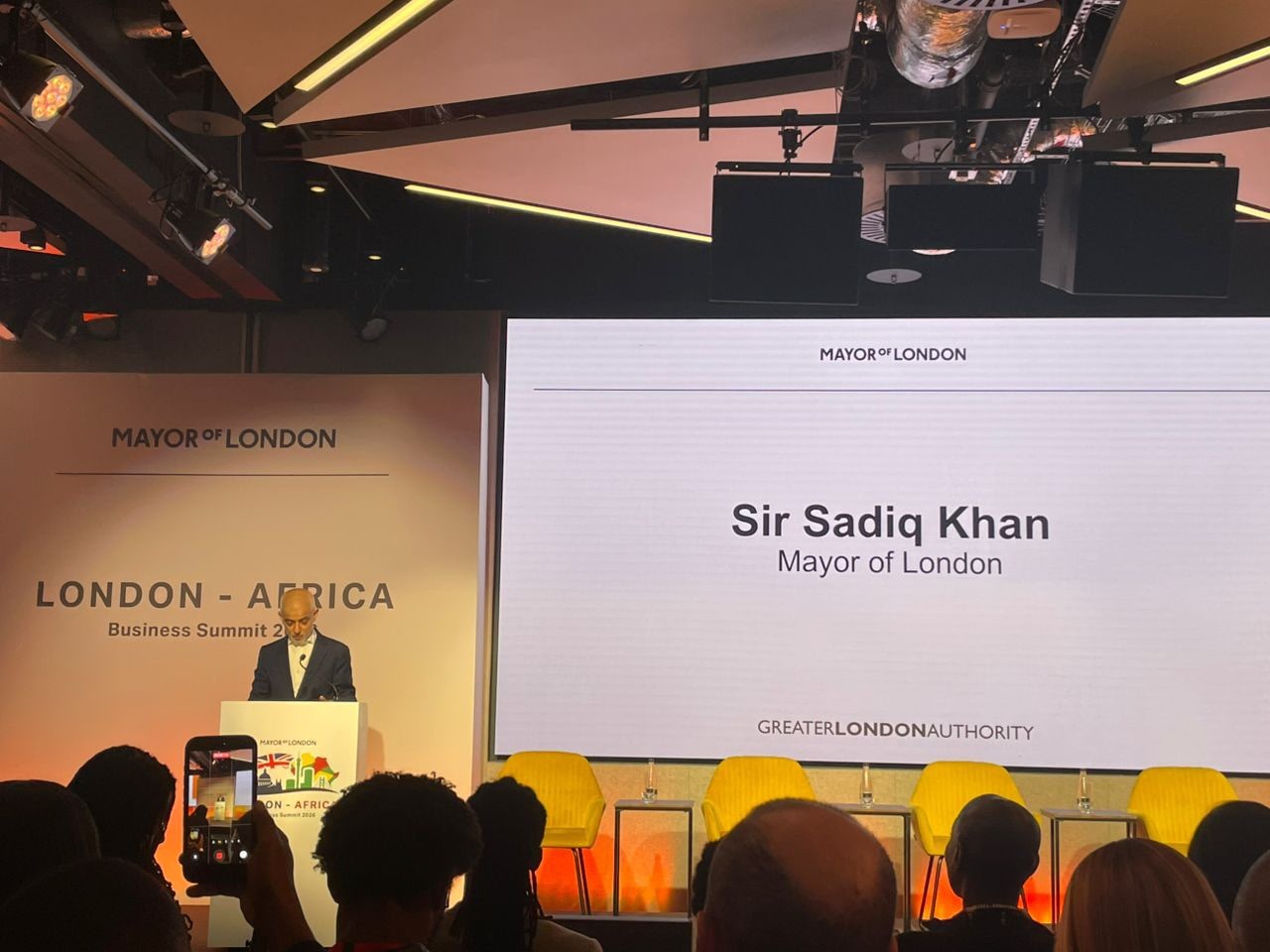
The Mayor of London, Sadiq Khan, has hosted City Hall’s first-ever London-Africa Business Summit, bringing together more than 200 business and political leaders from across Africa to strengthen trade, investment, and economic partnerships between London and the continent.
The summit, held in the heart of London’s financial district, attracted senior government officials, investors, entrepreneurs, and business executives from various African countries.
Participants included Ghana’s Minister of Trade for Agribusiness and Industry, as well as representatives from SOAS University of London, Nigerian Exchange Group, Ventures 54, and London Africa Network.
The summit was announced during Khan’s 2025 trade mission to Nigeria, Ghana, and South Africa, where he led a delegation aimed at promoting London as a leading global destination for investment and business expansion.
Since that mission, African companies have invested more than £30 million in London through foreign direct investment (FDI).
According to data presented at the summit, 117 African organizations are currently listed on the London Stock Exchange, covering sectors such as telecommunications, finance, energy, and technology.
Among them are Airtel Africa and Seplat Energy.
By comparison, fewer than 20 African companies are listed on the New York Stock Exchange.
The event comes amid growing economic cooperation between the United Kingdom and African nations.
UK-Africa trade reached approximately £52 billion in 2025 despite global economic challenges, while UK exports to Africa rose to nearly £26.2 billion, reflecting increasing demand for British goods and services across African markets.
Speakers at the summit highlighted Africa’s growing importance as a global economic growth hub, driven by rapid urbanization, infrastructure development, population growth, and expanding consumer markets.
The UK remains among Africa’s top ten trading partners and continues to strengthen economic ties through trade agreements covering 18 African countries.
The summit also emphasized the strong people-to-people connections between the UK and Africa.
The United Kingdom hosts the second-largest Nigerian diaspora community in the world after the United States, with an estimated 215,000 Nigerians residing in the country.
The Mayor’s London Growth Plan seeks to attract additional foreign direct investment to help expand London’s economy by £107 billion by 2035 and create 150,000 jobs by 2028.
London currently ranks as the leading destination for African foreign direct investment in Europe and the United States and is second globally outside Africa, behind Dubai.
Discussions during the summit focused on opportunities for collaboration in key sectors including financial services, digital technology, education, healthcare, infrastructure, renewable energy, and the creative industries.
Speaking at the event, Khan described Africa as one of the world’s most important growth regions and reaffirmed London’s commitment to supporting African businesses seeking international expansion.
“I am proud to host City Hall’s first-ever London-Africa Business Summit, bringing together investors, entrepreneurs, and businesses to showcase London as the best city in the world for African companies to expand internationally and attract investment,” he said.
Also speaking, Mark Smithson, Country Director of the UK Department for Business and Trade in Nigeria and Anglo West Africa, said the forum had strengthened partnerships capable of driving sustainable growth and shared prosperity across both regions.
Representatives of major financial institutions also expressed confidence in the future of Africa-UK economic relations.
Officials from NatWest Group, FirstBank UK, and Teybridge Capital highlighted London’s role as a global financial hub and a strategic gateway for African businesses seeking international growth.
The summit concluded with renewed commitments to deepen trade and investment cooperation, strengthen business partnerships, and unlock new economic opportunities between London and African markets.